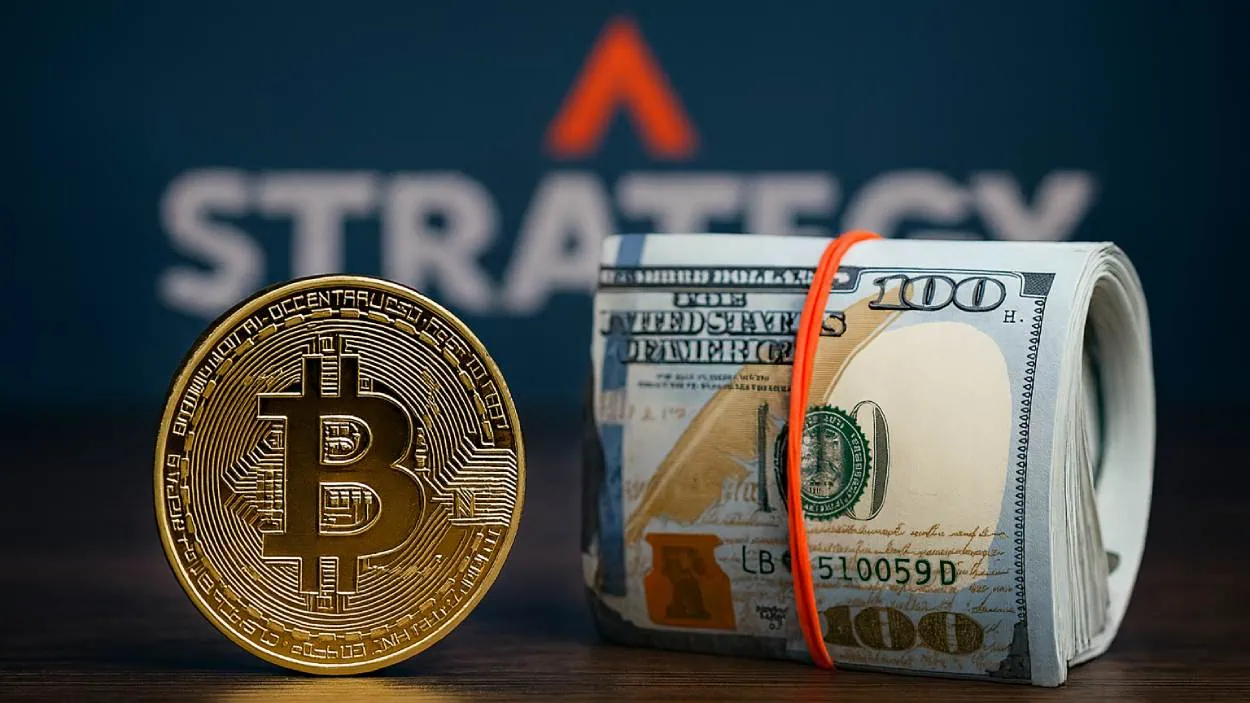






Strategy (NASDAQ: MSTR) sold $263.5 million worth of its shares between July 13 and July 19 and bought no bitcoin, according to an 8-K filed with the SEC on Monday. The sale pushed the bitcoin treasury company’s cash reserve to $3.225 billion.
Key Takeaways
- Strategy sold 2,732,318 shares for $263.5 million between July 13 and July 19 and made zero bitcoin purchases.
- The company’s U.S. dollar reserve rose to $3.225 billion after a $225 million boost from the share sale.
- Strategy holds 843,775 BTC worth about $54.7 billion, a stake now sitting on roughly $9 billion in paper losses.
- CEO Phong Le said the firm would reassess its debt exposure only if bitcoin fell into the $8,000 to $10,000 range.
- Michael Saylor published a 110-point essay opposing BIP-110 ahead of the proposal’s early August signaling deadline.
Strategy Pauses Bitcoin Buying To Rebuild Cash Reserve
Strategy, the bitcoin treasury company formerly known as MicroStrategy, disclosed the sale in a Form 8-K filed with the Securities and Exchange Commission covering the same trading window.
The company sold 2,732,318 MSTR shares in that window and directed $225 million of the proceeds toward its dollar reserve, which reached $3.225 billion. Strategy bought no bitcoin, sold no bitcoin, and repurchased no shares under its buyback programs.
The dollar buildup extends a recent pattern. A prior filing put the reserve near $3 billion following a $467 million share sale the week before, and the new $225 million addition continues a tilt toward cash as management guards against the firm’s debt load.
Strategy’s bitcoin position held steady at 843,775 BTC, a stake worth about $54.7 billion at current prices and equal to roughly 4% of bitcoin’s 21 million supply cap. Saylor has said the company acquired those coins for about $63.7 billion including fees and expenses, an average price of $75,476 per bitcoin.
Strategy has increased its USD Reserve by $225 million. As of 7/19/2026, we hodl ₿843,775 in our BTC Reserve and $3.2 billion in our USD Reserve. $MSTR $STRC https://t.co/YN1hABNkME
— Strategy (@Strategy) July 20, 2026
Executives Frame The Sales As Balance Sheet Strength
President and CEO Phong Le told Bloomberg TV that Strategy intends to remain a long-term bitcoin buyer despite the pause. Le said the firm would weigh debt risk only if bitcoin fell into the $8,000 to $10,000 range, calling the balance sheet secure.
Saylor has repeated a similar pledge, saying Strategy will keep buying bitcoin for years even as he defends the company’s occasional stock sales. He posted another bitcoin acquisition tracker chart to X over the weekend with the caption “What’s next?” Posts like that have preceded acquisition announcements before, though the approach has varied recently.
What’s next? pic.twitter.com/bNl0xX0obw
— Michael Saylor (@saylor) July 19, 2026
JPMorgan analysts called the larger cash reserve and improving institutional demand in bitcoin futures “encouraging signs” for the bitcoin outlook, even as spot bitcoin ETF flows stay volatile.
The filing does not say why Strategy skipped bitcoin purchases again, whether the pause carries into the next reporting period, or how large the reserve needs to grow before bitcoin buying resumes.
Corporate Bitcoin Treasuries Approach A Record High
Strategy sits atop a crowded field of corporate bitcoin buyers. Bitcoin Treasuries, a data tracker of public company holdings, counts 197 public companies running a bitcoin acquisition strategy, pushing corporate bitcoin treasury holdings to a record high.
Four companies round out the top five behind Strategy. Twenty One, backed by Tether, holds 43,514 BTC, followed by Metaplanet’s 43,000 BTC, MARA’s 36,303 BTC, and the Adam Back and Cantor Fitzgerald-backed Bitcoin Standard Treasury Company’s 30,021 BTC.
MSTR stock has not kept pace with the buildup. Shares fell 4% last week and closed Friday at $94.85, a decline of 38.6% for the year.
Bitcoin gained about 1% over the same stretch, widening the gap between Strategy’s treasury value and its market capitalization. MSTR shares were up 2% in pre-market trading.

Saylor Targets Bitcoin’s BIP-110 Proposal
Saylor turned his attention to bitcoin’s protocol over the weekend, publishing a 110-point essay titled “110 Reasons BIP 110 Is a Bad Idea.” The essay lays out his most detailed case yet against the proposed soft fork, which would limit arbitrary data on the bitcoin network.
The essay arrived ahead of BIP-110’s mandatory signaling window, which opens in early August. Miner support for the proposal sits at 0.86%, according to the measure’s public monitor. Foundry, a bitcoin mining pool, has asked its miners to vote on BIP-110, and industry voices have flagged the fork as on track to fail given the weak signaling.
CoinLaw’s Takeaway
Two straight weeks without a bitcoin purchase mark a real shift in Strategy’s operating rhythm, without necessarily changing the company’s long-term strategy. Building a $3.225 billion cash buffer gives the company room to service its debt obligations even if bitcoin prices weaken further, and it directly addresses the $8,000 to $10,000 downside scenario Le flagged as the debt-risk trigger. Current MSTR shareholders can track this pattern by comparing each week’s newly disclosed share count against the company’s total shares outstanding in future 8-K filings.
Analysts appear to read the buildup as prudent rather than defensive. JPMorgan’s framing of the cash reserve and rising institutional futures demand as “encouraging signs” suggests the market is treating the pause as routine balance sheet management, and the 38.6% YTD decline in MSTR shares appears tied more to the value gap with the underlying bitcoin stack than to the sales themselves. Whether Strategy returns to outright bitcoin buying may hinge on the reserve, the debt schedule, and bitcoin’s price in the weeks ahead.