





The former FTX CEO has lost his bid to overturn his fraud conviction and 25 year prison sentence, leaving only limited legal options remaining.
Key Takeaways
- A U.S. appeals court rejected Sam Bankman Fried’s attempt to overturn his conviction and sentence tied to the collapse of FTX.
- Judges found the prosecution’s evidence compelling and upheld the 2023 guilty verdict on seven fraud and conspiracy charges.
- The court dismissed claims that trial rulings prevented the defense from presenting key evidence.
- Bankman Fried can still seek review from the full appeals court or petition the U.S. Supreme Court, though such efforts rarely succeed.
What Happened?
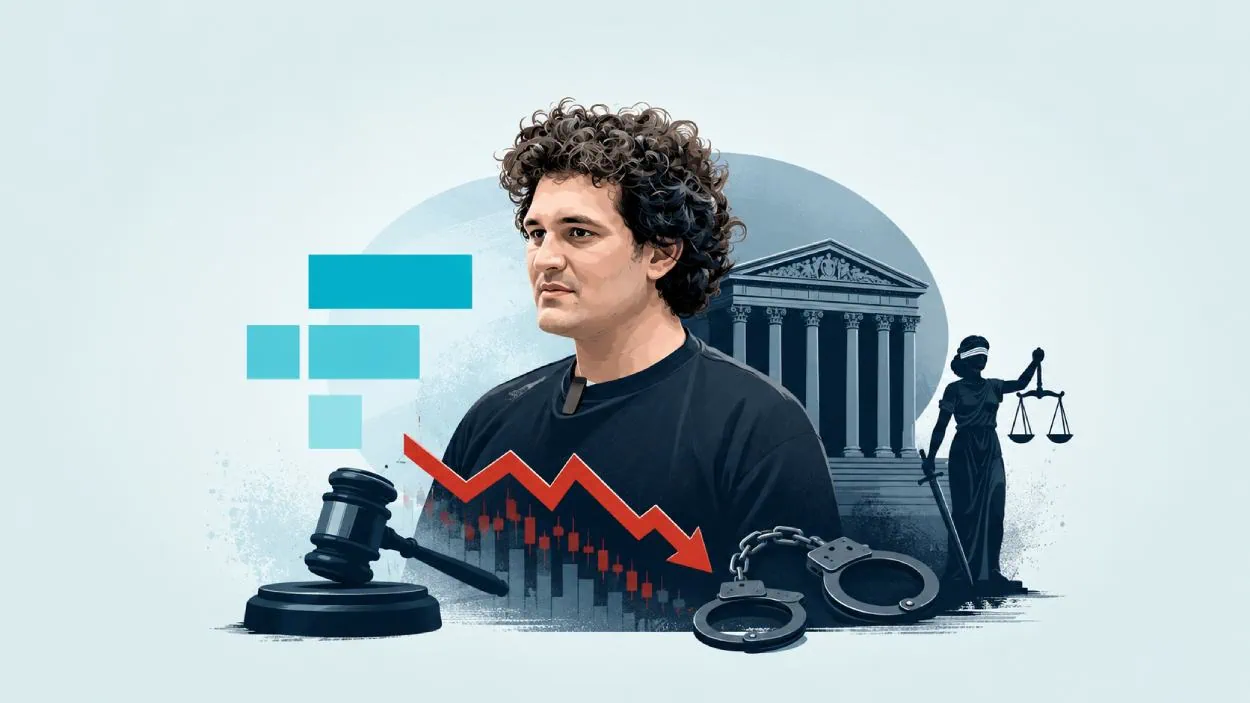
The U.S. Court of Appeals for the Second Circuit has rejected Sam Bankman Fried’s appeal seeking a new trial and reversal of his conviction in the FTX fraud case. The ruling leaves intact his 25 year prison sentence and marks another major setback for the former crypto billionaire.
In a 42-page decision issued by a three judge panel, the court concluded that the evidence presented by prosecutors was strong and found no reversible errors in the original trial proceedings.
JUST IN: Sam Bankman-Fried has lost his appeal against his conviction on seven counts of fraud and conspiracy.
— CoinDesk (@CoinDesk) June 12, 2026
Appeals Court Backs Original Verdict
The decision, first reported by Reuters, affirms Bankman Fried’s 2023 conviction on seven counts of fraud and conspiracy connected to the misuse of customer funds at FTX.
Before the exchange collapsed in November 2022, Bankman Fried was one of the most influential figures in the cryptocurrency industry. FTX was valued at billions of dollars and attracted millions of users worldwide. That reputation unraveled after the company filed for bankruptcy amid revelations that customer funds had been diverted to support Alameda Research, a trading firm closely linked to Bankman Fried.
Federal prosecutors described the scheme as a “fraud of epic proportions” and alleged that roughly $8 billion in customer funds were misused.
At trial, Bankman Fried admitted making mistakes while running the exchange but denied stealing customer money or intentionally defrauding users.
Defense Arguments Rejected
Bankman Fried’s legal team argued that the trial was unfair because U.S. District Judge Lewis Kaplan excluded evidence they believed would have helped their case.
According to the defense, the jury should have heard additional evidence supporting the claim that FTX had enough assets to eventually repay customers and that the company was solvent but facing liquidity problems.
Lawyers also raised concerns about judicial bias and argued that certain evidentiary rulings limited their ability to challenge the government’s case.
The appeals court was not persuaded. Judges concluded that the challenged rulings did not affect the outcome of the trial and found no basis for overturning the conviction.
During oral arguments in November 2025, members of the three judge panel had already expressed skepticism toward several of the defense’s claims, questioning whether the excluded evidence would have changed the jury’s decision.

Former Executives Played Key Role
A significant part of the government’s case came from testimony provided by former FTX insiders.
Several former executives, including individuals who pleaded guilty and cooperated with investigators, testified that Bankman Fried directed the use of customer funds to cover losses at Alameda Research.
Their testimony became a central element of the prosecution’s case and helped convince jurors that customer deposits had been improperly used.
In March 2024, Judge Kaplan sentenced Bankman Fried to 25 years in prison. During sentencing, he said the former executive knew his actions were wrong but “made a very bad bet about the likelihood of getting caught.”
Bankman Fried is currently serving his sentence at a low security federal prison near Santa Barbara, California. He is eligible for release in 2044.
What Legal Options Remain?
The ruling effectively closes Bankman Fried’s primary direct appeal route.
He may still request an en banc review, which would ask the full appeals court to reconsider the case. He could also petition the U.S. Supreme Court to hear the matter. However, both options face long odds and are rarely successful.
Reports have also suggested that Bankman Fried has pursued a presidential pardon. While comparisons have occasionally been made to Silk Road founder Ross Ulbricht, observers note that the circumstances surrounding the two cases are significantly different. Bankman Fried’s conviction involved allegations of misusing customer funds and deceiving FTX users, making any potential pardon politically difficult.
CoinLaw’s Takeaway
In my experience, this ruling was always one of the most important milestones in the FTX saga because it tested whether the conviction could withstand intense appellate scrutiny. I found the court’s decision significant not only for Sam Bankman Fried but for the broader crypto industry. The ruling reinforces that executives operating in digital asset markets are still subject to the same fraud laws as leaders in traditional finance. While further appeals remain possible, the chances of reversing the outcome now appear extremely limited.