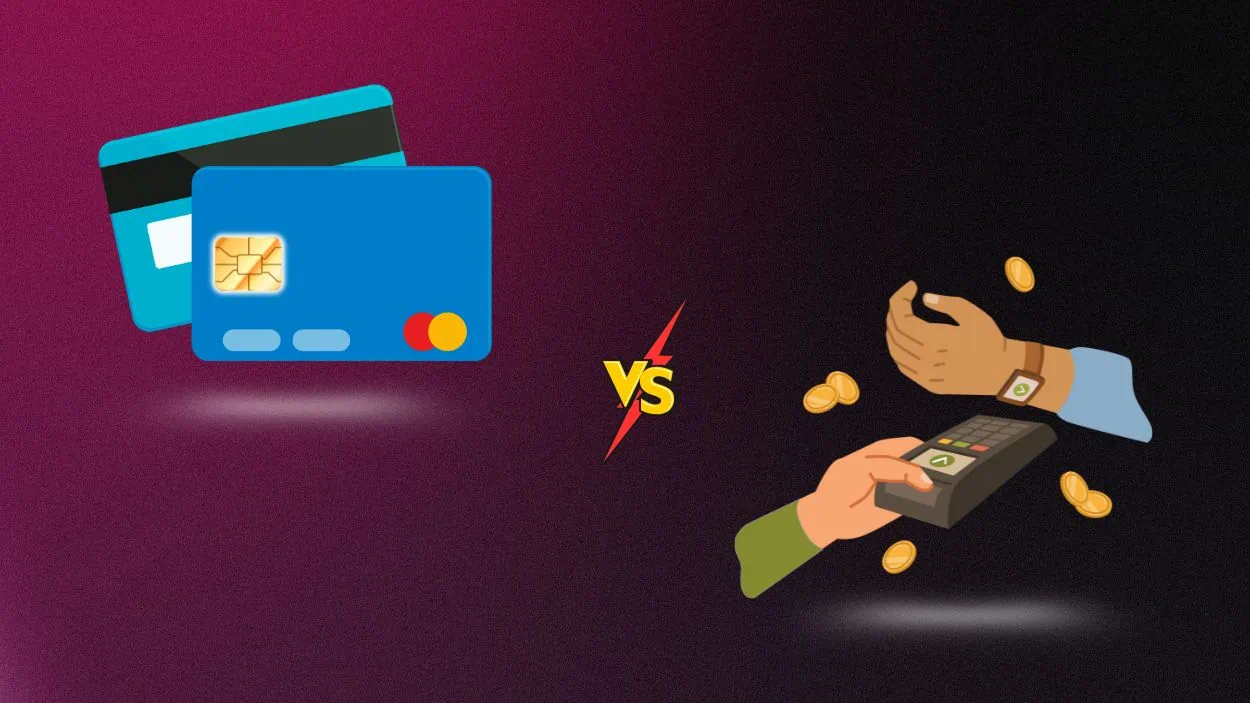





IEMV chip cards and contactless payments are shaping how people pay in both physical and digital spaces. As consumers tap or insert their cards across global markets, industries like retail and public transit are adapting swiftly. For instance, major U.S. retailers report rising in-store adoption, and transit systems in Europe report faster boarding. Let’s start by exploring key highlights. Read on to uncover detailed insights.
Editor’s Choice
- 96.20% of card-present transactions worldwide now use EMV chip technology.
- Over 80% of global consumers now use contactless payment methods, a rise from 74% in 2022.
- The global contactless payment market is projected to reach $35.4 billion in 2025.
- Visa’s Tap to Phone solution grew 200% year‑over‑year by March 2025.
- Digital wallet transactions are expected to grow 150% by 2028, with Apple Pay and Google Wallet leading U.S. adoption.
Recent Developments
- EMVCo reports that, as of Q4 2024, nearly 72% of issued cards use EMV and 96.2% of in-person transactions leverage EMV chips.
- The contactless market continues to experience rapid expansion, and the market size is expected to hit $35.4 billion in 2025, up from $29.3 billion in 2024.
- Visa’s Tap to Phone grew 200% year‑over‑year, empowering many small businesses to accept contactless payments via smartphone.
- Projections show digital wallet transaction volumes soaring by 150% by 2028, with Apple Pay and Google Wallet capturing 52% of U.S. POS adoption by 2027.
- Digital wallets are expected to account for over 50% of global e‑commerce transaction value by 2025, up from just over 40% in 2021.
- Security research underscores growing threats, EMV contactless systems face vulnerabilities across authentication and authorization protocols.
- Regional EMV card issuance shows Asia-Pacific at ~40%, Middle East & Africa at ~72%, and U.S. card‑present adoption at 92%.
Competitive Landscape of the Global Smart Card Market
- CPI Card Group Inc. holds the largest market share at 18%, leading the global smart card market.
- American Express Company follows closely with a 17% market share, reflecting its strong influence in the sector.
- Inside Secure SA commands 10% of the market, positioning itself as a top-tier security solutions provider.
- NXP Semiconductors NV and Atos SE are tied at 9%, contributing significantly to the market’s technological backbone.
- Infineon Technologies AG, Giesecke & Devrient (G&D) GmbH, and Other Key Players each account for 8%, showing a competitive middle tier.
- Gemalto NV holds 7%, slightly below the mid-range group.
- Texas Instruments Inc. has a 6% market share, rounding out the list of prominent players.

EMV Cards Global Adoption Statistics
- Globally, 71.98% of all issued cards were EMV-enabled by Q4 2024.
- In 2021, EMVCo reported 12 billion EMV chip cards in circulation, representing 68% of issued cards.
- 96.20% of card-present transactions globally now use EMV chips.
- Market size for EMV cards reached $26.67 billion in 2025, with forecasts projecting nearly $60.11 billion by 2034 at a CAGR of 9.48%.
- Another report values the EMV card market at $4.3 billion in 2024, rising to $6.3 billion by 2030 (CAGR 6.5%).
- Device count is expected to hit 7,630.2 million units by 2033, growing at a 3.7% CAGR from 2025.
- Asia-Pacific holds the largest regional share of the EMV card market as of 2025.

Contactless Payments Global Adoption Statistics
- Over 80% of global consumers now use contactless payments, up from 74% in 2022.
- The contactless payment market is projected to earn $35.4 billion in revenue in 2025.
- Overall growth rate has run at a 15.4% CAGR, climbing from $22.4 billion in 2022 to $29.3 billion in 2024.
- Revenue is forecasted to exceed $90.6 billion by 2032.
- Digital wallets will dominate over half of e‑commerce transaction value globally by 2025.
- Visa’s Tap to Phone hit a 200% growth rate, enabling contactless access for new SMBs worldwide.
- U.S. card transactions that are contactless-enabled stand at 65%.
Top 10 Countries in Digital Wallet Adoption
- India leads globally with a 90.8% digital wallet adoption rate.
- Indonesia closely follows at 89.8%, showing massive fintech traction.
- Thailand ranks third with 89.0% penetration among consumers.
- Hong Kong sees widespread use at 87.9%, driven by urban digital infrastructure.
- Philippines maintains strong adoption at 87.8%, reflecting its mobile-first economy.
- Malaysia has reached 86.9%, showcasing a robust digital transformation.
- Argentina stands at 84.6%, the highest in Latin America on this list.
- China reports 84.4% penetration, reflecting its mature mobile payment ecosystem.
- Saudi Arabia achieves 83.9%, marking strong growth in cashless initiatives.
- Singapore rounds out the top 10 with 79.7%, despite its highly developed financial sector.

Regional EMV Card Deployment Statistics
- Asia-Pacific accounts for approximately 40% of EMV card issuance.
- Middle East & Africa show 72% EMV adoption as of 2023.
- United States card-present adoption stands at 92%.
- EMVCo’s global data as of Q4 2024 reinforces 72% global issuance and 96.2% EMV transaction share.
- In 2021, 12 billion EMV cards were in use globally, marking a 1.1 billion increase year-over-year.
- The EMV market in Asia-Pacific leads in growth and size as per 2025 data.
Regional Contactless Payment Usage Statistics
- Globally, over 80% of consumers now use contactless payments.
- In the U.S., 65% of card transactions are made via contactless technology.
- Contactless share in POS credit card purchases in Australia reached 80% as of 2019, and is likely higher now.
- UK data (as of 2021) reported 142 million contactless cards and 147,000 terminals in use.
- Contactless limits were raised in the UK during the pandemic, from £30 to £45, then £100.
- Contactless use has soared where limits increased, especially during COVID‑19, for safer, touch‑free shopping.
EMV vs Contactless Market Size and Growth
- The EMV card market is estimated at $26.7 billion in 2025, projected to reach $60.1 billion by 2034 at a CAGR of 9.48%.

- The global contactless EMV cards market was $1.23 billion in 2024, expected to exceed $2.59 billion by 2033 (CAGR 8.7%).
- Contactless payment systems are expected to generate $35.4 billion in revenue in 2025, up from previous years.
- Digital wallets are set for a 150% growth in transaction volume by 2028.
- Mobile payments reached $1.62 trillion in 2025, reflecting a consumer shift from cash.
- Digital wallets will account for over half of global e‑commerce transaction value by 2025.
Demographics in Adopting EMV and Contactless Payments
- Among U.S. consumers aged 18–34, 85% made at least one mobile payment in 2025.
- Younger users, especially millennials and Gen Z, lead mobile wallet adoption, such as Venmo and Cash App.
- In Africa, mobile money surged 45% to $814 billion in 2025.
- Latin America saw mobile payments rise 46%, with Brazil’s PicPay and Mexico’s Mercado Pago expanding.
- Europe-based mobile payments grew 34% in 2025, especially in Sweden, Norway, and the Netherlands.
- Younger cohorts prefer contactless and mobile options for convenience and speed.
- Lower adoption among older demographics remains, due to habit and perceived complexity.
Transaction Volume: EMV vs Contactless Payments
- Contactless payments made 17.9 billion transactions in the U.S. in 2023, up from 4.7 billion in 2019.
- The U.S. saw 300 million contactless cards in circulation by the end of 2023.
- Global in‑person payments, contactless, now represent 50% as of early 2025.
- Mobile payment volume was $1.62 trillion in 2025.
- Contactless transactions globally in 2021 reached $2.5 trillion in volume.
- EMV transactions account for 96.2% of all card‑present transactions globally as of Q4 2024.
- U.S. EMV usage rose from 2% in 2015 to 82% in 2021 of card payment volume.
Fraud Rates and Security Statistics
- EMV chip-and-PIN transactions saw a 63% drop in counterfeit credit card fraud since 2004.
- Card-not-present fraud now makes up at least 50% of credit card fraud.
- EMV contactless systems are vulnerable to protocol attacks.
- Historic “pre‑play” attacks demonstrate cloning EMV cards at ATMs and POS.
- Mobile skimming of RFID/contactless cards poses an ongoing threat.
- Swipe transactions carry higher fraud risk and interchange fees.
- Online (CNP) transactions carry the highest fraud risk and the highest interchange fees.
How Digital Wallets Influence Spending Across Generations
- 61% of Generation Z report they spend more when using digital wallets, with only 17% spending less and 22% spending the same.
- Among Millennials, 51% spend more, while 25% spend less and 20% maintain the same spending levels.
- For Generation X, 41% spend more, 29% spend less, and 27% report no change in spending.
- Baby Boomers are the most conservative: only 28% spend more, while 30% spend less, and 37% spend the same.

Consumer Preferences: EMV vs Contactless Payments
- 50% of in‑person payments are contactless globally.
- Contactless cuts transaction time by up to 30%.
- Convenience and speed drive users toward tap‑to‑pay and mobile wallets.
- Mobile payments totaled $1.62 trillion in 2025.
- Young adults (18–34) show 85% mobile payment adoption.
- EMV remains widely trusted due to enhanced security and card familiarity.
- Contactless dominates in sectors like transit and quick-service retail.
Merchant Adoption of EMV and Contactless Payments
- U.S. contactless payments hit 25% of all card transactions in 2023.
- EMV chip adoption rose from 2% in 2015 to 82% in 2021.
- Many merchants now accept both EMV chip and contactless payments as standard.
- Contactless delivers faster throughput.
- Interchange fees for contactless are slightly higher than chip‑and‑PIN.
- Smart terminals now support mobile wallets, wearables, and contactless EMV.
- POS investment continues for speed and security.
Speed and Efficiency of Transactions
- Contactless payments can be nearly twice as fast as traditional cash or swipe methods.
- EMV chip-and‑PIN speeds improved with Visa Quick Chip and Mastercard M/Chip Fast.
- Contactless reduces transaction time by up to 30%.
- Eliminating PIN or signature speeds purchases further.
- Hybrid EMV/contactless terminals maximize both security and efficiency.
- Mobile wallet payments add convenience with biometrics.
- Faster checkouts translate to higher sales volume and lower abandonment rates.
Mobile Wallets and Contactless Payment Trends
- The global mobile payment market was valued at $88.5 billion in 2024, projected to reach $587.5 billion by 2030.
- Asia–Pacific held the largest mobile wallet revenue share at 35.4%.
- U.S. proximity-based mobile payments totaled $670.5 billion in 2024.
- Digital wallet transactions will grow 150% by 2028.
- Apple Pay is expected to reach 10% of global card transactions by 2025.
- Digital wallets will process more than 50% of global e‑commerce payments by 2025.
- Peru’s Yape serves 20 million users, accepted by 2 million businesses.
- India’s UPI handles over 1,660 million USD daily, with 106 billion transactions in 2025.
- Indonesia’s QRIS Tap reaches 50.5 million users and 32.7 million merchants.
Forecasts and Future Growth Statistics
- Mobile payments could reach $587.5 billion by 2030, with a 38% CAGR.
- Contactless payments expected to hit $90.6 billion by 2032, with 15.4% CAGR.
- Mobile and contactless payments may surpass $4.68 trillion by 2027.
- Digital wallet transactions are expected to increase by 150% by 2028.
- Digital wallets are expected to represent over 50% of e‑commerce transactions by 2025.
- Apple Pay will capture 10% of global card transactions in 2025.
- Super‑apps and real‑time systems will drive growth.
Contactless Payments in E‑Commerce Statistics
- Digital wallets will process more than half of global e‑commerce payments by 2025.
- Apple Pay will handle 10% of all global card transactions in 2025.
- Peru’s Yape supports seamless digital commerce.
- India’s UPI processes over 1,664.97 USD billion daily.
- QRIS Tap enables frictionless QR and NFC payments.
Business Impact of EMV and Contactless Payments
- Faster checkout, reduced theft, and greater efficiency.
- Contactless lowers transaction time.
- EMV reduces fraud and chargebacks.
- Super‑apps provide access to commerce for underserved markets.
- Digital data helps optimize business decisions.
- Infrastructure upgrades offer long-term ROI.
- Reduced cash use cuts operational costs.
EMV vs Contactless Payment Device Penetration
- $670.5 billion in U.S. proximity payments in 2024.
- QRIS Tap rolled out to millions in Indonesia.
- UPI processes 100 billion transactions annually.
- Mobile wallets will exceed 50% of e‑commerce by 2025.
- Apple Pay’s 10% global transaction share shows scale.
- Asia‑Pacific drives massive adoption.
- Yape serves 20 million mobile users.
Technology Infrastructure Supporting EMV vs Contactless
- QRIS Tap provides 0.3-second transactions.
- UPI handles 7,000+ transactions/second.
- Apple Pay uses secure elements and biometrics.
- EMV architecture ensures fraud resistance.
- Super‑apps use layered APIs and QR tech.
- ASEAN integrates QR for borderless payments.
- Regulation is expanding secure NFC access.
Impact of the COVID‑19 Pandemic on Payment Adoption
- 74% of consumers intend to stick with contactless.
- COVID accelerated cashless trends.
- Merchants expanded contactless capabilities.
- Pandemic drove a permanent shift in consumer habits.
- Mobile and contactless to hit $4.68 trillion by 2027.
- U.S. retailers saw tap-to-pay surges.
Compliance and Regulatory Trends in Payments
- UK FCA and PSR reviewing big tech wallets.
- EU plans for NFC access and digital IDs by 2026.
- ASEAN enabling QR code interoperability.
- Global frameworks adapting to super-app and real-time payment innovations.
Conclusion
Contactless payments and EMV cards stand at the crossroads of convenience, security, and innovation. EMV continues to dominate in physical transaction security, while contactless and mobile methods now power over half of e‑commerce and fuel global growth. The pandemic accelerated this shift, and infrastructure advancements, from NFC and QR systems to real-time rails like UPI, have made seamless payments a reality. As super‑apps, digital wallets, and regulatory advancements converge, the future of payment is not just digital, but integrated, instant, and inclusive.