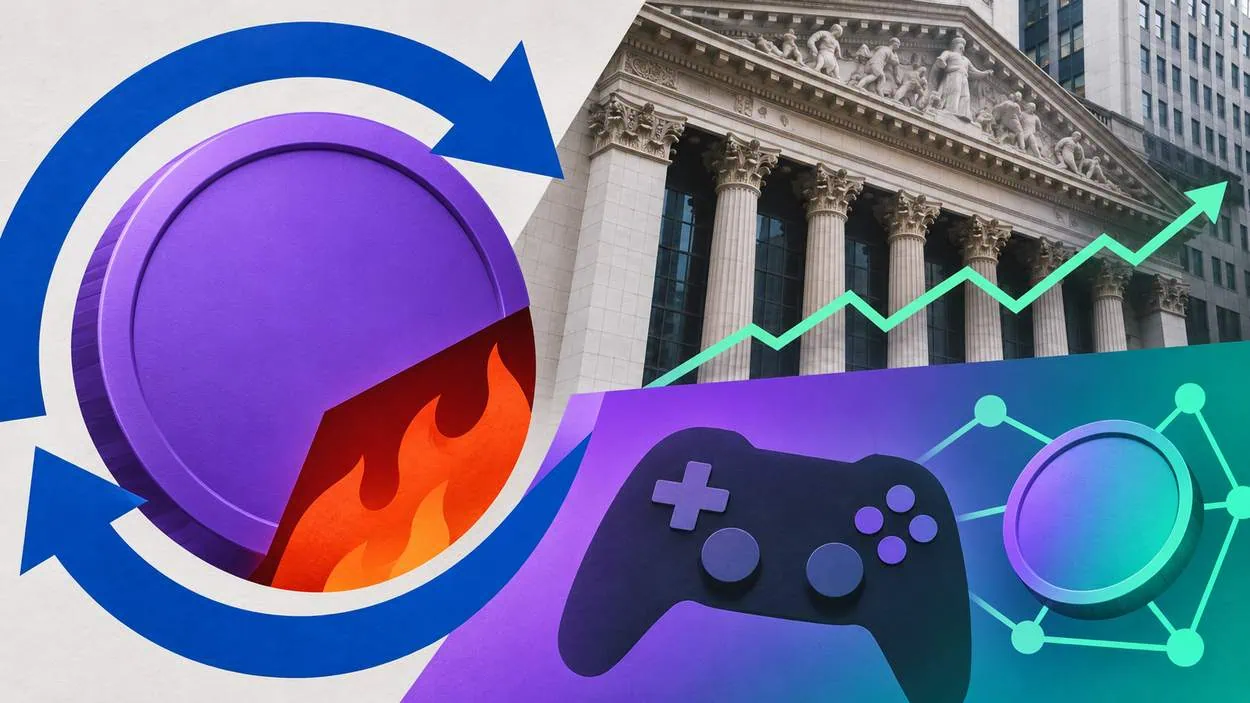





Crypto is going all in on the buyback. Across the 37 active programs tracked, projects spent roughly $143 million repurchasing their own tokens in the last month. Over the past year, that figure reached $1.57 billion. Hyperliquid alone accounted for $68.1 million of the latest monthly total, followed by Pump.fun at $25.4 million and Uniswap at $8.2 million.
It is the shift defining tokenomics this year. Bitwise CIO Matt Hougan described the current market as developing “revenue fever,” as protocols increasingly direct fees and other income back toward their native assets.
Buybacks are the new buzzword, but like most hype around tokens, it requires an ounce of skepticism.
Hyperliquid is an obvious case study. Trading fees are automatically converted into HYPE through its Assistance Fund, and HYPE held by the fund is burned. It directly connects trading activity with token purchases and supply reduction.
Pump.fun says 50% of revenue is targeted toward open-market PUMP purchases and burns, with more than $500 million deployed through the mechanism to date. The purchases are displayed on a public dashboard day by day.
The model is spreading beyond purely onchain protocols, as the newest example comes from gaming. 1win launched its $1WIN token on Solana this week, following a public sale that attracted $61.02 million in USDC commitments from more than 6,100 participants. The token is now trading through Meteora after the sale finished 15.647 times oversubscribed.
With 100 million registered players, 1win brings a gaming business that is profitable independently of the token. The existing business is central to its token model. The company plans to fund regular open-market $1WIN buybacks using gaming revenue rather than a dedicated token reserve. A separate mechanism will permanently burn 10% of $1WIN spent across supported platform products, while total supply is fixed at one billion tokens with no additional minting after TGE.
For gaming, that creates a different source of cash flow from a decentralized exchange or launchpad, but the underlying idea is similar. Users pay for a product or service, the business earns revenue, and some of that economic activity is directed back toward the token.
Of course, a buyback is not a magic price machine. Revenue can fall. Token demand can disappear. Projects can alter their policies, and purchasing supply from the market does not automatically produce appreciation.
The trend is meaningful nonetheless because it gives investors something concrete to look to.
The important numbers are no longer circulating supply, FDV and how many tokens are sitting in the treasury. Users can ask how much revenue the underlying product generates, what percentage goes toward repurchases, how regularly those purchases occur and what happens to the tokens afterward. The same scrutiny that businesses face when investors look to put their money in them.
In this way, Crypto buybacks are making token economics look like conventional business analysis. For Hyperliquid, the input is trading fees. For Pump.fun, it is launchpad revenue. For 1win, the proposed source is revenue from an established gaming business.
The mechanisms differ, but the question facing each token is easy: is there real economic activity behind the buy button?