




Staying connected where there was once no signal
The way people interact with one another is changing on several levels at once. Not only are communication infrastructure and familiar interfaces being transformed, but so is the way people are present in conversations. Today, communication has become divided into several parallel layers, each serving a different purpose. Let’s explore how this works in practice.

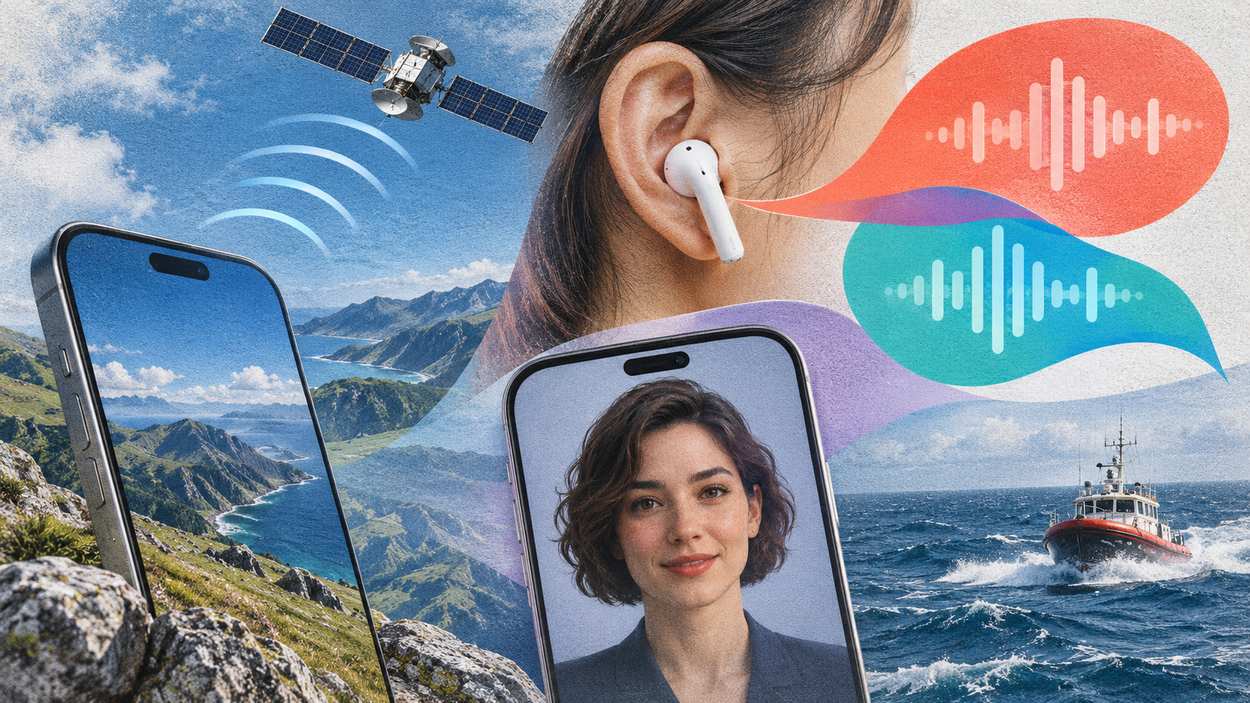
The idea of having ‘no signal’ is gradually becoming a thing of the past. And this is perhaps the biggest shift in communication infrastructure. Thanks to advances in satellite technology, it’s now possible to stay connected even in places without coverage from terrestrial mobile networks. It’s already possible to send SMS, MMS and short audio messages from almost anywhere in the world, whether that’s a remote mountainous region, a rural area or even the open sea. And all you need is an ordinary smartphone.
This capability becomes particularly important in emergencies or during major network outages. When mobile networks are overloaded or completely unavailable, making a regular phone call may simply be impossible. But a short text message sent via SMS could save a life. That’s why the development of satellite communication plays such an important role. And although it doesn’t yet eliminate every limitation, it’s helping to reduce the number of places where people can find themselves completely cut off from the world year after year.
Translation that disappears into your ear
Not so long ago, translating something meant opening a dedicated app, switching on the microphone, waiting for the result and then showing the screen to your chat partner. And this wasn’t always convenient, especially when you urgently needed to find something out or resolve an issue. But thanks to live translation technology integrated into compatible AirPods and iPhone models, you can now hear a foreign speaker’s words translated directly into your ear.
The way it works is fairly simple: the system analyses your chat partner’s words, determines their meaning (taking the context into account) and then translates what’s been said into the required language. The user hears the translated foreign speech directly through their earphones. This makes the language barrier less noticeable because there’s no longer any need to interrupt the conversation to translate what’s being said. Instead, users can stay focused on communicating rather than constantly looking at a screen.
However, the technology still has some limitations. It doesn’t yet handle certain dialects, conversational slang or rapid speech perfectly. But thanks to live translation technology, translation is becoming less of a separate task and more of an almost invisible part of communication.
Mind captioning: decoding brain signals
Researchers and the company NTT, working in collaboration with scientists, have developed a technology that converts what a person sees or imagines in their mind into a meaningful written description. This development is based on a combination of neuroimaging techniques and artificial intelligence. Researchers record brain activity associated with processing visual information. An AI model then identifies patterns between the recorded signals and corresponding words. The system subsequently reconstructs the meaning of what the person has seen or imagined.
For now, this is purely a laboratory technology, but its potential is genuinely impressive. For example, people with motor impairments who can understand speech but cannot speak or type may regain the ability to express themselves. At the same time, however, a perfectly reasonable question arises: how ethical is this technology? After all, if such systems become part of everyday life in the future, serious privacy concerns will emerge. And we’ll need to consider how to use this technology to help people without violating their rights.
Voice AI: natural conversations without waiting
Voice assistants are evolving, and the old ‘request, pause, ready-made response’ model is gradually becoming a thing of the past. It’s being replaced by smoother, more natural two-way conversations in real time. Users no longer need to wait for an answer to finish every time they want to clarify something or make a change. You can communicate with a voice assistant much as you would with a real person: interrupt it, clarify details while it’s responding, ask it to change its tone, ask follow-up questions and more. All of this opens up new possibilities for education, work and everyday life in general. But it’s important to remember that artificial intelligence can still misunderstand a question, overlook important details or provide inaccurate information.

Video chats: when it’s not quite you on camera
Video chats have also undergone changes. Modern video calls are gradually moving beyond ordinary camera broadcasts. Users now have access to AI avatars and digital clones that partially or completely replace their presence on camera. Virtual doubles can speak pre-written text, reproduce a particular communication style and perform simple tasks while the user is busy with something else. But how honest is it to use a digital double without informing your chat partner? This question remains open.
For example, Omegle.chat is a video chat where the communication environment is already mediated by algorithms. There are no virtual doubles here, but there is automatic translation, real-time moderation and extremely fast switching between users.
Algorithms help Omeglechat manage interactions on the platform, creating conditions for easy and enjoyable connections. And thanks to AI technologies, modern video chats are becoming genuinely safe spaces for communication.
What will communication look like in the future?
It’s already clear that communication is becoming flexible and multi-layered, and people can choose not only how they communicate but also how present they want to be in the interaction. You can reply with a text message, send a short voice message or delegate communication to an AI double. The boundaries between real and digital presence are gradually becoming blurred, giving us complete freedom of choice. Whether this is a good or bad thing remains to be seen. However, new opportunities also bring new ethical questions. Would you let an AI avatar join a call in your place? Or would you prefer to be there yourself, on the other side of the screen?