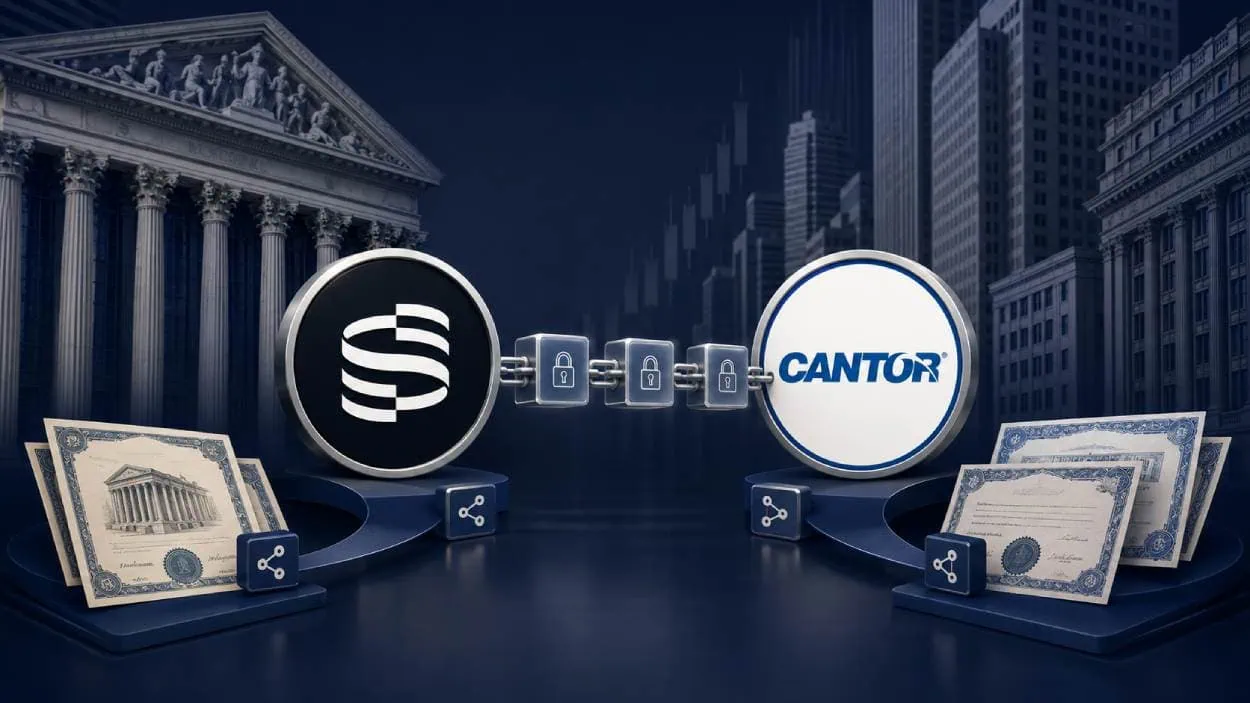







Securitize Corp. and Cantor Fitzgerald & Co. announced an agreement on July 15, 2026, to bring initial public offerings and follow-on offerings onto blockchain-based infrastructure. The deal pushes tokenization beyond secondary-market trading into how companies raise capital, according to Securitize.
Key Takeaways
- Securitize (NYSE: SECZ) and Cantor Fitzgerald will let public companies run initial public offerings onchain, not just trade shares after listing.
- Securitize Markets, LLC, the company’s SEC-registered broker-dealer affiliate, will handle offering and settlement, while Cantor supplies equity capital markets and trading expertise.
- Cantor ranked #1 in U.S. IPOs in 2025, said Pascal Bandelier, Cantor’s Co-CEO and Global Head of Equities.
- Cantor Equity Partners II took Securitize public through a business combination, and Cantor Fitzgerald & Co. is now its onchain-IPO partner.
- Securitize already tokenizes funds with asset managers including BlackRock and Apollo, infrastructure the new deal extends into new-issue securities.
Cantor and Securitize Widen Tokenization to IPOs
The agreement, per Cantor, pairs its equity capital markets and trading capabilities with Securitize’s tokenization infrastructure, used to issue, distribute, and service the securities. Securitize Markets, LLC, the firm’s SEC-registered broker-dealer affiliate, will take part directly in the offering and settlement process.
That mechanism extends a pattern already visible across Decentralized finance markets, where tokenized assets have mostly represented value that already exists rather than created it.
Carlos Domingo, Co-Founder and CEO of Securitize said:
Domingo said the arrangement brings together the capabilities needed to support capital formation onchain within existing regulatory frameworks.
Securitize and Cantor Fitzgerald are bringing IPOs and follow-on offerings onchain.
— Securitize (@Securitize) July 15, 2026
Together, we’re creating a regulated way for companies to raise capital and conduct IPOs using blockchain-based infrastructure. pic.twitter.com/lWmaXrvT7E
The Cantor Vehicle That Took Securitize Public
Securitize Corp. trades on the New York Stock Exchange under the ticker SECZ. It got there by completing a business combination with Cantor Equity Partners II, Inc. The Cantor name now sits on both sides of that story: the vehicle that took Securitize public, and the investment bank now partnering on its onchain IPOs, a rare bit of vertical integration.
The transaction left Securitize Corp. with 163,218,683 shares of common stock outstanding, funded in part by roughly $197.4 million raised through a private investment in public equity.
From Tokenized Funds to Tokenized IPOs
Securitize has built more than $5 billion in tokenized assets under management as of July 2026, working with asset managers including Apollo and BlackRock. That business has centered on tokenizing funds investors already hold.
Tokenizing a fund is one problem. Tokenizing the moment a company’s shares are first created is a different, largely untouched one. Cantor and Securitize say their agreement is built for that step, pairing Cantor’s underwriting role with Securitize’s issuance infrastructure inside the same regulatory frameworks that already govern public offerings.

Implications for Tokenized Capital Markets
Cantor says it has built one of the fastest-growing equities franchises on the Street and is now extending that distribution reach onchain. Pairing that scale with Securitize Markets’ SEC registration keeps the deal inside a compliance perimeter regulators already recognize.
If the model holds, tokenized settlement could shrink the gap between pricing an offering and delivering shares. It could also widen the investor base alongside the traditional book-building process.
No tokenized IPO has priced under this arrangement yet. The near-term test is whether an issuer actually uses it.
CoinLaw’s Takeaway
This deal reads as a distribution problem more than a technology debut. Securitize could already tokenize assets that investors already held. Getting a company’s own IPO, underwriting and all, onto the same rails was the harder piece.
Pairing that infrastructure with Cantor, the same firm whose vehicle took Securitize public weeks ago, gives the arrangement a credibility shortcut most standalone tokenization platforms cannot claim on their own.
The regulatory framing carries real weight here. Routing the deal through an SEC-registered broker-dealer and Cantor’s existing underwriting business is a bet that onchain capital formation grows by fitting inside the current rules, not by testing them. Whether that bet pays off depends on an issuer actually pricing a tokenized offering under this structure, something that has not happened yet.