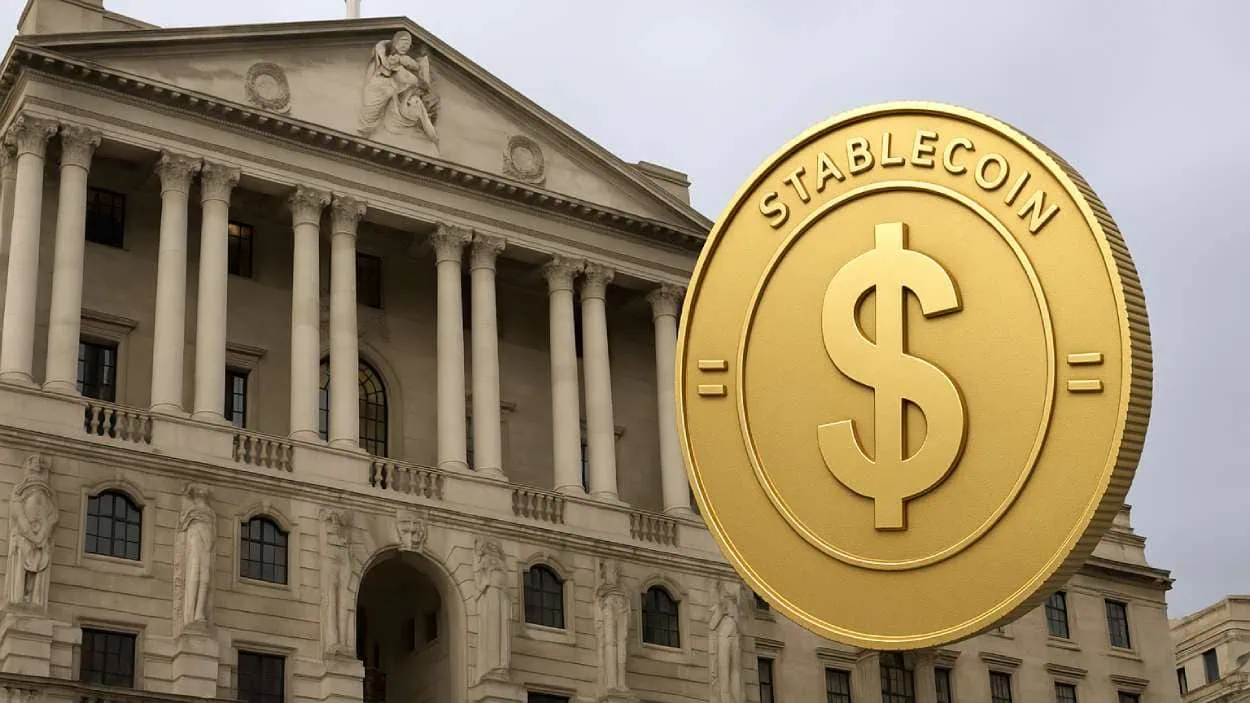







The Bank of England’s proposed caps on stablecoin holdings are drawing strong criticism from the UK crypto industry, with experts calling the plan unrealistic and damaging to innovation.
Key Takeaways
- The Bank of England is proposing limits on stablecoin holdings, suggesting caps between £10,000 and £20,000 for individuals and £10 million for businesses.
- UK crypto leaders say the rules would be hard to enforce and risk driving business overseas, especially compared to the US and EU’s more open frameworks.
- Critics argue the caps would stifle innovation and financial competitiveness, leaving the UK lagging behind in the global digital economy.
- The Bank of England is expected to publish a formal consultation later this year to address regulatory feedback on stablecoins.
What Happened?
The Bank of England is considering strict limits on how much stablecoin individuals and companies can hold. The move has triggered backlash from UK-based crypto advocates, who warn that such limits are not only technically impractical but could also harm the country’s position in the growing global digital asset market. With the US and EU embracing stablecoin adoption without placing caps on holdings, industry leaders fear the UK could fall behind if the proposal moves forward.
The Bank of England putting an ownership cap on stablecoins is another example of the governing elite doing literally the stupidest thing it could do.
— Zia Yusuf (@ZiaYusufUK) September 15, 2025
Trying to outlaw the future never works.
We must embrace it.
Stablecoin Caps Draw Heavy Criticism
The central bank’s proposal emerged from a discussion paper published in late 2023, which floated a range of possible ownership caps for digital pounds and systemic stablecoins. These included a limit of £10,000 to £20,000 for individuals and up to £10 million for businesses. Some feedback even suggested a lower threshold of £5,000 for individuals.
The rationale, according to Bank of England officials, is to avoid destabilizing the traditional banking system. Concerns include mass withdrawals from banks in favor of stablecoins offering yield or greater transaction convenience. Sasha Mills, the Bank’s executive director for financial market infrastructure, said the limits would help reduce the risks tied to sudden deposit outflows and unchecked growth of systemic payment platforms.
However, crypto leaders remain unconvinced.
Tom Duff Gordon, Coinbase’s vice president of international policy, warned that the proposal would be “bad for UK savers, bad for the City and bad for sterling.” He emphasized that no other major jurisdiction has imposed similar caps.
Simon Jennings, executive director at the UK Cryptoasset Business Council (UKCBC), echoed these concerns, calling the plan “unworkable.” He noted that stablecoin issuers cannot track ownership in real-time, making enforcement nearly impossible without invasive measures like digital IDs or continuous wallet monitoring. “Limits simply don’t work in practice,” Jennings said.
Riccardo Tordera-Ricchi of The Payments Association added that placing limits on stablecoins “makes no sense,” especially when there are no equivalent caps on cash or traditional bank accounts.
Global Standards Leave the UK Behind
Both the United States and the European Union have moved ahead with stablecoin regulations that emphasize transparency, reserves, and governance, without restricting ownership amounts. The US passed the GENIUS Act in July, setting up a regulatory framework for payment stablecoins. The European Union’s Markets in Crypto-Assets Regulation (MiCA) became fully effective in mid-2024, introducing oversight mechanisms while allowing unlimited holdings.
The Bank of England’s more conservative stance could threaten to isolate the UK from major payment corridors. Jennings recently suggested the UKCBC aims to create a “transatlantic corridor” for stablecoin payments between the UK and the US. But the proposed holding caps could jeopardize such cross-border innovations.

Fears of Currency Substitution and Bank Runs
UK regulators have warned that stablecoins could destabilize the financial ecosystem if left unchecked. The Financial Policy Committee pointed to the risk of foreign-denominated stablecoins replacing local currencies, potentially undermining monetary policy.
Similar warnings came from European Central Bank president Christine Lagarde, who said unchecked US stablecoin growth could divert euro deposits abroad and strengthen the dollar’s dominance in global transactions.
Banks also worry about losing ground to stablecoins offering interest-bearing deposits. Ronit Ghose of Citi noted that if stablecoins begin paying yield, they could trigger mass outflows from traditional banks, similar to the boom of money market funds in the 1980s.
Not everyone agrees. Bitwise investment chief Matt Hougan responded by saying, “If local banks are worried about competition from stablecoins, they should pay more interest on deposits.”
CoinLaw’s Takeaway
Honestly, this proposal feels like a step backward. In my experience, when regulators try to put artificial limits on innovation without solving the underlying issues, it only drives that innovation elsewhere. The UK has an opportunity to be a serious player in the digital finance space, but rules like this will only push projects and capital to more welcoming regions like the US or EU. I get the concerns about financial stability, but putting caps on ownership is like trying to control the internet by capping how many websites someone can visit. If enforcement is nearly impossible and the risks are global, then collaboration and smart regulation make a lot more sense than fear-based limits.