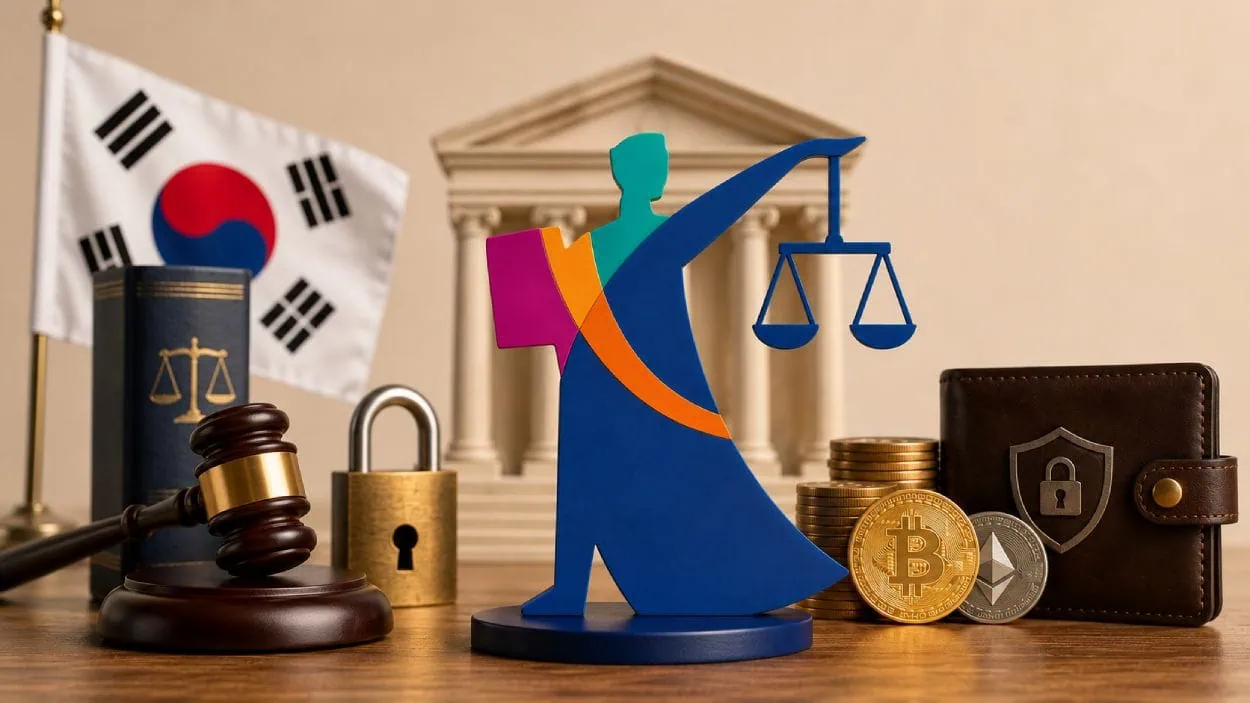







On July 6, 2026, South Korea’s Supreme Court proposal remains in public comment as it moves toward crypto seizure and liquidation rules for civil debt cases. Implementation is planned for October.
Key Takeaways
- The National Court Administration published Notice 2026-160, per Supreme Court records, as a draft partial amendment to the Civil Execution Rules covering virtual assets.
- The draft adds Articles 175-2 through 175-13, creating formal procedures to seize, freeze, transfer, and liquidate crypto holdings in civil debt cases.
- Creditors could freeze a debtor’s wallet before a final judgment, through provisional seizure and disposal-barring injunctions.
- Illiquid tokens with low trading volume may be converted into a major cryptocurrency such as Bitcoin, before a court-ordered sale.
- Public comment runs through August 11, 2026, ahead of a targeted Oct. 1 effective date.
What Happened?
The draft rewrites civil execution rules for crypto under Notice 2026-160, per Supreme Court records. The official notice states the rationale directly: virtual assets being intangible property of economic value whose holding, trading, and enforcement caseload are all expanding.
Exchanges and other custodians sit at the center of the mechanism. The National Court Administration, said the revision aims to unify enforcement practices across lower courts and improve predictability and legal stability.
Under the draft, compulsory execution reaches crypto a debtor holds directly and the debtor’s right to demand its transfer from an exchange or custodian. Once a court orders seizure, disposal is barred and the exchange must hand the assets to an enforcement officer. Seizure takes legal effect once the officer receives the assets. Creditors could also ask a court to require exchanges to disclose whether a transfer claim exists, the type and quantity of assets held, and any competing or priority claims.
For turning seized assets into cash, a court may issue a transfer order sending assets directly to the creditor, or a sale order routing them through an enforcement officer. That officer can open a dedicated exchange account, sell at market, or entrust the sale to the exchange itself.
🇰🇷 SOUTH KOREA COULD FORCE DEBTORS TO SELL CRYPTO TO PAY UP
— Coin Bureau (@coinbureau) July 6, 2026
The country’s Supreme Court has proposed new rules for taking crypto from debtors and using it to repay creditors.
The rules would allow courts to freeze, seize, and sell them in civil cases.
South Korean prosecutors… pic.twitter.com/PFjddUCUDG
Pre-Judgment Wallet Freezes
The draft is notable because it gives civil creditors a mechanism to act before the underlying case is fully decided.
The draft’s preservation measures, provisional seizure and injunctions barring disposal, exist specifically to stop debtors from hiding or moving coins into other wallets while litigation is still pending. That timing shift is the structurally new part: enforcement moves from a post-verdict step to a pre-verdict freeze.
Exchanges Absorb the Enforcement Workload
The draft leans on virtual asset service providers to do much of the operational work. Exchanges must surrender seized assets to enforcement officers, face disclosure demands over a debtor’s holdings and competing claims, and can be entrusted to execute the court-ordered sale themselves.
That places South Korea’s crypto exchange market in the same position banks occupy under garnishment orders. The disclosure requirement gives creditors visibility into holdings a debtor may not reveal voluntarily.
One provision stands out for market structure. When a seized token has low trading volume and is difficult to liquidate, the rule permits converting it into a major cryptocurrency such as Bitcoin before the sale proceeds. That path implicitly treats Bitcoin as the settlement rail of last resort when a smaller token’s thin market depth can’t absorb a forced sale.

Part of a Broader 2026 Pattern
The proposal lands weeks after two other Korean regulatory moves, part of the broader push behind crypto regulation enforcement worldwide. The Financial Services Commission last month expanded crypto disclosure requirements for applicants seeking debt relief under the New Start Fund, requiring virtual asset holdings in asset reviews. The FSC has also proposed covering digital-asset laws under the country’s financial regulatory sandbox.
Taken together with the Supreme Court’s draft, the throughline is consistent. Authorities are folding crypto into enforcement machinery built for traditional assets, not a lighter-touch track. A debtor’s crypto is treated the same as a bank account or a car: reachable, disclosable, and sellable under court order.
CoinLaw’s Takeaway
This draft closes an enforcement gap rather than creating a new prohibition. The draft’s new Articles 175-2 through 175-13 codify disclosure duties, seizure procedures, and a liquidation path for exchanges. The pre-judgment freeze option is the biggest practical shift for debtors: a wallet can be locked down while a case is still being litigated, not just after a verdict.
The comment period runs through August 11, giving exchanges, custodians, and legal practitioners a window to flag operational gaps before the rule potentially takes effect in October. Whether the final text keeps the current scope on “major cryptocurrency” conversions or narrows it will matter most to smaller-cap token holders.