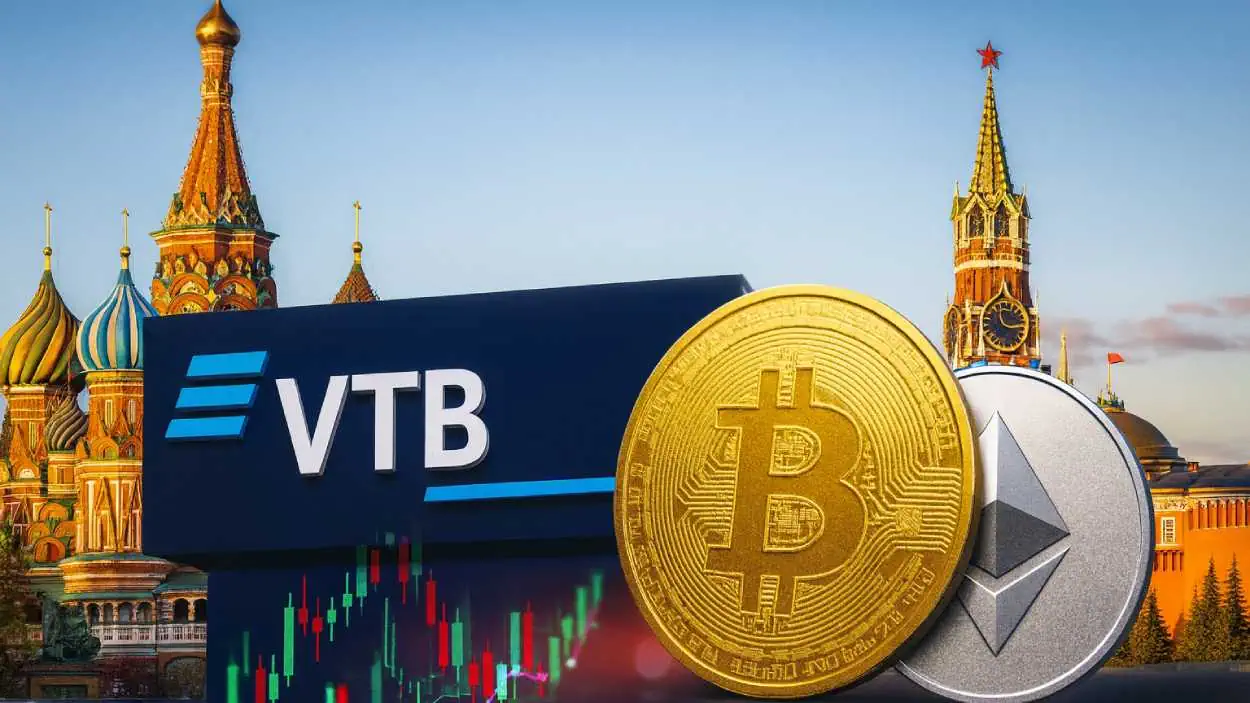







Russia’s second-largest bank, VTB, is planning to launch spot cryptocurrency trading in 2026, but the service will only be available to millionaire clients.
Key Takeaways
- VTB Bank will begin regulated spot crypto trading in 2026, becoming the first major Russian bank to do so.
- Only high-net-worth individuals with at least $1.3 million in assets will qualify for the crypto services.
- The pilot program aligns with Russia’s changing stance on crypto and is partly driven by Western sanctions pushing alternative payment methods.
- VTB joins global banking peers like Santander and Standard Chartered in targeting elite clients for crypto access.
What Happened?
VTB Bank, a key state-owned financial institution in Russia, has announced a move into the crypto space with plans to launch a regulated spot trading platform for digital assets by 2026. However, the offering will be strictly limited to qualified millionaire investors, reflecting both a cautious approach and a strategic pivot amid ongoing international sanctions.
Breaking: 🇷🇺 Russia’s second largest Bank VTB, set to launch #Bitcoin & #crypto trading in 2026.
— Crypto Anna (@CryptoAnna0) December 8, 2025
Russia is coming 🚀 pic.twitter.com/NkYUUCovKC
VTB’s Crypto Pilot Targets the Wealthy
VTB’s crypto services will not be available to the general public. The bank has explicitly limited participation to clients who meet strict financial criteria, reportedly requiring at least $1.3 million in asset holdings. Testing for the new service has already begun with a select group of affluent clients.
Bank officials indicated this exclusivity is intentional, as Russia’s legal environment for digital assets remains under close regulation. The pilot program will offer spot market trading for major cryptocurrencies like Bitcoin (BTC) and Ethereum (ETH), conducted entirely within the bank’s application.
According to statements from the bank, the offering is modeled after similar services rolled out by top-tier international banks, including Standard Chartered, BBVA, DBS, and Santander, which have all created secure crypto platforms tailored for wealthy clients.
Sanctions Push Russia Toward Crypto Innovation
Since the invasion of Ukraine in 2022, Russia has been hit with 19 rounds of sanctions from the European Union, severely restricting its access to global financial systems. These restrictions have pushed Moscow to look for alternative settlement channels, with crypto emerging as a leading contender.
Government officials have acknowledged that millions of Russians now use crypto for savings and payments, even though it was previously banned. There are also reports that Russia has used digital assets in parts of its oil trade deals with countries like China and India.
The move by VTB reflects this broader trend, aiming to offer crypto services in a tightly regulated environment. Russia’s central bank has approved controlled crypto trading for institutions that meet specific conditions, a framework under which VTB now operates.

A Controlled Bet on Crypto’s Future
While VTB is the first major Russian bank to formally announce a crypto rollout, analysts expect that other institutions could follow if the pilot succeeds. Still, there are no current plans to expand access to retail investors, due to the high risk and volatile nature of crypto assets.
The service is also being positioned as a long-term strategic play, with officials citing growing client demand, especially from individuals with limited access to traditional global financial networks.
Russia’s broader crypto strategy seems to be taking shape, balancing innovation with oversight as it attempts to circumvent traditional banking barriers without destabilizing its financial system.
CoinLaw’s Takeaway
In my experience watching global finance, this is a textbook case of necessity driving innovation. Russia has had its back against the wall since sanctions hit, and now it’s using crypto to carve out a path forward. I found it striking that VTB is not just dipping its toe in the water but going all-in for the elite class. It shows how serious the Kremlin is about adopting digital assets for sanctioned financial flows, while still keeping control tight. This isn’t just a tech experiment. It’s a geopolitical shift wrapped in blockchain.