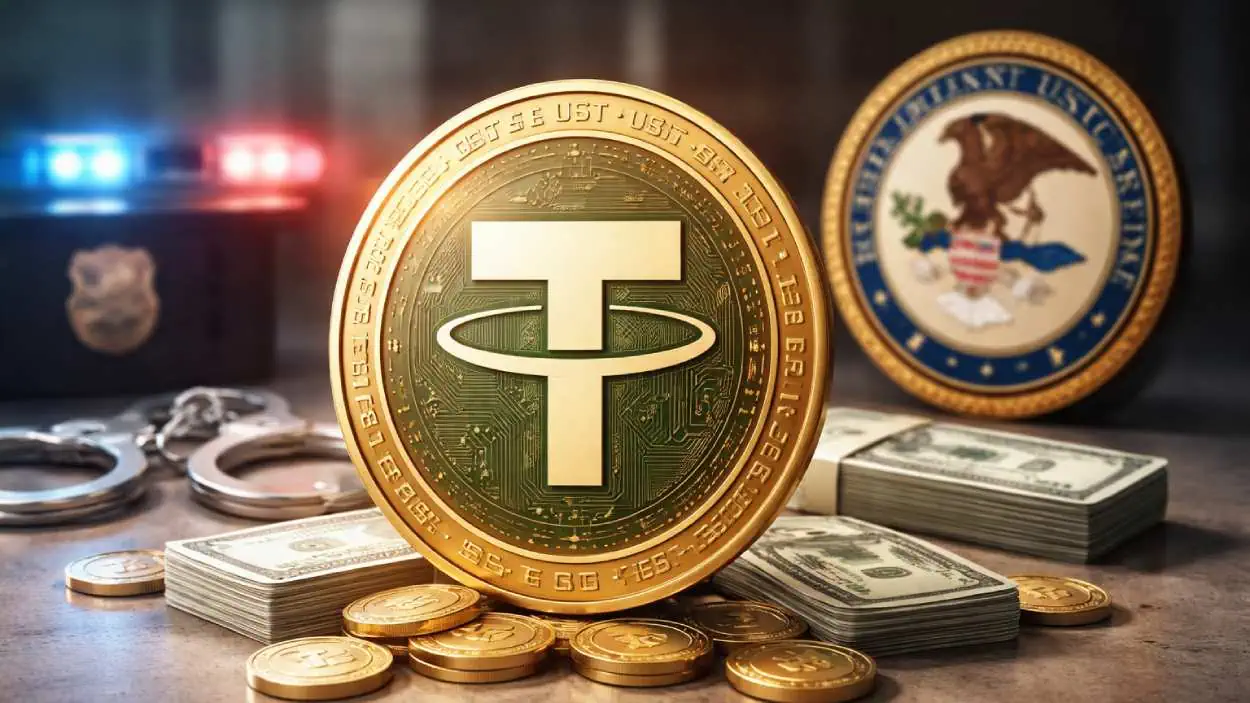







Tether froze around $182 million in USDT across five Tron wallets in a single day, spotlighting how centralized control shapes the stablecoin market.
Key Takeaways
- Tether froze over $182 million in USDT on January 11, targeting five wallets on the Tron network.
- The move was likely coordinated with U.S. law enforcement, including the Department of Justice and FBI.
- Stablecoins made up 84% of illicit crypto activity by end of 2025, according to Chainalysis.
- Despite centralization concerns, Tether’s USDT remains dominant, holding 60% of the stablecoin market with $187 billion in circulation.
What Happened?
On January 11, Tether carried out one of its largest single-day enforcement actions by freezing $182 million worth of USDT across five wallets on the Tron blockchain. The wallets held amounts ranging from $12 million to $50 million, according to Whale Alert data.
While the exact reason for the freezes hasn’t been publicly disclosed, all signs point to cooperation with U.S. authorities, including the Department of Justice, FBI, and Secret Service. This action adds to the growing trend of law enforcement using stablecoin issuers to clamp down on illicit financial activity.
Tether just froze $182m USDT on Tron across 5 wallets, one of the largest blacklist I can remember.
— Googly 👀 (@0xG00gly) January 11, 2026
Expecting another DOJ press release thanking Tether soon, like for previous large cases.
To put in context, this is higher than all USDC frozen to date.https://t.co/7MR5K0oKfK pic.twitter.com/kgsiqbYaYD
A Major Freeze in a Centralized Ecosystem
The frozen wallets were all part of the Tron (TRC-20) network, where Tether holds deep liquidity. The company, which issues the world’s largest stablecoin, retains administrative control over its smart contracts, allowing it to freeze tokens immediately. This ability enables Tether to comply with law enforcement requests, but also underscores the centralized nature of most stablecoins.
According to AMLBot, between 2023 and 2025, Tether froze over $3.3 billion in assets and blacklisted 7,268 wallet addresses, mostly on the Ethereum and Tron networks. This recent action is among the largest seen in a single day, and it highlights how centralized control can be quickly activated in response to potential threats like scams, hacks, or sanctions evasion.
Law Enforcement’s Favorite Tool?
As criminals move away from Bitcoin and toward dollar-pegged tokens, stablecoins have become the preferred method for illicit crypto transactions. Chainalysis data shows that by the end of 2025, stablecoins accounted for 84% of all illicit crypto transaction volumes, a sharp contrast to earlier years where Bitcoin was the main concern.
This shift has made compliance actions from stablecoin issuers more frequent and impactful. Tether’s ability to work closely with agencies such as the DOJ and FBI is now seen as a critical component in global anti-money laundering efforts.

Centralization Sparks Ongoing Debate
The incident reignites the long-standing debate over the centralized power wielded by stablecoin issuers. While Bitcoin and other decentralized assets are resistant to censorship, stablecoins like USDT can be frozen instantly, raising questions about how “crypto” these tokens really are.
Critics argue that this power undermines the ethos of decentralization and could steer institutions or governments toward truly uncensorable alternatives like Bitcoin or even gold. Supporters, on the other hand, view this control as a necessary trade-off for compliance and broader financial integration.
Despite the controversies, Tether’s dominance in the stablecoin market remains unshaken. The company’s flagship token, USDT, holds a market capitalization of approximately $187 billion, making up 60% of the $308 billion stablecoin market, according to DeFiLlama.
CoinLaw’s Takeaway
I think this story shows just how much power Tether holds behind the scenes. While we often hear that crypto is about freedom and decentralization, this kind of move reminds us that stablecoins operate very differently. In my experience watching the space, these types of enforcement actions are only going to increase, especially as regulators get more serious. If you’re holding stablecoins, it’s worth remembering they can be frozen or seized at any time if law enforcement gets involved. It’s a reminder that not all digital assets are created equal.