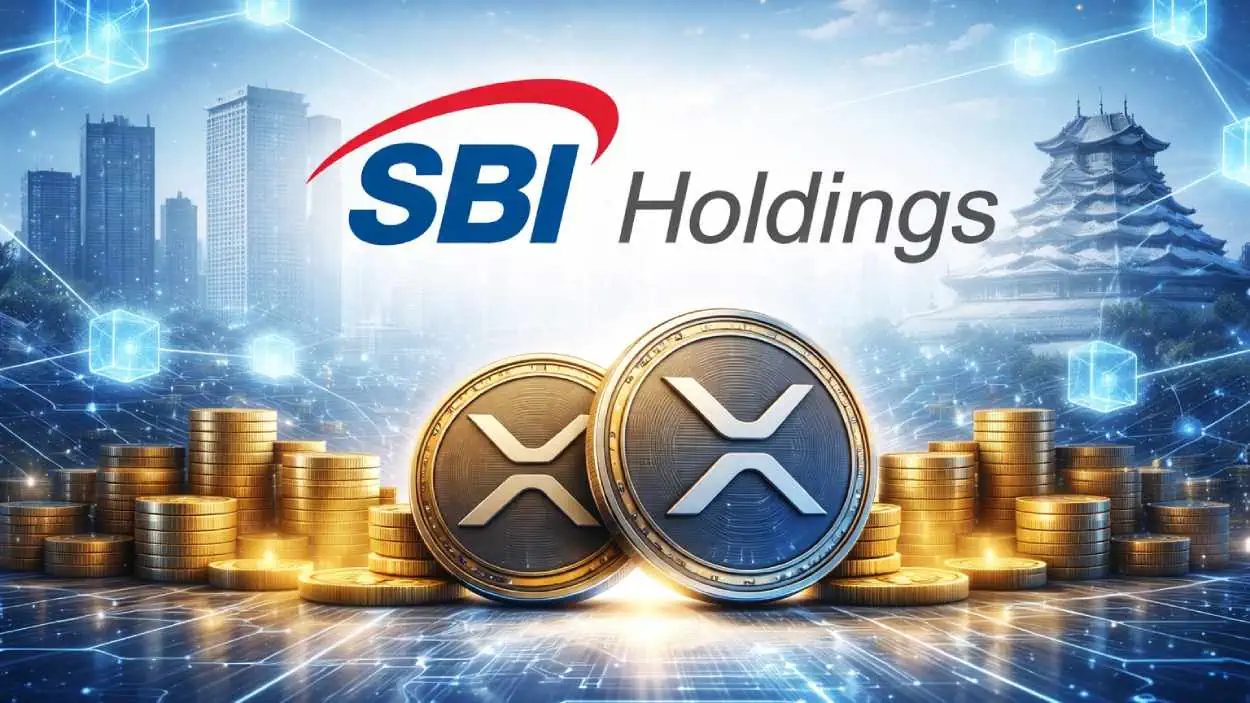







SBI Holdings has launched a 10 billion yen blockchain based bond that offers fixed income returns along with XRP rewards for eligible investors.
Key Takeaways
- SBI Holdings is issuing a 10 billion yen onchain bond managed through BOOSTRY’s ibet for Fin platform.
- Investors receive fixed annual yields between 1.85% and 2.45%, paid semiannually.
- Eligible participants can earn XRP rewards worth 200 yen per 100,000 yen invested.
- The bond will begin secondary trading on March 25 via the Osaka Digital Exchange.
What Happened?
SBI Holdings announced the launch of its new SBI START Bonds, a three year blockchain based bond aimed primarily at retail investors in Japan. The 10 billion yen issuance blends traditional fixed income features with crypto linked incentives, signaling deeper integration between capital markets and digital assets.
The bond is fully managed onchain using BOOSTRY’s “ibet for Fin” platform, a blockchain infrastructure designed for security token issuance and settlement.
🚨🚨🚨 SBI Japan just announced a 10 billion yen onchain bond with $XRP rewards built in!
— X Finance Bull (@Xfinancebull) February 23, 2026
Retail investors. Fixed rate. Blockchain settlement. XRP as the reward layer.
This is what mainstream adoption actually looks like. Not a headline. A product regular people can buy.
Japan… pic.twitter.com/0GUzbeCV9L
A Retail Focused Blockchain Bond
Unlike earlier tokenization pilots that focused on institutions, this offering is targeted at individual investors. The three year bonds carry an indicative annual interest rate between 1.85% and 2.45%, with interest paid twice a year.
Secondary trading is expected to begin on March 25 through the Osaka Digital Exchange’s proprietary START trading system, placing the bond within a regulated digital securities environment rather than a crypto native exchange.
By structuring the bond within Japan’s existing regulatory framework, SBI continues to position itself at the intersection of traditional finance and blockchain infrastructure.
How the XRP Rewards Work?
In addition to fixed coupon payments, eligible investors will receive XRP token incentives.
Retail residents and companies investing at least 100,000 yen and holding an account with SBI VC Trade qualify for the program. According to SBI, investors will receive XRP “in an amount corresponding to their subscription amount.”
The product page specifies:
- 200 yen worth of XRP for every 100,000 yen invested.
- Distribution at issuance.
- Additional distributions on each interest payment date through 2029.
Importantly, the XRP rewards are separate from the bond’s fixed yield. While the coupon remains stable, the value of XRP rewards may fluctuate based on market prices.

Deep Roots With Ripple and XRP
SBI’s connection to XRP is not new. The company formed a partnership with Ripple in 2016, leading to the creation of SBI Ripple Asia and the rollout of XRP powered remittance corridors between Japan and the Philippines.
A subsidiary of SBI has previously distributed XRP directly to shareholders. Chairman and CEO Yoshitaka Kitao has also stated that the company owns roughly 9% of Ripple Labs, making it one of the largest corporate stakeholders in the blockchain firm.
Beyond XRP, SBI has expanded into stablecoins and digital asset infrastructure. The company partnered with Circle to launch USDC in Japan and signed a memorandum of understanding with Ripple to distribute its RLUSD stablecoin.
Choosing XRP as the incentive asset instead of a stablecoin reinforces SBI’s long standing strategic alignment with Ripple’s ecosystem.
What This Means for Japan’s Digital Asset Market?
Japan has been one of the more active jurisdictions in regulated security token issuance. By using BOOSTRY’s ibet for Fin platform and the Osaka Digital Exchange, SBI keeps the entire bond lifecycle inside a compliant digital framework.
The structure reflects a broader trend in financial markets where firms are experimenting with hybrid models that combine conventional investment mechanics with blockchain settlement and token incentives.
At the same time, XRP has recently been part of a wider market correction, with broader crypto assets showing pressure across valuation metrics. Despite that environment, institutional engagement around XRP infrastructure continues to expand.
SBI’s move places token incentives directly into mainstream securities distribution, further blurring the line between crypto platforms and traditional capital markets.
CoinLaw’s Takeaway
In my experience, this is one of the clearest examples yet of how crypto is quietly integrating into traditional finance instead of replacing it. I found the retail angle particularly important. This is not just a pilot for institutions. It is a real product aimed at everyday investors.
Layering XRP rewards onto a regulated fixed income instrument feels like a strategic test. If investors respond positively, we may see more bonds and securities tied to digital asset incentives. For XRP specifically, this strengthens its role beyond trading speculation and embeds it deeper into financial infrastructure.