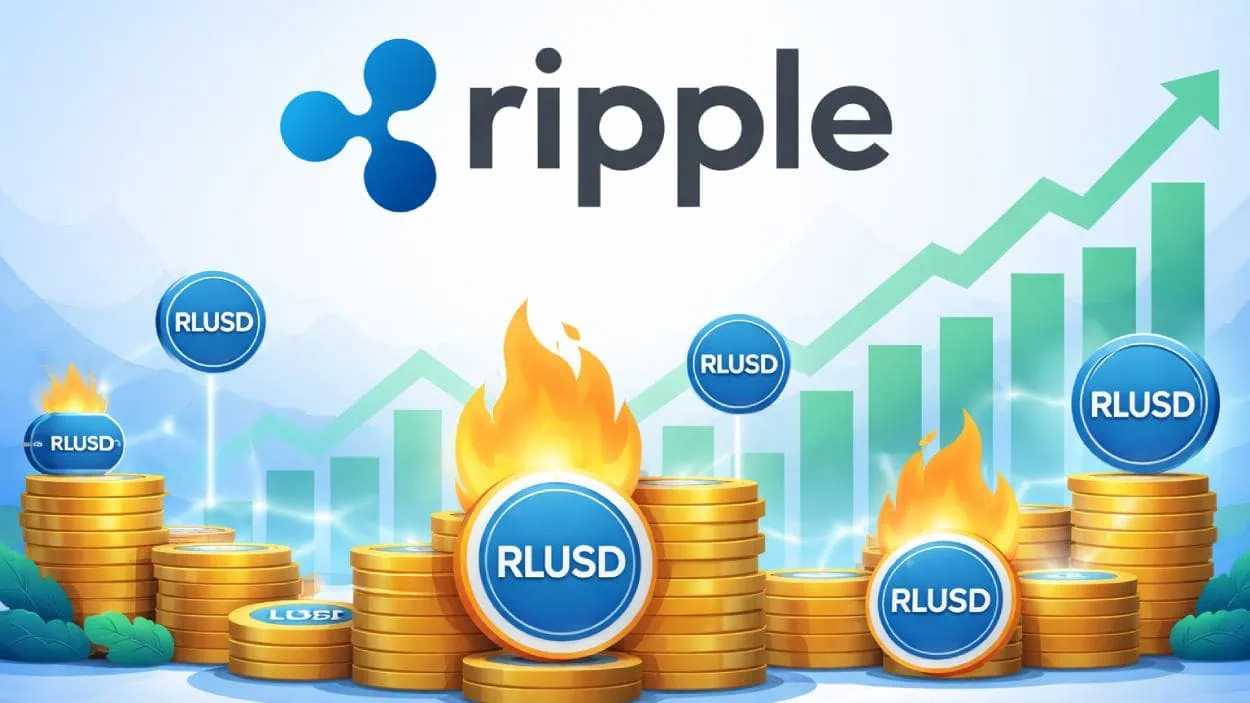







Ripple has burned 45 million RLUSD tokens in a week while its stablecoin rapidly approaches a 1.5 billion dollar market cap.
Key Takeaways
- Ripple burned 45 million RLUSD over the past seven days while minting only 10 million.
- RLUSD market cap is nearing 1.5 billion dollars, driven by institutional adoption.
- Heavy token burns reflect redemptions and treasury management, not network issues.
- New integrations with Mastercard and iTrustCapital are expanding RLUSD use cases.
What Happened?
Ripple’s stablecoin treasury has seen intense activity, with large scale token burns and selective minting over the past week. The company is actively managing supply as RLUSD adoption grows across institutional channels and payment systems.
🔥🔥🔥🔥🔥🔥🔥 40,000,000 #RLUSD burned at RLUSD Treasury.https://t.co/zGyqZSdprG
— Ripple Stablecoin Tracker (@RL_Tracker) March 24, 2026
Massive Burns Signal Active Supply Control
Ripple’s RLUSD treasury has burned 45 million tokens in just one week, compared to only 10 million tokens minted during the same period. On March 23 alone, the company burned 30 million RLUSD in a single day, followed by another 10 million token burn, flagged by blockchain tracker @RL_Tracker.
This level of activity highlights how Ripple is tightly controlling the circulating supply of its stablecoin. While large token burns might seem alarming at first glance, they are actually a routine mechanism in fully backed fiat stablecoins.
When institutional clients redeem RLUSD for US dollars, the tokens are sent to a null address and permanently removed from circulation. This ensures that every RLUSD in circulation is backed by real world reserves held in Ripple’s accounts.
At the same time, minting occurs when new capital flows into the ecosystem. For example, 10 million RLUSD was minted on March 19, reflecting fresh demand entering the network.
Institutional Demand Driving RLUSD Growth
The surge in treasury activity comes as RLUSD is rapidly gaining traction. The stablecoin is now approaching a 1.5 billion dollar market cap, signaling strong institutional interest.
Recent developments are accelerating this growth:
- RLUSD was listed on iTrustCapital, opening access to more investors.
- Ripple is piloting instant credit card settlements through its Mastercard partnership.
- The stablecoin is being positioned as a core settlement layer for cross-border payments.
These integrations are helping RLUSD expand beyond traditional crypto use cases into real world financial infrastructure.

What the Burns Really Mean?
The heavy burn activity suggests two key possibilities:
- Institutional redemptions are increasing, meaning large players are cashing out RLUSD for fiat.
- Ripple is conducting a strategic inventory rebalance to maintain liquidity and stability.
Either way, the process reflects healthy and active usage of the stablecoin, rather than any technical or financial distress.
In fact, such transparency in supply adjustments is becoming a closely watched metric for evaluating stablecoin reliability and adoption.
Impact on XRP Raises Questions
While RLUSD growth strengthens Ripple’s ecosystem, it also raises important questions about XRP’s role going forward.
Despite the expansion of RLUSD, XRP remains down 40 percent year to date. Each new RLUSD integration validates Ripple’s technology, but it does not necessarily drive direct buying pressure for XRP.
This has led to ongoing debate about whether stablecoin adoption could gradually reduce XRP’s utility in certain use cases, especially in payments and settlements.
CoinLaw’s Takeaway
In my experience, this kind of aggressive supply management is actually a strong signal of maturity, not risk. Ripple is clearly treating RLUSD like a serious financial product, not just another crypto token.
What stands out to me is how institutional adoption is shaping the entire strategy. The burns are not random. They reflect real money moving in and out of the system.
I found the Mastercard integration particularly important. If RLUSD becomes a reliable settlement layer for everyday payments, it could quietly become one of the most practical stablecoins in the market.
That said, I do think Ripple needs to address the growing concern around XRP. If RLUSD continues to grow without boosting XRP demand, it could create long term questions about value distribution within the ecosystem.