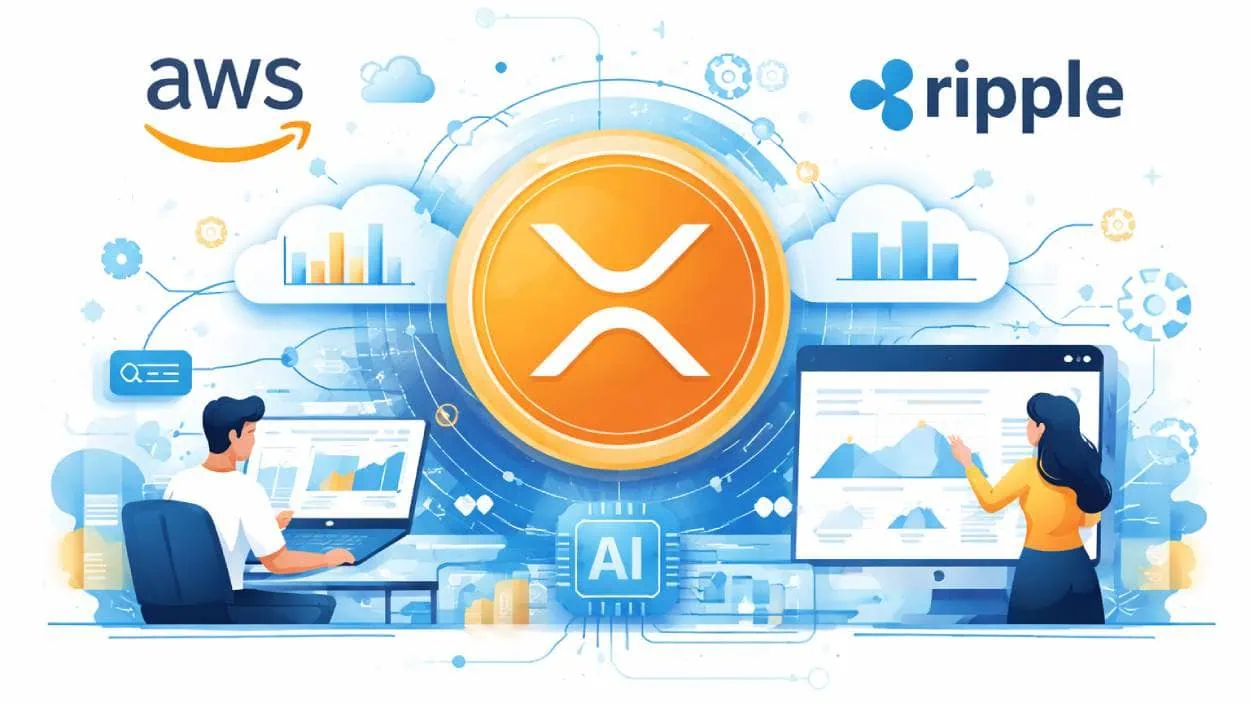







Ripple is testing Amazon Bedrock AI with Amazon Web Services to dramatically reduce system log analysis time for the XRP Ledger from days to minutes.
Key Takeaways
- Ripple and AWS are testing Amazon Bedrock to analyze XRP Ledger (XRPL) logs using generative AI.
- Log processing that once took 2 to 3 days now completes in just minutes.
- The initiative targets performance bottlenecks and supports XRPL’s growing ecosystem.
- This AI integration enhances Ripple’s ability to scale smart contracts and tokenized assets.
What Happened?
Ripple is exploring the use of Amazon Bedrock, Amazon Web Services’ generative AI platform, to monitor and optimize the XRP Ledger. This trial aims to automate system log analysis, a process that typically consumes several days of engineer effort due to XRPL’s high-throughput, C++-based infrastructure. Early tests show Amazon Bedrock could cut that process down to 2 or 3 minutes, significantly boosting operational efficiency.
⚡️AWS AND RIPPLE TO WORK ON AN XRPL UPGRADE
— Coin Bureau (@coinbureau) January 8, 2026
Amazon Web Services and Ripple are reportedly exploring Amazon Bedrock AI for the XRP Ledger.
With this integration, XRPL system logs could be analyzed in 2–3 minutes, down from days. pic.twitter.com/e0e1GL6s5b
Ripple and AWS Join Forces for Scalable Monitoring
Ripple and AWS are jointly evaluating Amazon Bedrock to address one of XRPL’s long-standing challenges: the overwhelming volume of complex system logs. Ripple engineers have traditionally needed two to three days to review these logs manually and detect performance issues or bugs. Now, with Amazon Bedrock’s AI capabilities, those same analyses could be completed in minutes.
This shift not only saves engineering time but also empowers Ripple to respond quickly to issues, keeping the network stable and responsive as usage increases.
Key benefits from the test include:
- AI-based analytics that instantly detect network bottlenecks.
- Streamlined monitoring of XRPL’s globally distributed node infrastructure.
- Faster issue resolution and system optimization with fewer manual tasks.
According to a recent presentation by an AWS solutions architect, the idea was introduced during a discussion on how blockchain systems increasingly demand automated data monitoring as transaction volume grows.
XRPL Builds Momentum with Upgrades and Adoption
This Amazon AI testing arrives as XRPL continues expanding its capabilities. Since late 2022, Ripple has rolled out a series of upgrades, including tools to support decentralized finance (DeFi) applications, smart contracts, and enterprise-friendly features. Notably:
- In September, Ripple enhanced the Smart Escrow Devnet to support advanced programmability.
- XRPL introduced the Multi-Purpose Token (MPT) standard in October, simplifying token issuance and real-world asset tokenization.
- Liquidity on XRPL’s decentralized exchange has climbed to $173 billion, according to CryptoQuant, reflecting surging user engagement.
In parallel, Ripple is also working to bolster XRPL’s security by exploring quantum-resistant cryptographic models, such as Dilithium. This ensures future resilience as blockchain threats evolve.

CoinLaw’s Takeaway
In my experience following Ripple’s roadmap, this collaboration with AWS could be a real game changer. Log analysis might not sound exciting, but anyone who’s worked in tech knows it can be a serious bottleneck. By slashing log review time from days to minutes, Ripple isn’t just saving time. They’re unlocking speed and insight at a scale that most blockchains can’t touch right now. I found the Bedrock integration especially smart because it future-proofs XRPL as it grows. This move shows Ripple is thinking like a tech leader, not just a crypto company. And that makes a big difference.