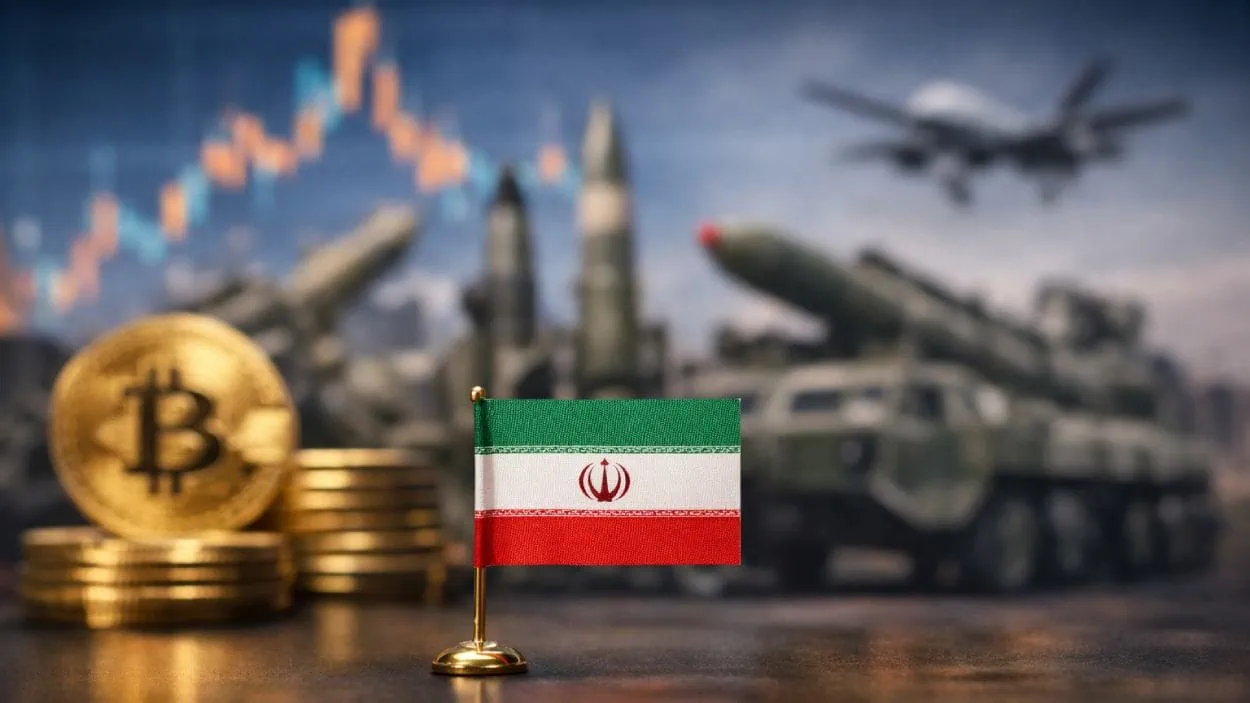







Iran is now openly offering to sell military equipment like missiles and warships in exchange for cryptocurrency, marking a rare move by a nation-state to adopt digital assets in arms trading.
Key Takeaways
- Iran’s Defense Ministry Export Center, Mindex, is accepting cryptocurrency, barter, and Iranian rials for weapons sales.
- The crypto payment option appears designed to bypass Western sanctions restricting Iran’s global financial access.
- Mindex claims clients in 35 countries and offers a wide catalog including drones, missiles, warships, and defense systems.
- This shift signals broader interest among sanctioned regimes to use crypto in cross-border deals.
What Happened?
Iran’s state-run arms exporter Mindex has begun offering cryptocurrency payments for international weapons contracts, including ballistic missiles, drones, and naval systems. The move is seen as part of a growing effort to bypass tough U.S. and European sanctions that limit Iran’s access to traditional banking systems.
Breaking news: Iran is offering to sell advanced weapons systems including ballistic missiles, drones and warships to foreign governments for cryptocurrency, in a bid to use digital assets to bypass western financial controls https://t.co/VxyamhFkBX pic.twitter.com/Arlxk3cqTx
— Financial Times (@FT) January 1, 2026
Mindex’s Crypto Pivot: A Sanctions Workaround
The Financial Times was first to report that Mindex now allows payments for military equipment in digital assets. The agency’s official website confirms the option, stating crypto can be used if both parties agree in the contract.
Mindex has client relationships with 35 countries and lists its offerings in multiple languages through an online catalog. These include:
- Emad ballistic missiles.
- Shahed drones.
- Shahid Soleimani-class warships.
- Cruise missiles and air defense systems.
- Military vehicles and propellants.
There are no listed prices on the site. However, potential buyers can request in-person inspections of the weapons in Iran, pending security approval.
The site also features a chatbot, contract portal, and a detailed FAQ section that addresses sanctions-related concerns. One prominent question asks whether sanctions will prevent delivery of purchased weapons. Mindex replies:
Conditions, Flexibility, and Enforcement
Mindex outlines some conditions for buyers, including usage limitations in the event of war with another country. However, the company notes that these rules are “negotiable,” emphasizing a willingness to be flexible if payment terms are met.
The agency is even offering the possibility of executing cryptocurrency payments in the buyer’s home country, as long as security procedures are followed.

Iran’s Track Record of Using Crypto to Evade Sanctions
This isn’t Iran’s first step into crypto-financed trade. In recent years, U.S. authorities and Israeli intelligence have repeatedly flagged Iran’s use of digital assets in oil sales and weapons smuggling. In one notable case, the U.S. Treasury traced over $100 million in crypto used by two Iranian nationals to process oil transactions between 2023 and 2025.
Back in September, U.S. officials sanctioned individuals linked to Iran’s Islamic Revolutionary Guard Corps (IRGC) for operating a crypto-enabled “shadow banking” network. These covert financial channels helped move regime funds globally without using formal banks.
A Broader Pattern Among Sanctioned States
Iran is not alone. Other countries under economic pressure, such as Russia and North Korea, have also turned to cryptocurrencies to support cross-border trade. But Iran’s direct use of crypto in the defense sector is among the most public examples of this trend.
Despite international pushback, Iran’s defense exports have remained strong. In 2024, the Stockholm International Peace Research Institute ranked Iran 18th globally in arms exports, just behind Norway and Australia.
CoinLaw’s Takeaway
I found this story both bold and troubling. Iran isn’t just experimenting with crypto. It’s putting it at the core of its military export strategy. This is a serious red flag for international regulators and watchdogs. In my experience, when sanctioned countries go this far into crypto, it’s a signal that traditional enforcement methods are hitting limits. Iran’s model could inspire others, and that means we’re heading into a phase where crypto isn’t just a speculative asset but a geopolitical tool. That’s not just interesting. It’s urgent.