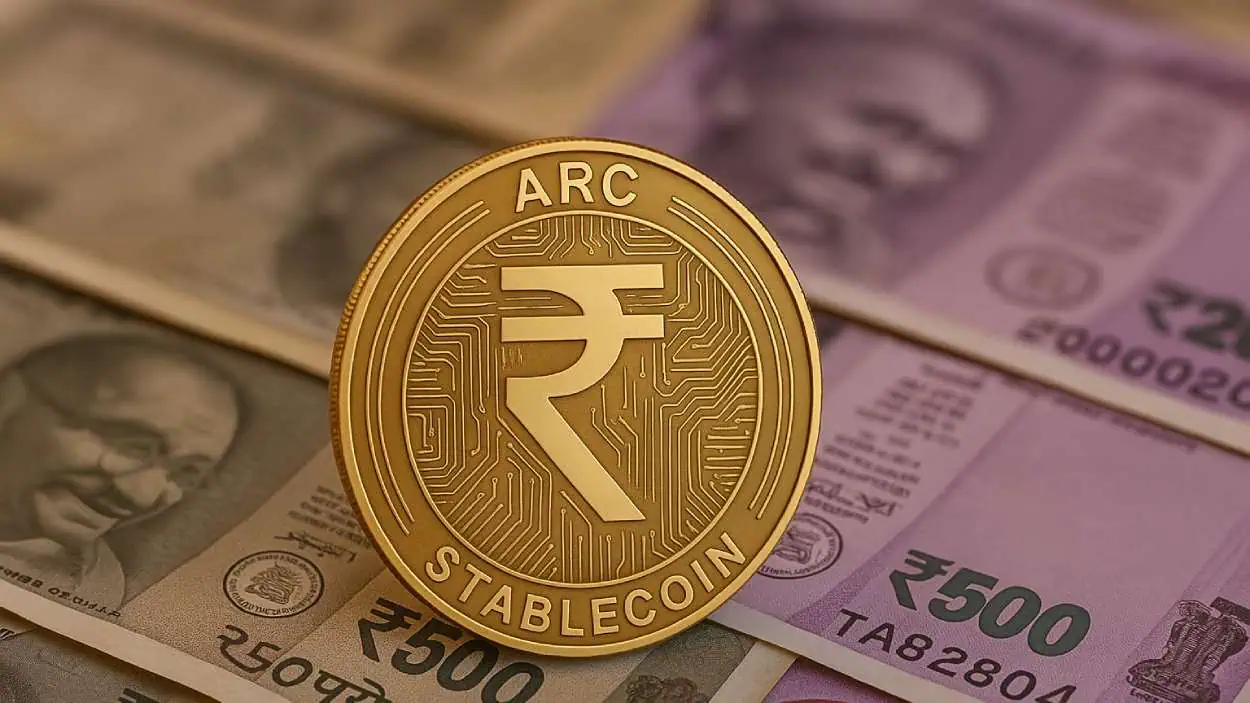







India is gearing up to launch a fully regulated, rupee-backed stablecoin called the Asset Reserve Certificate (ARC) in early 2026, aiming to support digital payments and protect the country’s financial sovereignty.
Key Takeaways
- ARC is a rupee-pegged stablecoin backed by Indian government securities and treasury bills, launching in the first quarter of 2026.
- Developed by Polygon Labs and fintech firm Anq, ARC is intended to serve alongside the Reserve Bank of India’s central bank digital currency (CBDC).
- The stablecoin is designed to reduce capital flight into foreign dollar-backed stablecoins, offering a regulated domestic alternative.
- ARC will include built-in compliance mechanisms and operate only through authorized institutions, aligning with India’s capital control policies.
What Happened?
India is moving forward with the ARC stablecoin project, a regulated digital asset backed 1:1 by the Indian rupee and sovereign reserves. Set to launch in early 2026, ARC is being developed by Polygon Labs in partnership with Indian fintech company Anq. This initiative comes as the government looks to strengthen its digital finance infrastructure while keeping tight control over cross-border capital flows.
🚨 𝗜𝗡𝗗𝗜𝗔’𝗦 𝗥𝗨𝗣𝗘𝗘 𝗦𝗧𝗔𝗕𝗟𝗘𝗖𝗢𝗜𝗡 𝗜𝗦 𝗔𝗥𝗥𝗜𝗩𝗜𝗡𝗚, 𝗤𝟭 𝟮𝟬𝟮𝟲
— Wise Advice (@wiseadvicesumit) November 20, 2025
INDIA is officially preparing to launch a fully rupee-backed stablecoin and the early framework is already in motion. 🇮🇳
What’s coming?
• A regulated INR stablecoin backed 1:1 by the Reserve… pic.twitter.com/oc1RqPbG3w
A Regulated Stablecoin to Reinforce Domestic Liquidity
The ARC stablecoin is designed to operate entirely within India’s financial ecosystem. By backing each token with Indian government securities, treasury bills, or other cash-equivalent reserves, ARC provides a conservative and transparent alternative to offshore stablecoins like USDT and USDC. It is not open to public minting. Only authorized corporate and institutional accounts will be able to issue or redeem ARC, which aligns with India’s partially convertible currency rules.
- ARC’s issuance framework complies with India’s foreign exchange regime.
- Transfers and usage will be restricted to whitelisted accounts only, enforced through protocol-level controls using Uniswap v4 hooks.
- These design choices aim to preserve monetary oversight while still enabling blockchain-powered efficiency.
Supporting India’s CBDC and Blockchain Goals
ARC is not meant to replace the Reserve Bank of India’s digital rupee (e₹) but to complement it as a secondary, programmable layer for business-facing use cases. While the CBDC would remain the default instrument for consumer payments, ARC will cater to enterprise functions such as treasury management, automated settlements, and on-chain commerce.
With ARC integrated into the UPI system and Polygon CDK networks, India is taking concrete steps to bridge traditional finance and modern decentralized systems. This hybrid model allows the country to modernize financial infrastructure while still maintaining sovereign control over money supply and compliance.

Domestic and Global Impact
The timing of ARC’s launch coincides with a global trend where governments are exploring sovereign-backed stablecoins to enhance cross-border transactions and domestic liquidity. India, by embracing a rupee-backed asset, seeks to ensure that liquidity stays within its borders, especially during crypto bull runs when capital outflows spike.
CoinLaw’s Takeaway
I find India’s approach here smart and timely. By launching ARC, India is doing more than just creating another digital token. It is building a financial firewall to keep domestic capital from leaking into unregulated markets. In my experience, countries that strike this balance between innovation and regulation tend to foster more sustainable fintech growth. ARC could be a model for other emerging economies trying to navigate the tricky terrain of digital assets, compliance, and sovereignty. And if it delivers on speed, cost savings, and reliability, it might become a game-changer not just for India but for global finance.