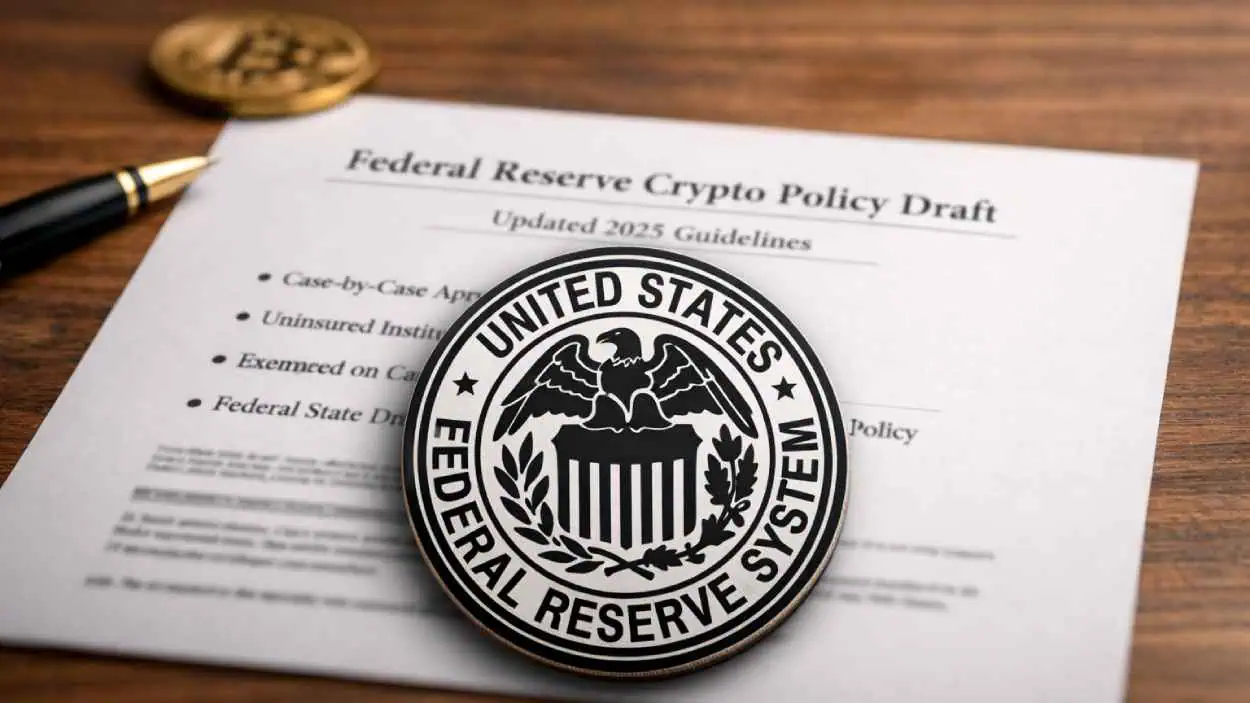







The Federal Reserve has taken a big step back from its previously cautious stance on crypto by withdrawing a 2023 policy that limited banks from engaging in digital asset services.
Key Takeaways
- The Federal Reserve has rescinded its 2023 policy statement that limited crypto activities for state member banks, especially uninsured institutions.
- New 2025 guidance allows uninsured banks to apply for permission to engage in crypto and other novel activities on a case-by-case basis.
- The shift is part of a broader trend of growing acceptance for digital assets among US regulators.
- Crypto-friendly Custodia Bank, previously denied a Fed master account under the 2023 guidance, may now find a clearer path to participation.
What Happened?
In a significant policy reversal, the Federal Reserve withdrew a 2023 statement that had discouraged state-chartered banks from pursuing crypto-related activities. The updated 2025 guidance introduces a more flexible, case-by-case approval process for uninsured state member banks, signaling a more open regulatory stance.
JUST IN: 🇺🇸 Federal Reserve withdraws 2023 policy, now allowing uninsured banks to engage in crypto activities.
— Watcher.Guru (@WatcherGuru) December 17, 2025
Fed Withdraws 2023 Guidance Curbing Crypto Access
The 2023 policy had placed tight restrictions on “novel” banking activities, especially those involving cryptocurrencies. It created a strong presumption against allowing state member banks to engage in digital asset services unless such activities were already permitted for national banks. This had effectively shut the door on many innovative fintech strategies, including stablecoin issuance or placing crypto on bank balance sheets.
Under the new guidance issued this week, uninsured state member banks are no longer automatically barred from such activities. Instead, the Federal Reserve will now review these activities on a case-by-case basis, focusing on safety, soundness, and systemic stability. Insured state banks, however, still face limitations under section 24 of the Federal Deposit Insurance Act.
The Fed emphasized that its understanding of financial innovation has matured since the 2023 policy was issued. In its statement, the Board said, “The financial system and the Board’s understanding of innovative products and services have evolved,” rendering the previous guidance outdated.
Pushback Within the Fed
While the shift was welcomed by some, it was not a unanimous decision. Federal Reserve Governor Michael Barr dissented, warning that the new policy could create uneven playing fields among banks and encourage regulatory arbitrage.
Barr said in his official statement:
Barr’s dissent highlights an ongoing debate within US financial oversight about how to balance innovation with systemic risk. Notably, he had supported the original 2023 policy and argued for consistent treatment across banking institutions.

Custodia Bank Back in the Spotlight
The new guidance has important implications for Custodia Bank, a Wyoming-based crypto-focused financial institution founded by Caitlin Long. Custodia was previously denied access to a Federal Reserve master account, partly because of the now-rescinded 2023 guidance.
Custodia operates as a special purpose depository institution (SPDI) and is not federally insured. It holds 100 percent reserves and was built to provide crypto banking services within regulatory boundaries. Long reacted positively to the Fed’s move, noting that the guidance used to deny Custodia’s access to the Fed’s core systems was not even in place when her application was rejected.
In a social media post, she wrote:
Regulatory Shift Amid Political and Market Pressure
This policy reversal is part of a broader regulatory recalibration in the US. The Fed had already shuttered its 2023 crypto supervision program earlier this year and joined forces with the OCC and FDIC to provide new digital asset safeguarding frameworks.
Fed Vice Chair for Supervision Michelle Bowman said the new policy helps ensure the US banking system remains modern and competitive. She said:
CoinLaw’s Takeaway
I think this shift is long overdue. In my experience watching regulatory policy closely, the 2023 guidance felt like it was built more out of fear than insight. The crypto market has matured a lot since the FTX collapse, and it’s clear that innovation can’t be locked out of the banking system forever. With the Fed now willing to look at each case based on actual risk and readiness, banks like Custodia finally have a fighting chance to offer real solutions. This isn’t about turning banks into crypto casinos. It’s about enabling real, regulated innovation that benefits customers and strengthens the system. I found Bowman’s words refreshing, and frankly, a big step forward for US fintech.