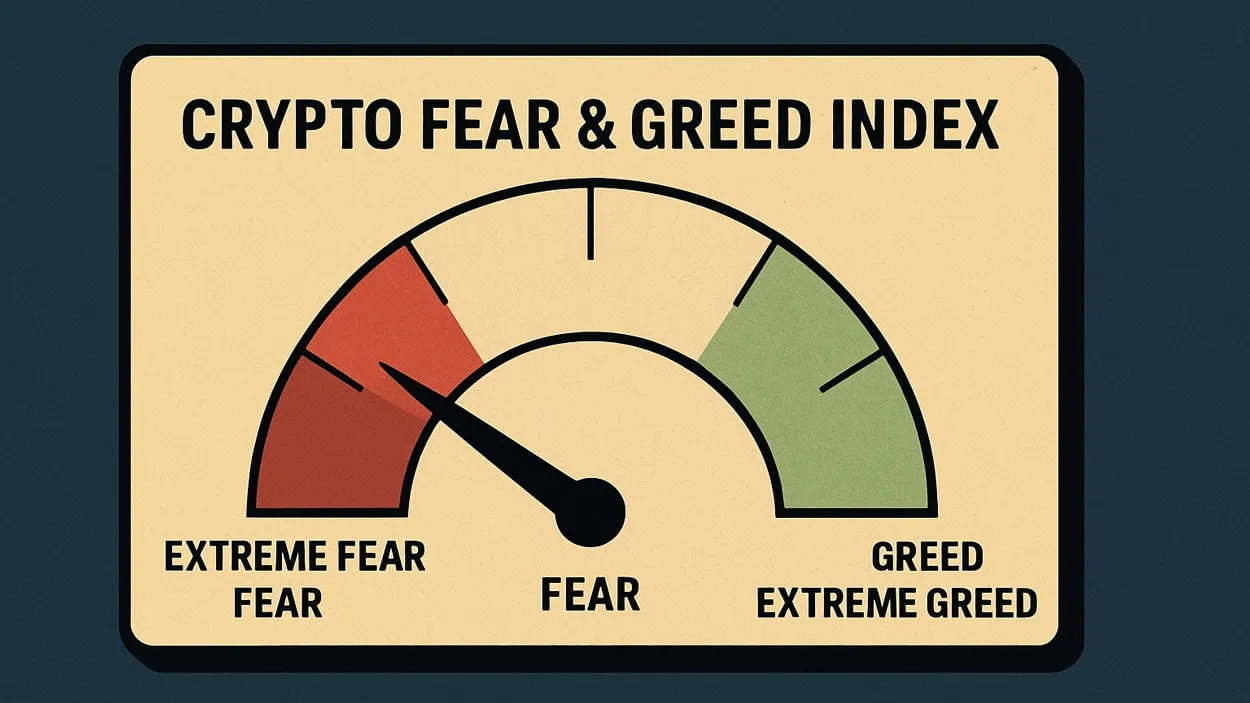







When the gauge of the “fear and greed” index turns to the lower side of the spectrum for longer than one would hope, fear and uncertainty take hold. Portfolios bleed red, headlines spell doom, and the gut feeling tells you to run. But the history whispers a different story. Those moments of maximum terror, when everyone else is capitulating, have occasionally proven to be wealth generators for the disciplined few.
So, in this article, let’s discuss this sentiment index beyond its evocative labels and unpack whether the contrarian strategy can be the one worth considering in the current market conditions.
The Fear-Greed Scale of Market Sentiment
Markets, especially those as volatile as crypto, aren’t moved by fundamentals and balance sheets alone. They’re driven just as much by participants’ psychology, the collective emotional pulse of everyone holding, buying, or desperately selling. ‘Market sentiment’ is essentially the generalized aggregate mood of investors toward an asset at any given moment.
The Crypto Fear & Greed Index serves as a quantitative tool for measuring this otherwise elusive emotion. The index aggregates multiple data points, including volatility levels, market momentum, social media activity, surveys of investor sentiment, Bitcoin’s dominance over altcoins, and broader market trends.
As is often the case, this tool’s greatest utility lies at its extremes. The index functions as a contrarian indicator, meaning its most valuable signal comes when everyone else is feeling the same thing at maximum intensity. Whether the fear or greed side is overwhelming, it might be telling you to pay attention.
What the Index Really Measures
It is worth spelling out that the Fear & Greed Index measures current sentiment, not future price. It is not a crystal ball predicting where Bitcoin’s heading next week or next month. The index pulls data from multiple sources to create this snapshot. Through sentiment analysis and data aggregation, it tries to process market metrics into a single readable number. The index provides context for decision-making, not a simple command to buy or sell.

“Extreme Fear”: Opportunity vs. Trap
An “Extreme Fear” reading on the index, typically anything below 25, signals maximum panic. This is when investors are capitulating, when the selling feels like it might never stop. It also indicates a market that’s oversold based on emotion rather than fundamentals, which can create genuine pricing inefficiencies for those willing to look past the terror.
That said, the sentiment can stay in the “fear” side of the spectrum for weeks or even months. Prices can always go lower than you think possible. Just as it does not call for immediate capitulation, it is not an unmistakable buy signal either.
What is a Strategic Opportunity, Then?
When an Extreme Fear reading appears alongside certain other conditions, your buy thesis gets significantly stronger. Look for a sharp, high-volume price drop; a slow grind suggests fundamental erosion, but sudden changes are more indicative of panic selling. Check whether negative media coverage has reached a fever pitch, amplifying emotional narratives over rational analysis. Scan social media for widespread despair; when platforms like X and Reddit are full of capitulation posts, sentiment has likely bottomed out.
Most importantly, examine whether there are obvious, new catastrophic fundamentals at play. If there’s no core protocol failure, no new existential threat, then the fear may be disconnected from reality.
Speaking of which, on-chain metrics can serve as confidence builders here. A glance at the MVRV Z-Score or Exchange Netflow data can confirm that the sentiment-price disconnect is real. The focus should be on that disconnect itself, the gap between how people feel and what’s actually happening beneath the surface.

When Fear is Justified
Again, not every moment of extreme fear represents an opportunity. Sometimes that fear is well substantiated.
Consider a prolonged, grinding bear market that just won’t end, a “death by a thousand cuts.” There will be no dramatic capitulation moments; instead, prices erode slowly while interest fades and fundamentals quietly deteriorate. Or think about black swan events with unresolved systemic implications. When a major exchange collapses, and contagion risk remains unclear, or when a fundamental breakdown in the protocol itself emerges, fear is appropriate.
The key differentiator here is the nature of this sentiment itself. Panic-driven selling based on emotion while fundamentals remain intact is a potential opportunity. Fear rooted in genuine loss of faith due to systemic issues is another case entirely. Being able to distinguish between these scenarios is what separates disciplined contrarian investing from catching falling knives.
Actionable Strategies from Disciplined Investor’s Playbook
Knowing what to look for matters, but knowing what to do matters more. Let’s shift from theory to practice with concrete methods that enforce discipline and remove emotion from your decision-making.
Dollar-Cost Averaging (DCA)
For most investors facing a fearful market, DCA stands as the premier strategy. By automating purchases at regular intervals, you buy a fixed dollar amount regardless of price with no influence of emotion whatsoever. In a bear market, you’re systematically accumulating through the entire bottom zone without needing to pinpoint the exact low. In a temporary pullback, you are sticking to your strategy and accumulating when others panic.
Staggered Entry for Tactical Allocation
If you have a lump sum ready to deploy rather than a periodic cash flow, consider a staggered entry approach. Instead of going all-in at once, divide your capital into tranches, like 3–5 separate portions.
Then you can use specific Fear & Greed Index thresholds as triggers. For instance, deploy your first tranche when the index hits 20, your second at 15, your third at 10, and hold remaining tranches in reserve for further deterioration or eventual deployment at your discretion based on developing conditions.
This transforms the index from an abstract indicator into a concrete action trigger. It provides a systematic alternative to the all-or-nothing gamble of “calling the bottom.”
Risk Management in Adverse Conditions
With a bear market on the horizon, whether it happens or not, any capital you deploy during extreme fear must be capital you can genuinely afford to lose for years. Bitcoin’s volatility means your “extreme fear” purchase could drop another 30% before recovery begins. To manage that risk, there are several critical rules you need to follow.
Position Sizing and Portfolio Hygiene
The “fear buys” should still be a part of a pre-determined allocation framework. A reasonable approach suggests never allocating more than 5–10% of your total risk capital for speculative accumulation during any single buying campaign. This ensures that even if your timing proves early and prices drop further, you haven’t compromised your overall financial position.
After a crypto purchase, prioritize secure self-custody immediately. Transfer your Bitcoin to a hardware wallet you control. Alternatively, buy Bitcoin on ChangeHero to have it delivered straight to the crypto wallet address you specify.
Psychology of Waiting and Watching
Prepare yourself for the mental challenge ahead: remember, prices may well fall further after your purchase. This doesn’t mean your strategy failed just yet.
The goal for such entries is never to catch the absolute bottom; it’s a fool’s errand that even professional traders rarely achieve. Achieving a superior average cost over time is a much more realistic goal. When you buy in fear while others are selling, you’re implementing that goal regardless of short-term price action afterward. Embrace this mindset upfront, and you’ll minimize regret while maintaining your long-term perspective.
Conclusion and Long-Term Perspective
At its foundation, Bitcoin represents a long-term store of value and a hedge against monetary debasement. The protocol doesn’t change because market sentiment shifts; the scarcity doesn’t evaporate because traders panic. Buying during extreme fear is a strategic acquisition of a long-duration asset at what history suggests is a discount. The contrarian approach demands calm when others panic and action when others freeze. That being said, it is worth keeping in mind it’s an approach, not a ticket; an opportunity, not a guarantee. Besides, markets cycle through fear and greed, but for those who maintain perspective and discipline, these cycles can be navigated profitably.