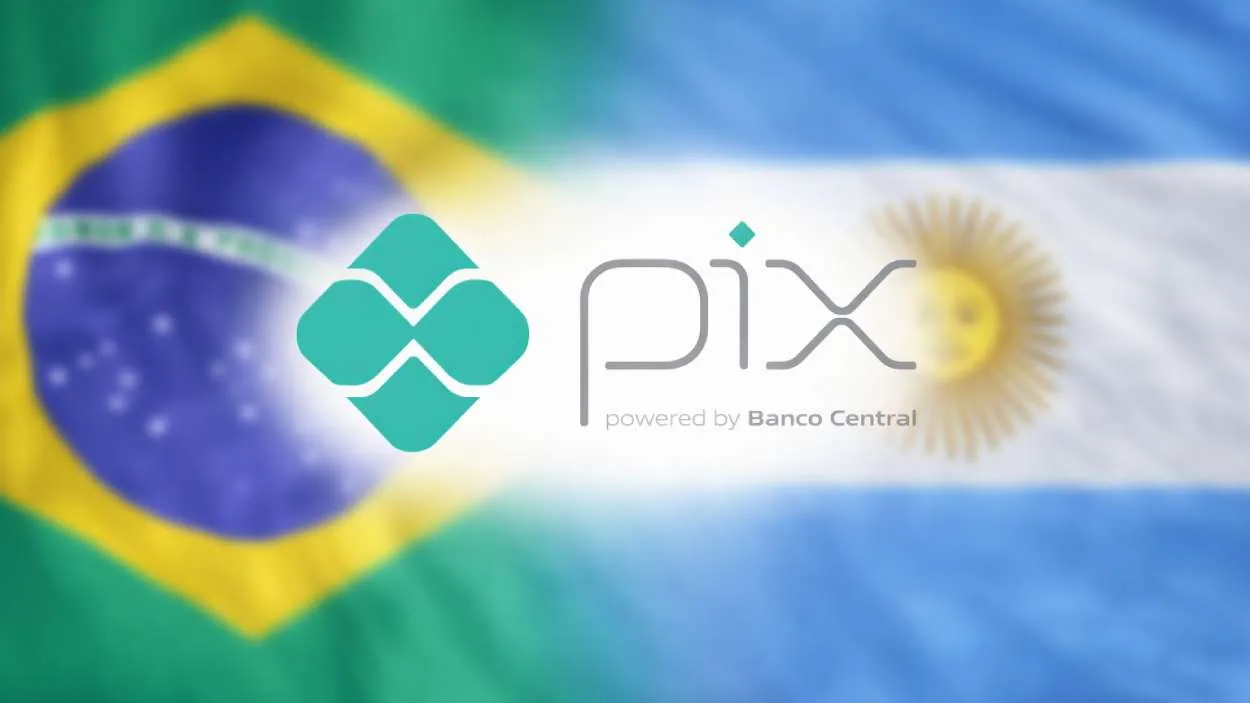






Brazil has expanded its popular Pix instant payment system to Argentina, allowing Brazilians living in the country to make fast digital payments while strengthening links between two of Latin America’s largest crypto markets.
Key Takeaways
- Brazil’s central bank has expanded the Pix instant payment system to Argentina for Brazilian users living there.
- The service allows instant payments, merchant purchases, and crypto platform funding through Pix.
- Argentina leads Latin America in crypto adoption per capita, while Brazil leads in total crypto value received.
- The move is seen as a step toward regional financial integration and broader cross border payment systems.
What Happened?
Brazil’s central bank has expanded its widely used Pix digital payment platform to Argentina, enabling Brazilians living in the country to make instant payments, purchase goods and services, and send money across borders. The feature is being introduced with support from financial institutions including Banco do Brasil and its Argentine unit Banco Patagonia.
The rollout marks the first international expansion of Pix since the instant payment system launched in Brazil in 2020 and signals a broader push toward regional financial integration.
🇧🇷 LATEST: Banco Central do Brasil expands its Pix instant payment system to Argentina, allowing Brazilians to pay for goods and send money across both countries. pic.twitter.com/VAIT4M24UZ
— Cointelegraph (@Cointelegraph) March 9, 2026
Pix Expands Beyond Brazil
Pix has quickly become the most widely used payment system in Brazil, with more than 170 million users and support from around 900 financial institutions. The system allows users to send and receive payments instantly at any time of day without fees for individuals.
With the new expansion, Brazilian users in Argentina can pay merchants by scanning a QR code through their banking app. The transaction is processed instantly while the currency conversion from Brazilian reais to Argentine pesos happens automatically in the background.
The Argentine merchant receives payment in pesos while the Brazilian customer is charged in reais. Banco do Brasil manages the underlying transaction process including the currency conversion and any applicable taxes.
Felipe Prince, vice president for Internal Controls and Risk Management at Banco do Brasil, said the move highlights the bank’s focus on payment innovation.
Oswaldo Parre, chief executive officer of Banco Patagonia, described the initiative as an important step toward greater financial integration across the region.
Strong Link to Cryptocurrency Platforms
Pix has also become a key gateway for cryptocurrency adoption in Brazil. Major crypto platforms operating in the country support the payment system as a fiat on ramp.
These include Binance Pay, Crypto.com, Mercado Bitcoin, Kraken, and the Lemon crypto app, which allow users to fund their accounts using Pix transfers.
According to Lemon’s State of the Crypto Industry in Latin America 2025 report, Argentina currently leads the region in cryptocurrency adoption per capita while Brazil ranks first in terms of total crypto value received.
The report also highlights rapid growth in Argentina’s crypto market. The country now has roughly four times more crypto users than during the 2021 market cycle.
In 2025 alone, Argentina recorded 5.4 million crypto app downloads, with more than 90 percent linked to wallets that implemented Pix payments in Brazil.

Inflation and Economic Shifts Drive Crypto Use
Economic conditions in Argentina have also played a role in the rapid rise of digital assets. High inflation has pushed many residents toward cryptocurrencies as an alternative store of value and payment tool.
While inflation has begun to ease, the Argentine peso still recorded an annual inflation rate of 37 percent in 2025, according to the Lemon report. This marked a significant improvement compared with the previous year but remains relatively high.
Argentina has also recently removed strict currency controls, allowing residents to buy and sell US dollars on the open market. Previously, tight restrictions created a large black market for US dollars and dollar backed stablecoins.
These policy changes have opened the door for new crypto use cases beyond savings and remittances, including everyday payments and financial services.
Plans for Further Global Expansion
Banco do Brasil has indicated that the Pix expansion into Argentina may be only the beginning. The bank is currently evaluating whether the payment feature could be extended to other regions with large Brazilian communities, including parts of the Americas, Europe, and Asia.
Brazilian authorities are also closely monitoring how the system performs outside the country before considering broader international deployments.
If successful, Pix could become a model for cross-border payment infrastructure across Latin America, potentially reducing reliance on traditional banking networks and lowering transaction costs across the region.
CoinLaw’s Takeaway
In my experience following fintech innovation, Pix is one of the most successful payment systems created by a central bank in recent years. Its expansion to Argentina shows how a strong domestic payment network can evolve into a regional financial tool.
I believe this move could quietly accelerate crypto adoption across Latin America. When people can move money instantly and cheaply into exchanges, the barrier to using digital assets becomes much lower. If Pix continues expanding to more countries, it may reshape how payments and crypto funding work across the region.