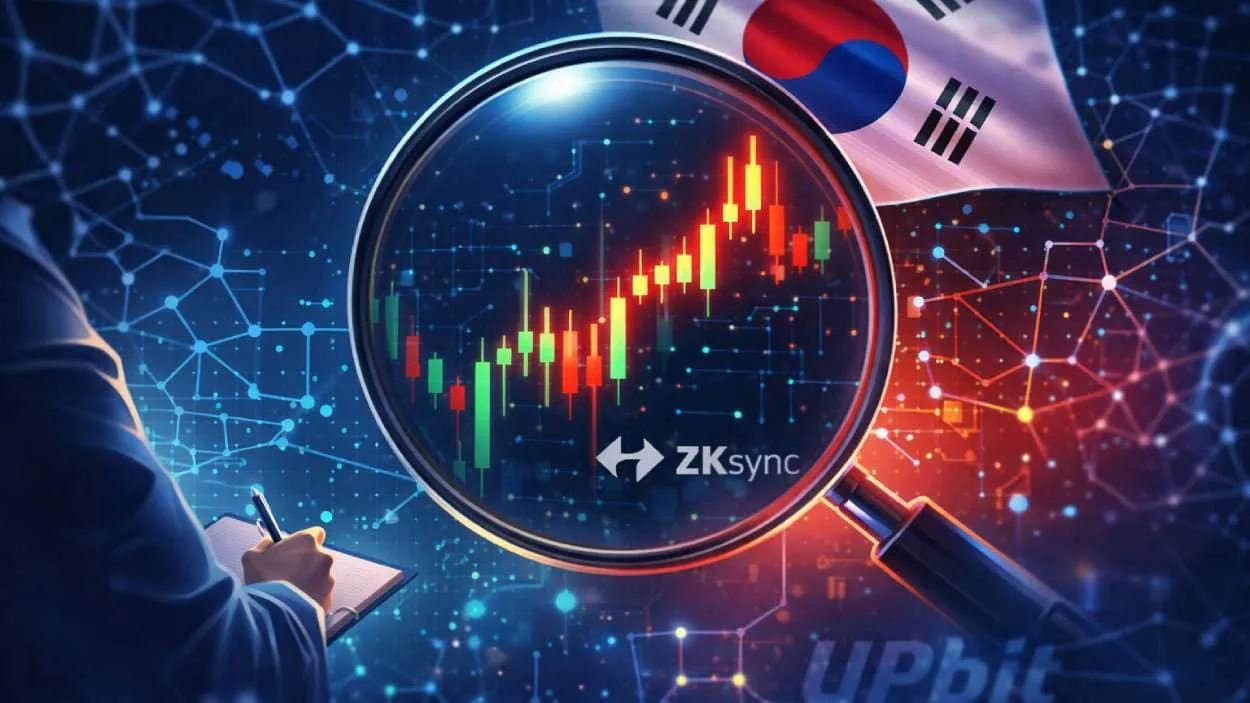







South Korean regulators have launched a market manipulation probe into the dramatic 1000 percent price surge of ZKsync on the Upbit exchange.
Key Takeaways
- ZKsync token spiked nearly 1000 percent on Upbit during a brief window on February 1, triggering suspicions of price manipulation.
- South Korea’s Financial Supervisory Service (FSS) is conducting a preliminary investigation that may escalate to formal legal action.
- Blockchain analysis showed coordinated buying from inactive wallets just before a system maintenance window.
- If manipulation is proven, violators could face jail time and heavy fines under South Korea’s Virtual Asset User Protection Act.
What Happened?
On February 1, ZKsync’s token price soared from about $0.42 to $4.57 on Upbit during a short system maintenance period, before dropping back below $0.51 within hours. The massive spike of nearly 1000 percent drew immediate attention from traders and regulators, especially as global exchanges like Binance and Coinbase only saw modest price movements in comparison.
South Korea’s Financial Supervisory Service quickly responded, launching a preliminary investigation through its Virtual Asset Investigation Bureau to analyze trading behavior and determine whether coordinated manipulation occurred.
Korean regulators open probe into ZKsync price ‘manipulation’ after 970% surge on Upbithttps://t.co/ab8LiueOAZ
— DL News (@dlnews) February 4, 2026
ZKsync Price Spike Triggers Regulatory Scrutiny
South Korea’s Financial Supervisory Service (FSS) confirmed on February 3 that it was reviewing suspicious activity involving ZKsync trades on Upbit, the country’s largest crypto exchange.
According to officials, the incident occurred during Upbit’s scheduled maintenance window, when typical market liquidity is low. Investigators are focusing on potential collusion, spoofing, or pump-and-dump tactics that may have triggered the extreme price swing.
Blockchain forensic analysis revealed that around 15 previously inactive wallet addresses purchased over 4.2 million ZK tokens in the 30 minutes leading up to the maintenance window. Once the price peaked, the same wallets offloaded tokens, realizing profits estimated around $18.7 million.
Key Metrics from February 1:
- Upbit: 987% price increase, 4,200% volume spike, 6-hour recovery.
- Binance: 42% price increase, 180% volume spike.
- Coinbase: 38% price increase, 150% volume spike.
- Bybit: 51% price increase, 210% volume spike.
These stark discrepancies between Upbit and other platforms raised red flags among regulators and market analysts.
Legal and Regulatory Context
South Korea has been tightening its grip on cryptocurrency trading since the Virtual Asset User Protection Act took effect in 2024. The law enables regulators to:
- Enforce real-time monitoring of all crypto transactions.
- Mandate reporting of suspicious patterns by registered exchanges.
- Impose criminal penalties and fines up to five times the illicit profits.
Jin Hyeon-su, a managing partner at law firm Decent Law, noted that coordinated trading behavior and timing around maintenance “likely constitutes price manipulation, collusive trading, and unfair trading.” Violators under the law can face over a year in jail plus hefty fines.
The FSS said its review could evolve into a formal investigation based on the severity of findings. If so, this would be another step in South Korea’s ongoing crackdown on altcoin price rigging, following a recent case where a crypto CEO was jailed for similar offenses on Bithumb.

Upbit’s Track Record Adds Weight
Upbit, operated by Dunamu Inc., handles roughly 80 percent of crypto trades in South Korea. The exchange has previously faced investigations, including a high-profile 2018 fraud probe. The ZKsync event has reignited questions about exchange transparency and infrastructure vulnerabilities, especially during maintenance windows.
Meanwhile, regulators are also concerned whether Upbit insiders had prior knowledge of trading activity or the maintenance period’s effect on liquidity, potentially aiding manipulation.
Global Implications for Crypto Oversight
This case adds to the global conversation on digital asset regulation. Similar enforcement trends are emerging in the US, where the SEC has filed over 24 manipulation cases since 2023, and in Europe under the MiCA framework.
The immediate impact includes:
- Increased risk premiums on Korean-listed tokens.
- Stricter compliance expectations for exchanges.
- Potential delays in withdrawals as exchanges reevaluate internal controls.
Despite short-term volatility, experts say such actions boost investor trust in the long run and pave the way for greater institutional involvement in crypto markets.
CoinLaw’s Takeaway
I’ve covered countless crypto investigations, but this one hits hard. When a token spikes 1000 percent in a few hours while others barely move, something smells off. I find the timing around Upbit’s maintenance incredibly suspicious. In my experience, true market growth doesn’t happen in the shadows of downtime.
This case reminds us all that crypto still has a manipulation problem, especially on centralized platforms. I’m glad regulators are using forensic blockchain data to trace the wallets behind these moves. It’s about time we held manipulators accountable, not just for fairness but to build the future of crypto on trust, not tricks.