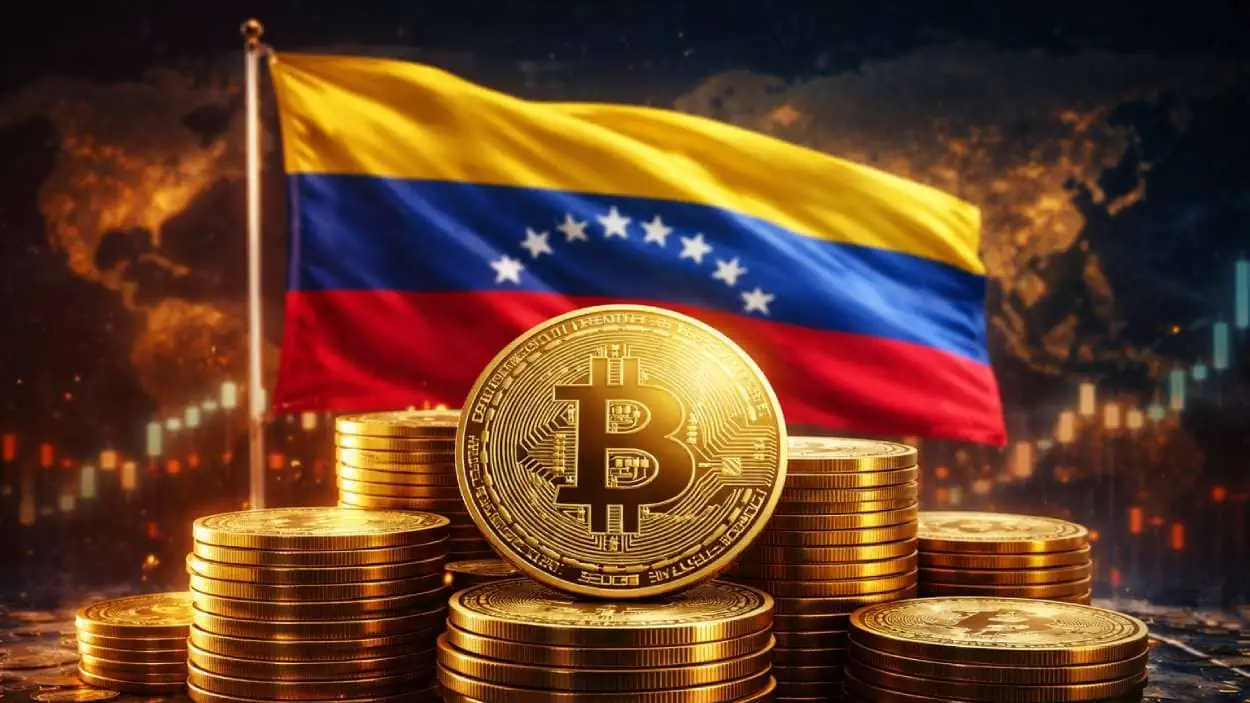







A vast Bitcoin reserve allegedly accumulated by Venezuela has come to light following the arrest of President Nicolás Maduro, sparking fresh debate over digital asset control, sanctions, and global market stability.
Key Takeaways
- Venezuela is believed to hold between 600,000 and 660,000 BTC, worth approximately $60 to $67 billion, making it one of the largest Bitcoin reserves globally.
- The stash was built through gold sales, oil-for-Tether transactions, and seized mining operations as a way to evade international sanctions.
- U.S. authorities may freeze the Bitcoin, integrate it into a strategic reserve, or liquidate it, with a freeze seen as the most likely and least disruptive option.
- If locked up, this reserve could remove 3 percent of Bitcoin’s supply from circulation, potentially supporting higher prices long-term.
What Happened?
New intelligence assessments have revealed that Venezuela quietly amassed a massive Bitcoin stockpile, likely totaling between 600,000 and 660,000 BTC. This was uncovered after U.S. forces captured President Nicolás Maduro in January 2026. The strategic reserve, hidden for years, now places Venezuela among the top Bitcoin holders worldwide, alongside institutions like BlackRock and MicroStrategy.
Venezuela: The $60B+ Bitcoin “Shadow Reserve”
— Serenity (@aleabitoreddit) January 4, 2026
Markets focus on the $17T+ in Oil that Venezuela owns.
But what they don’t know is that Venezuela one of the largest active $BTC holders in the world.
Similar in scale to both $MSTR and Blackrock.
Here’s how this impacts markets… pic.twitter.com/lf7CMUgtUB
Venezuela’s Covert Bitcoin Accumulation
Venezuela’s accumulation began around 2018, in response to increasing international sanctions. The strategy reportedly included:
- Liquidating $2 billion worth of gold from the Orinoco Mining Arc and converting it to Bitcoin at around $5,000 per coin. This alone would now be worth $36 billion.
- Accepting crude oil payments in USDT through state oil company PDVSA between 2023 and 2025, then converting them to Bitcoin to avoid U.S. dollar exposure.
- Seizing domestic mining operations, consolidating computing power and BTC output from private hands into state control.
All told, the stash accounts for roughly 3 percent of Bitcoin’s current circulating supply, a massive concentration of digital wealth by any measure.
Geopolitical Risk Meets Crypto Markets
Germany’s 2024 sale of 50,000 BTC triggered a 15 to 20 percent price correction. By comparison, Venezuela’s holding is twelve times larger, raising serious questions about potential market shocks.
The U.S. now faces several options regarding the reserve:
- Freezing the assets, locking them up for years in legal disputes and effectively removing them from the market.
- Holding the Bitcoin as a strategic reserve, a move aligned with growing institutional interest in BTC.
- Selling via auctions, though this is widely seen as unlikely due to the potential for massive price disruptions.
Freezing or warehousing the coins could lock them up for 5 to 10 years, significantly reducing available liquidity and potentially supporting Bitcoin’s price over the long term.

Key Uncertainties: Private Keys and Legal Access
Despite the intelligence revelations, a major technical hurdle remains: who holds the private keys? Without them, the Bitcoin is unspendable. If key shards are lost or distributed among Maduro loyalists, some or all of the stash could be permanently frozen on the blockchain.
Until access is secured, neither the U.S. government nor any transitional Venezuelan authority can control, move, or sell the assets.
Venezuela’s Crypto Ecosystem on the Rise
While the state-level hoard captures headlines, grassroots crypto adoption in Venezuela has also surged:
- 10 percent of grocery payments were reportedly made in crypto by late 2025.
- Nearly 40 percent of peer-to-peer transactions used crypto assets.
- Stablecoin remittances made up almost 10 percent of inflows into the country.
Venezuela ranked 17th globally in crypto adoption, according to Chainalysis, highlighting a vibrant ecosystem developing in parallel to state strategies.
What a New Government Might Do?
With Maduro removed, a transitional government could take a different approach to crypto policy. Ideas under discussion include:
- Relaxing mining restrictions.
- Creating regulatory clarity for crypto payments.
- Pursuing access to the alleged Bitcoin stash to support reconstruction or offer collateral for international aid.
However, any plans hinge on recovering wallet access and achieving formal institutional control over state agencies and digital assets.
CoinLaw’s Takeaway
In my experience covering crypto markets, this is one of the most important geopolitical developments in Bitcoin’s history. The fact that a sanctioned regime may have secretly stockpiled such a massive amount of BTC without moving the market shows just how opaque global crypto reserves can be. What really strikes me is the strategic tension now facing the U.S. government.
Freeze it and support prices? Liquidate and risk chaos? Either way, it highlights that Bitcoin is no longer just a retail or institutional play, it’s now a tool of statecraft. I found the private key dilemma especially fascinating. Even with billions on the line, if no one can access the wallets, the coins might as well not exist. This could be bullish for Bitcoin in the long run, but I’ll be watching closely to see if the stash ever moves on-chain.