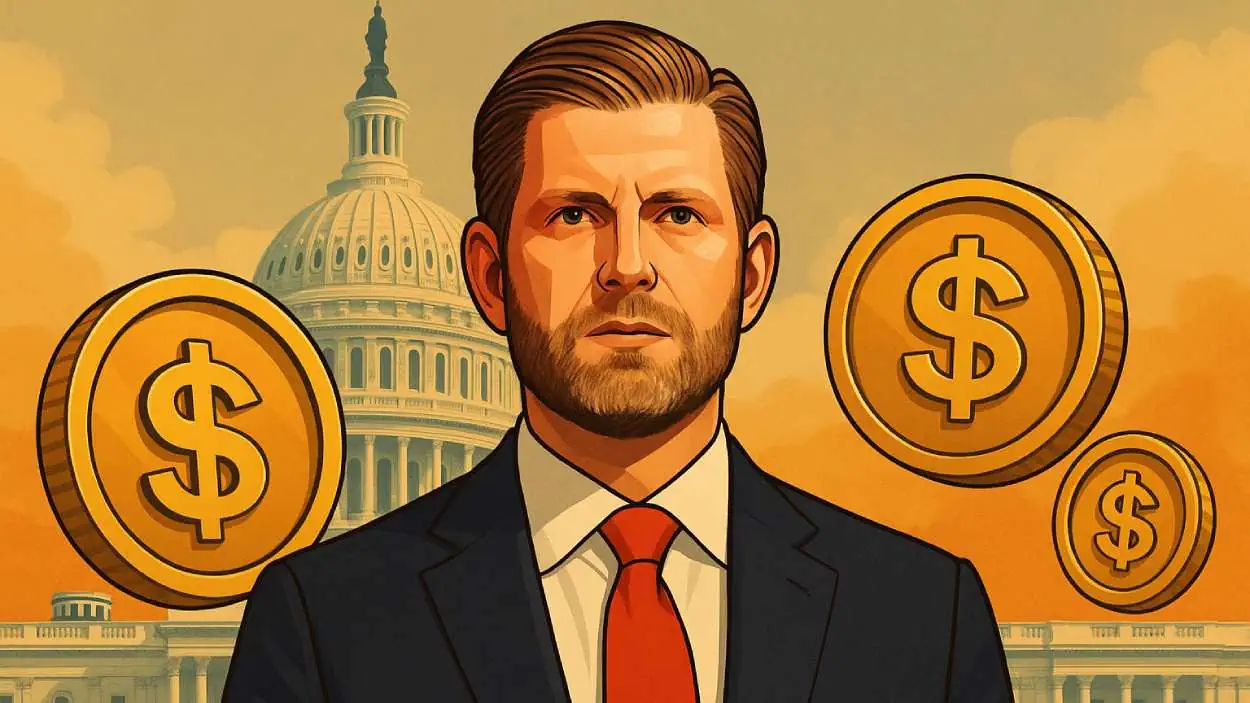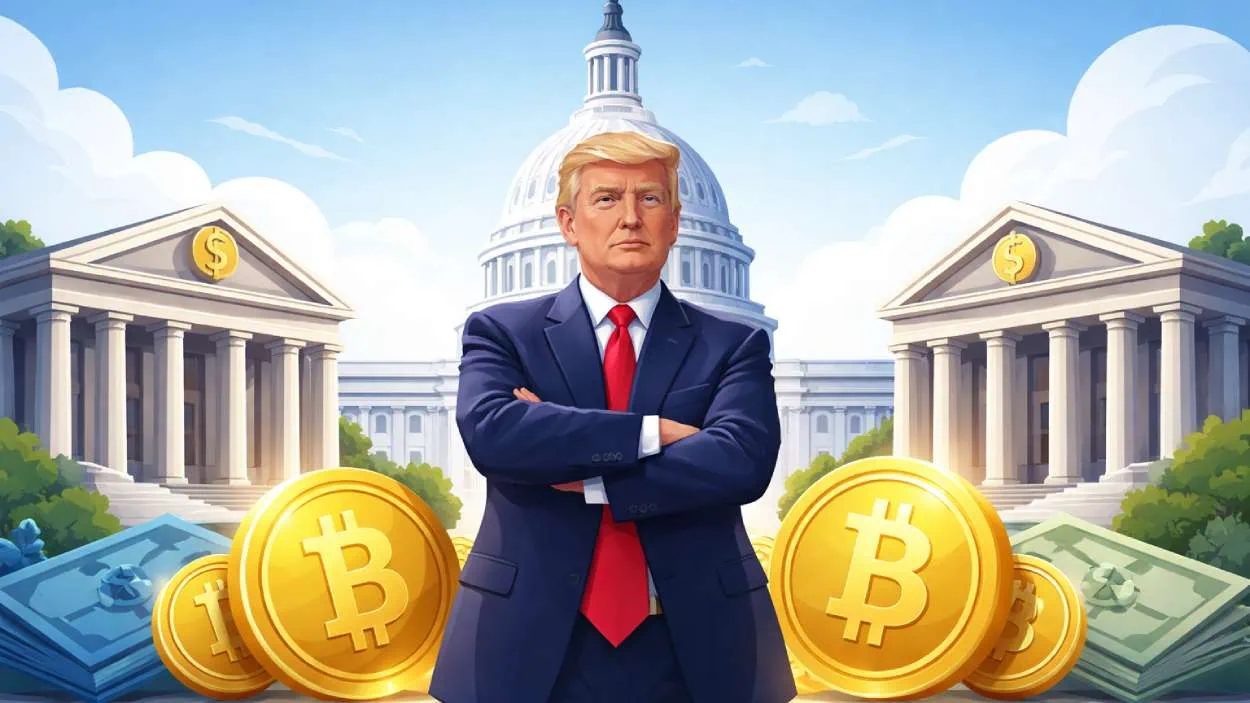







President Donald Trump is urging lawmakers to move forward with a key cryptocurrency market structure bill while accusing banks of trying to weaken his administration’s crypto agenda.
Key Takeaways
- President Donald Trump publicly criticized banks for attempting to undermine the crypto industry and delay the Clarity Act legislation.
- The dispute centers on whether crypto exchanges should be allowed to offer yield on stablecoins held by users.
- Banks warn the move could trigger deposit flight, while crypto companies say users should be able to earn returns on their holdings.
- The Clarity Act remains stalled in the Senate, despite pressure from the White House and ongoing negotiations.
What Happened?
President Donald Trump has taken direct aim at the banking industry as negotiations over a major cryptocurrency bill continue to stall in the United States Senate. In a series of posts on Truth Social, Trump urged lawmakers to quickly pass the Clarity Act, a market structure bill designed to establish clearer regulatory rules for digital assets.
At the center of the dispute is a lobbying battle between banks and crypto companies over whether digital asset exchanges should be allowed to offer yield to customers who hold dollar backed stablecoins.
President Trump blasts banks on Truth Social for holding the Clarity Act “hostage” — warning that delays could hand crypto’s future to China. “The U.S. needs to get Market Structure done, ASAP.” https://t.co/0BHFK91GA4
— CoinDesk (@CoinDesk) March 3, 2026
Trump Accuses Banks of Blocking Crypto Progress
Trump’s remarks represent one of his strongest public criticisms of the traditional banking sector in relation to cryptocurrency policy. In his Truth Social post, he argued that banks should stop interfering with legislation that he believes will strengthen the US crypto sector. Trump said:
He also warned that delays could allow other countries to gain an advantage in the rapidly evolving digital asset sector.
Trump framed the issue partly as a global competition, warning that failure to pass crypto friendly legislation could allow countries such as China to gain the upper hand in digital finance.
Stablecoin Yield Debate Creates Legislative Gridlock
The core conflict revolves around stablecoin yield programs offered by crypto exchanges and platforms.
Stablecoins are digital tokens typically backed by US dollars or other liquid assets. They are widely used in cryptocurrency markets for payments and trading. Under the GENIUS Act, which Trump signed into law last year, stablecoin issuers must fully back their tokens with reserves such as cash or short term government securities.
However, the law does not clearly address whether third party platforms such as crypto exchanges can offer yield to users holding stablecoins.
Banks have pushed lawmakers to add language to the Clarity Act that would explicitly ban these yield programs. They argue that allowing exchanges to offer returns on stablecoin holdings could encourage customers to move funds away from traditional bank deposits, potentially affecting lending activity.
Crypto companies strongly oppose that restriction. Industry leaders say the ability to earn returns on stablecoins provides value to consumers and supports innovation in digital finance.
Trump appeared to support the crypto industry’s position in his post, writing that “Americans should earn more money on their money.”

Negotiations Continue as Senate Timeline Tightens
Despite pressure from the White House, the Clarity Act remains stuck in the Senate.
The legislation previously passed the House of Representatives but has struggled to gain momentum in the upper chamber. A planned markup session in the Senate Banking Committee was postponed earlier this year as lawmakers continued negotiating the bill’s language.
Officials from the White House have been mediating discussions between banking and crypto industry representatives in an attempt to reach a compromise. According to people familiar with the talks, draft language for the legislation continues to circulate among lawmakers.
The administration had initially hoped to reach a deal earlier in the year, but no agreement has yet emerged.
Trump also warned that banks should not attempt to weaken the stablecoin regulatory framework already established under the GENIUS Act.
“The Banks should not be trying to undercut The Genius Act, or hold The Clarity Act hostage,” Trump said.
CoinLaw’s Takeaway
From my perspective, this conflict shows how the crypto industry is moving from the margins into the center of financial policy debates. In my experience covering digital assets, the biggest hurdle for crypto in the United States has always been regulatory uncertainty.
The Clarity Act could become a major turning point if it finally defines the rules for how crypto markets operate. At the same time, I can understand why banks are concerned. If consumers start earning yield through stablecoins instead of traditional deposits, it could reshape parts of the financial system.
Still, I believe the bigger story here is the political shift toward pro crypto policy in Washington. When the President openly sides with the crypto industry in a fight against banks, it signals just how important digital assets have become in the broader economic and political landscape.