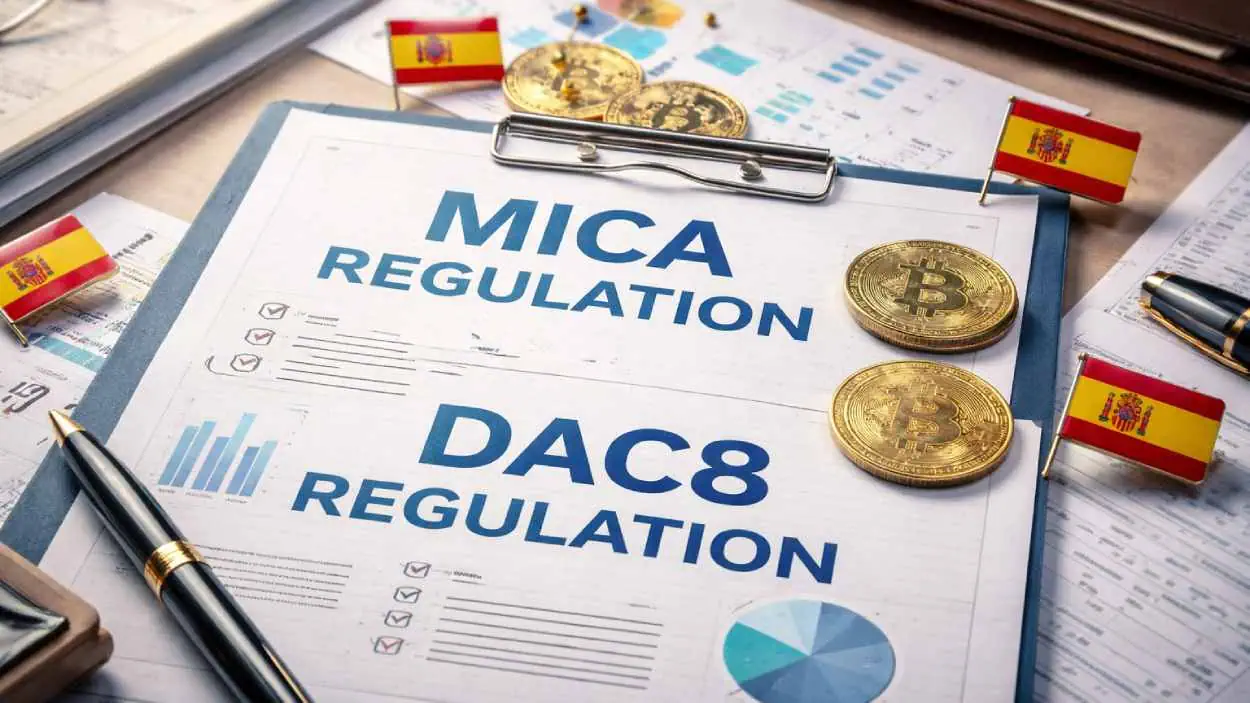







Spain is moving ahead of the curve in the European crypto space by fully implementing the MiCA and DAC8 frameworks by 2026.
Key Takeaways
- Spain will enforce the DAC8 tax reporting rules from January 1, 2026, requiring exchanges to report detailed user data.
- All crypto service providers in Spain must obtain full MiCA authorization by July 1, 2026, or halt operations.
- The CNMV has shortened the transitional period for existing firms, pushing faster compliance compared to other EU countries.
- These frameworks mark a major regulatory overhaul, introducing stricter licensing, consumer protection, and tax transparency.
What Happened?
Spain has officially confirmed it will fully enforce the EU’s Markets in Crypto-Assets Regulation (MiCA) and Directive on Administrative Cooperation (DAC8) by 2026. MiCA, focused on regulating crypto markets, will be mandatory from July 1, 2026, while DAC8, which targets tax transparency, kicks in on January 1, 2026.
💥BREAKING:
— Crypto Rover (@cryptorover) December 24, 2025
🇪🇸 SPAIN TO FULLY ENFORCE CRYPTO REGULATIONS IN 2026, MANDATING FIRMS TO OBTAIN FULL LICENSES AND REPORT USER TRANSACTIONS TO TAX AUTHORITIES. pic.twitter.com/ChJnwbNI9d
Spain Tightens Crypto Rules with MiCA and DAC8
Spain’s proactive stance places it among the first EU countries to set concrete national timelines for the full implementation of these pivotal crypto regulations. The National Securities Market Commission (CNMV) and the Ministry of Economy are driving this change, significantly shortening the transitional period allowed under EU law.
- MiCA’s July 2026 deadline will replace Spain’s existing registry system under the Bank of Spain with a full licensing regime.
- Companies must now comply with strict capital, governance, and consumer protection requirements.
- Over 60 crypto firms currently registered in Spain will have to secure MiCA licenses to continue operations beyond the deadline.
The CNMV has already opened the application process for MiCA authorization. Crypto firms must submit comprehensive documentation, often exceeding 100 pages, outlining governance structures, risk policies, and operational models. Simplified procedures are available only for regulated entities like banks or e-money institutions.
DAC8 Ushers in a New Era of Tax Transparency
DAC8, which takes effect from January 1, 2026, brings automatic tax reporting for crypto exchanges and wallet providers. All user transactions, balances, and fund flows must be reported directly to the Spanish Tax Agency and shared across EU member states.
- The directive ends reliance on user self-reporting via forms like Form 721.
- Spanish authorities will have the power to cross-check tax returns with exchange data, detect inconsistencies, and enforce penalties.
- In extreme cases, the tax agency may freeze or liquidate digital assets to recover unpaid taxes.
While self-custody wallets are outside DAC8’s scope for now, exchanges and custodial platforms face heightened oversight. Even small transactions could trigger reporting obligations due to low thresholds.

Industry Impact and Market Readjustments
Spain’s accelerated approach is prompting legal and technical restructuring across the local and international crypto ecosystem. Firms are investing in advanced compliance infrastructure, including:
- Enhanced Know-Your-Customer (KYC) procedures.
- Standardized formats for transaction data.
- Updated internal controls to meet both MiCA and DAC8 requirements.
The CNMV has made it clear that only entities registered before December 30, 2024, can continue operating through the transitional phase. Those involved in more complex services, like portfolio management or investment advice, must prove operational activity prior to that date.
These reforms are already prompting market consolidation, with many smaller players unlikely to survive the compliance burden. According to sources, only a handful of firms, including BBVA, have already received MiCA authorization in Spain.
CoinLaw’s Takeaway
In my experience covering financial regulation, Spain’s no-nonsense approach sends a powerful message. By tightening timelines and demanding early compliance, regulators are choosing stability and consumer protection over market leniency. I found it especially striking that Spain is willing to risk startup attrition in favor of long-term clarity and security. For users, the message is simple: the days of anonymous, lightly regulated crypto in Spain are over. And for firms, it is a make-or-break moment. Those who adapt quickly will be the ones shaping Spain’s next generation of digital finance.