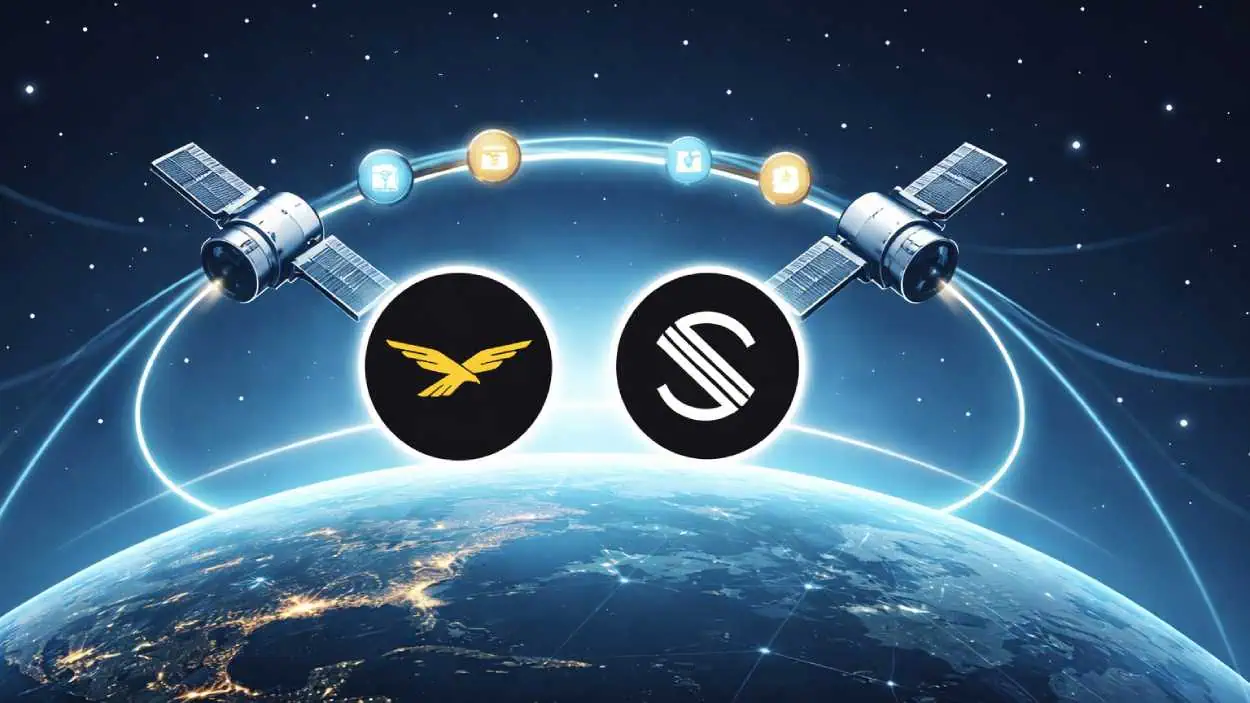







Spacecoin and World Liberty Financial (WLFI) have announced a game-changing partnership to build a satellite-powered decentralized finance (DeFi) and internet ecosystem, promising better connectivity and financial access for underserved communities worldwide.
Key Takeaways
- Spacecoin and WLFI have formed a strategic alliance, integrating WLFI’s USD1 stablecoin into Spacecoin’s decentralized satellite internet network.
- The USD1 token will handle payments and settlements for Spacecoin’s blockchain-powered connectivity services, aiming to serve “off-grid” and remote economies.
- A token swap agreement aligns the long-term interests of both projects, with plans to scale satellite-based DeFi infrastructure globally.
- WLFI’s Trump family backing and Spacecoin’s active satellite launches signal a strong push for real-world utility in decentralized finance.
What Happened?
On January 22, 2026, Spacecoin and WLFI officially announced a strategic partnership. WLFI’s USD1 stablecoin will be integrated into the Spacecoin protocol to support payments and settlements for satellite-based internet services. This initiative marks a major step in fusing blockchain-powered financial services with real-world infrastructure, especially in areas underserved by traditional systems.
🛰️ MAJOR ANNOUNCEMENT 🛰️
— Spacecoin™ 🛰️ (@spacecoin) January 22, 2026
In a move anchored by a token swap with @worldlibertyfi, we’re entering into a strategic partnership to explore new solutions that converge the decentralized technology of finance and satellite internet connectivity.
Together, we will continue… pic.twitter.com/XnTRfdOKUx
Integrating Stablecoins Into Space: A Financial Utility for the Unbanked
The partnership aims to deliver decentralized internet through satellites, combined with a blockchain-based financial layer. WLFI’s USD1, a digital dollar pegged one-to-one to the U.S. dollar, will become the default payment method for users accessing Spacecoin’s satellite internet. This is particularly vital in regions where local currencies are unstable or financial systems are underdeveloped.
WLFI co-founder Zak Folkman described Spacecoin as a project “tackling a real infrastructure problem” and emphasized the importance of long-term utility and execution. He noted that USD1 was created to handle real-world payments and settlements, making it ideal for this type of decentralized physical infrastructure.
Tae Oh, founder of Spacecoin, echoed the sentiment, stating that “true digital freedom requires not only network connectivity but also fair and open financial services.” Their vision is to create a self-sovereign financial network that connects individuals globally without relying on traditional banks or payment processors.
A Shared Vision for Decentralized Infrastructure
This collaboration signals a new chapter in the decentralized physical infrastructure (DePIN) movement. Spacecoin’s model rewards satellite node operators with SPACE tokens while providing connectivity directly from low Earth orbit. By pairing this with WLFI’s DeFi expertise and USD1 stablecoin, the two companies aim to build a “super-infrastructure” that rivals legacy telecom and financial systems.
Key developments include:
- Token Swap Agreement: The swap between WLFI and Spacecoin aligns their financial models, ensuring liquidity and shared growth goals.
- Satellite Deployment: Spacecoin has launched four satellites (CTC-0 and three CTC-1 units), transitioning from concept to active operation in just three years. These were deployed using SpaceX’s Falcon 9 rockets and are already testing inter-satellite communication.
- Binance Alpha Listing: The SPACE token’s debut on Binance Alpha, paired first with WLFI’s USD1, further cements their partnership.
At the upcoming World Liberty Forum in Mar-a-Lago, the projects are expected to unveil more developments. The momentum behind this alliance places both Spacecoin and WLFI at the forefront of blockchain’s integration into real-world services.

CoinLaw’s Takeaway
I find this partnership incredibly exciting. Spacecoin and WLFI are not just playing with buzzwords like DeFi and blockchain. They are building real infrastructure that could genuinely empower people in remote and underserved regions. In my experience, what separates hype from impact in crypto is utility, and this alliance seems to deliver that. By combining satellite internet with stablecoin payments, they’re tackling two of the biggest barriers to global digital inclusion: connectivity and financial access. If they can pull this off, it could be one of the most significant applications of blockchain in years.