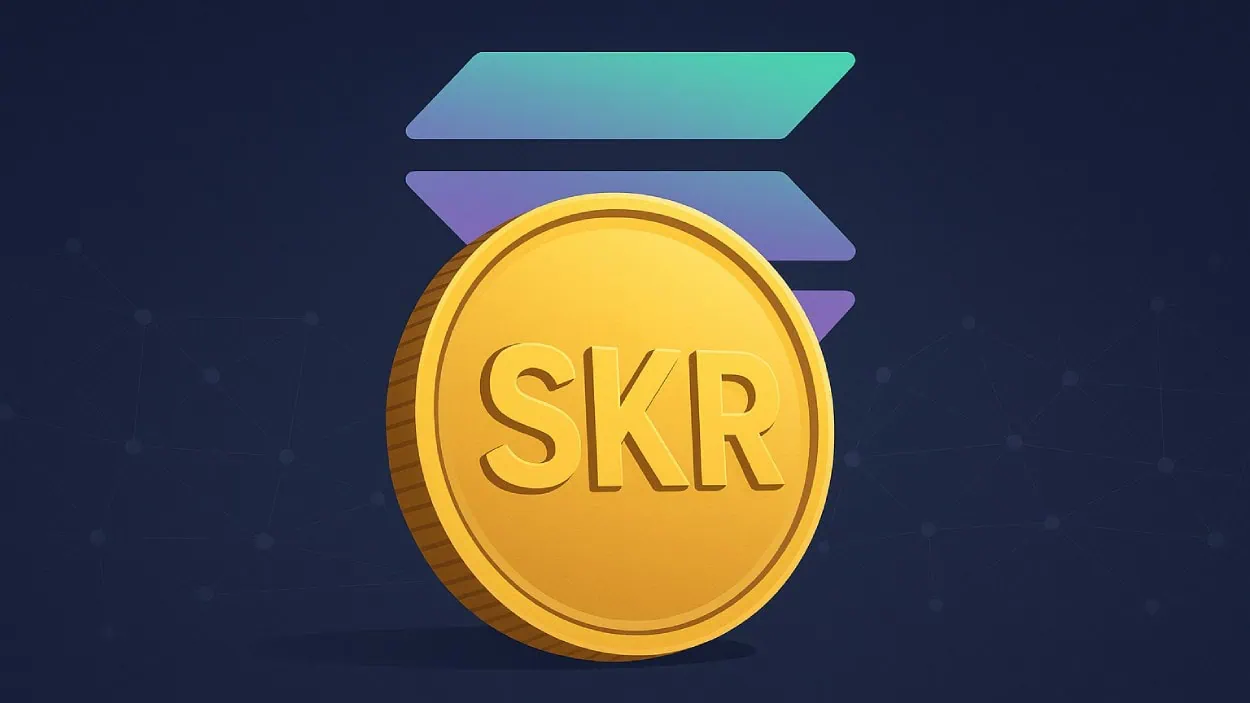







Solana Mobile is preparing to launch its native SKR token in January 2026 as a foundational part of its decentralized mobile ecosystem, aiming to power governance, rewards, and ownership across its growing product line.
Key Takeaways
- SKR token will launch in January 2026 with a total supply of 10 billion tokens.
- 30 percent of tokens will be airdropped to early Seeker phone buyers and active dApp users.
- SKR will support staking with “Guardians” who help moderate the dApp Store and verify devices.
- A hardware vulnerability in the Seeker phone’s chip has raised security concerns, though the attack risk is low.
What Happened?
Solana Mobile has announced the upcoming launch of its SKR token, which will serve as the native asset of its decentralized smartphone ecosystem. This token is designed to reward participation, support application growth, and introduce governance features to the Solana-powered Seeker phone platform.
Seek and you will find.
— Seeker | Solana Mobile (@solanamobile) December 3, 2025
SKR is coming in January 2026 🧵 pic.twitter.com/cwtlp8G8Zf
SKR Tokenomics and Distribution
The SKR token will have a fixed supply of 10 billion tokens, with a distribution model focused on users and ecosystem growth. Here is the planned breakdown:
- 30 percent (3 billion SKR) for airdrops to Seeker users and active Solana dApp participants.
- 25 percent (2.5 billion SKR) for ecosystem growth and partnerships.
- 10 percent (1 billion SKR) for liquidity and launch support.
- 10 percent (1 billion SKR) to a community treasury.
- 15 percent (1.5 billion SKR) reserved for Solana Mobile’s team.
- 10 percent (1 billion SKR) allocated to Solana Labs, the parent company.
SKR will also use a linear inflation model to generate new tokens over time. The initial inflation rate will be 10 percent in year one, decreasing by 25 percent annually until it reaches a stable 2 percent terminal rate. This model is designed to reward early adopters while maintaining long-term sustainability.
More detailed tokenomics and governance mechanisms are expected to be revealed at the Solana Breakpoint conference, scheduled for December 11 to 13.
Seeker Phone, dApp Store, and Guardian Roles
The SKR token is deeply integrated with Solana Mobile’s Seeker phone, which launched in August as the successor to the Saga. Seeker runs Android and offers direct access to onchain apps, aiming to support a full Web3 experience.
A key innovation is Solana Mobile’s decentralized dApp Store, which already features over 100 Solana-based projects. Unlike typical app stores, it operates with community moderation and security protocols, powered in part by the SKR token.
The ecosystem introduces a novel concept of “Guardians” who will:
- Verify device authenticity.
- Moderate dApp submissions.
- Uphold community standards.
Users will be able to stake SKR tokens with Guardians and receive rewards. The first Guardian will be Solana Mobile, followed by Helius Labs, Double Zero, and Triton One.

Security Concerns: Seeker Chip Vulnerability
While excitement around the SKR token grows, researchers from Ledger have flagged a serious vulnerability in the MediaTek Dimensity 7300 chip used in the Seeker phone. Security engineers Charles Kristen and Leo Benito demonstrated that attackers could exploit the chip using electromagnetic pulses during boot, potentially gaining full access to the device.
Although the likelihood of a successful attack is only between 0.1 percent and 1 percent, the process can be repeated rapidly, increasing the chance of compromise. The flaw is hardware-level and unpatchable, as it lies in the chip’s silicon architecture.
MediaTek acknowledged the issue, stating the chip was not designed to defend against electromagnetic pulse threats, which are beyond its standard use cases.
This is not the first time Solana smartphones have faced vulnerabilities. Back in November 2023, CertiK analysts found a critical flaw in the Saga model as well.
CoinLaw’s Takeaway
In my experience, token launches like this only succeed if they solve real problems or deliver real value. The SKR token seems to do both. It’s not just another crypto asset thrown into a phone. It’s designed to incentivize usage, support app developers, and establish community governance on mobile devices in a way we haven’t really seen before.
What excites me most is the integration of SKR into real-world use, from app moderation to device trust. However, the hardware vulnerability is a serious red flag. It’s a reminder that Web3 progress must never come at the cost of basic security. Hopefully, Solana Mobile will take steps to address that before launch.