






Russia’s central bank is preparing to ease crypto restrictions, potentially allowing more citizens to access digital assets amid ongoing Western sanctions.
Key Takeaways
- The Bank of Russia is considering loosening crypto regulations that currently restrict usage to wealthy, highly qualified investors.
- Talks are underway with the Ministry of Finance to revise the “super-qualified investor” criteria, broadening access to ordinary Russians.
- The move is partly driven by Western sanctions, which have limited Russia’s ability to transact using traditional currencies.
- A decision is expected by the end of the year, signaling a major policy shift in Russia’s stance on digital assets.
What Happened?
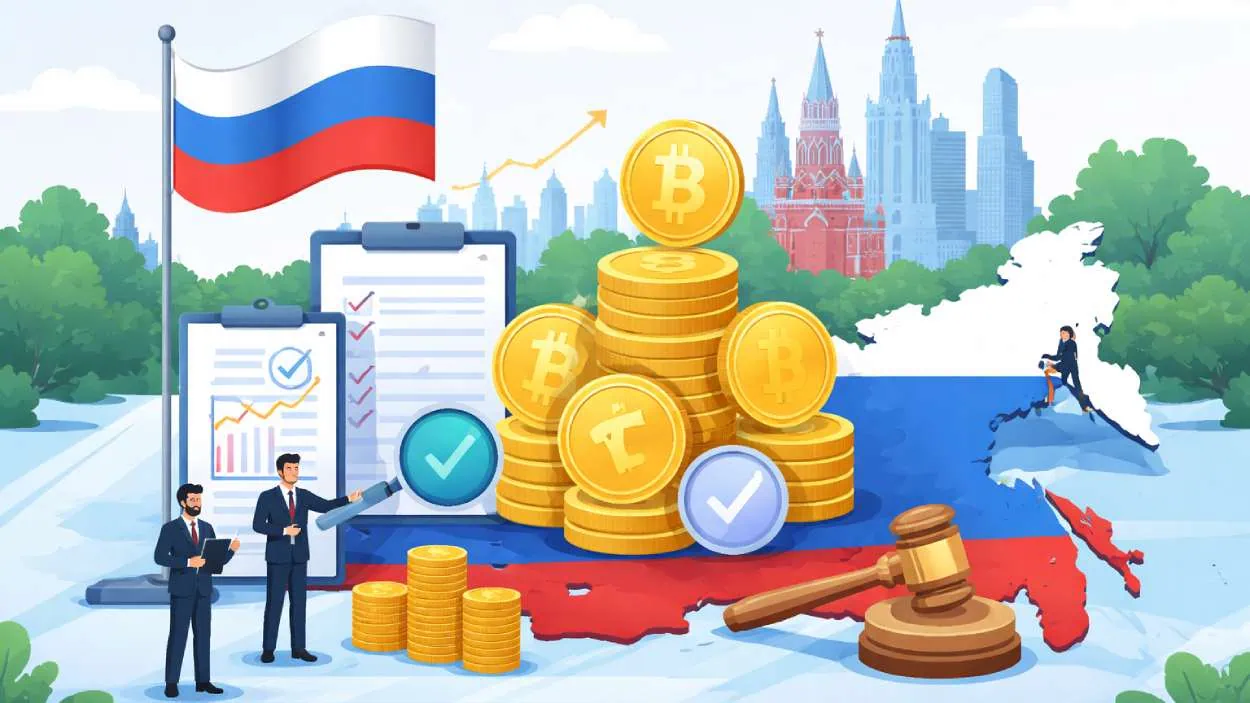
The Bank of Russia has confirmed ongoing discussions with the Ministry of Finance to ease cryptocurrency restrictions. This potential change could mark a turning point in the country’s approach to digital assets, especially as global sanctions complicate traditional financial transactions.
JUST IN: 🇷🇺 Bank of Russia confirms it’s discussing easing cryptocurrency regulations – Cryptopolitan. pic.twitter.com/uneKDSwOen
— Whale Insider (@WhaleInsider) December 2, 2025
Central Bank Reconsiders Strict Crypto Access Rules
Russia’s central bank, long known for its cautious stance on crypto, is now signaling a more open approach. Vladimir Chistyukhin, First Deputy Chairman of the Bank of Russia, said the regulator is considering relaxing the “super-qualified investor” requirement, a classification that currently limits crypto transactions to Russia’s wealthiest citizens.
This status is restricted to individuals with over 100 million rubles in assets or an annual income exceeding 50 million rubles. The strict threshold has made crypto virtually inaccessible to the average Russian.
Chistyukhin acknowledged the need to ease these requirements, especially given the current geopolitical climate. He said:
Sanctions Drive the Shift
Russia’s shifting stance on crypto comes in response to heavy Western sanctions imposed after its invasion of Ukraine in 2022. These sanctions have severely restricted Russia’s access to international financial systems.
By relaxing crypto rules, Russian authorities aim to create alternative payment channels and boost the country’s economic resilience. Chistyukhin specifically tied the regulatory shift to these sanctions, noting the increasing difficulty Russians face in making cross-border payments using traditional currencies.
Recent measures include the European Union’s 19th sanctions package and actions by the US Treasury targeting Russian crypto exchanges such as Garantex Europe. These developments have pushed Russian regulators to reconsider how crypto could serve the national interest.

Gradual Opening of the Crypto Market
The central bank’s softened stance is not new but appears to be accelerating. In March 2023, Russia introduced an “experimental legal regime” that allowed certain businesses to use cryptocurrencies for international transactions.
Under this regime, “super-qualified” investors could legally trade crypto. In October, the central bank extended digital asset access to commercial banks and later proposed letting mutual funds invest in crypto derivatives.
While household investments in crypto remain modest, the central bank no longer sees this as a systemic risk. Instead, it views crypto as a potential “normal instrument” in the financial system.
Ministry of Finance Supports Reform
Deputy Finance Minister Ivan Chebeskov previously hinted at a regulatory overhaul. He stated that the current definition of “highly qualified” investors is under review and that broader access is under consideration.
Both the Ministry of Finance and the Bank of Russia now appear aligned in their efforts to open up the crypto market. Final details are expected to be made public by the end of the year, potentially changing how millions of Russians can interact with digital assets.
CoinLaw’s Takeaway
In my experience watching global crypto adoption unfold, this is a big moment for Russia. The country’s central bank is not just tweaking policy, it’s acknowledging that crypto might be here to stay. For years, access to digital assets was locked behind high wealth barriers. Now, that gate might swing open for everyday Russians. I found it especially telling that the shift is directly tied to sanctions. This is less about tech enthusiasm and more about survival. Still, if these reforms go through, they could ignite a much broader use of crypto across Russia, and possibly set a precedent for other sanctioned nations looking for financial alternatives.