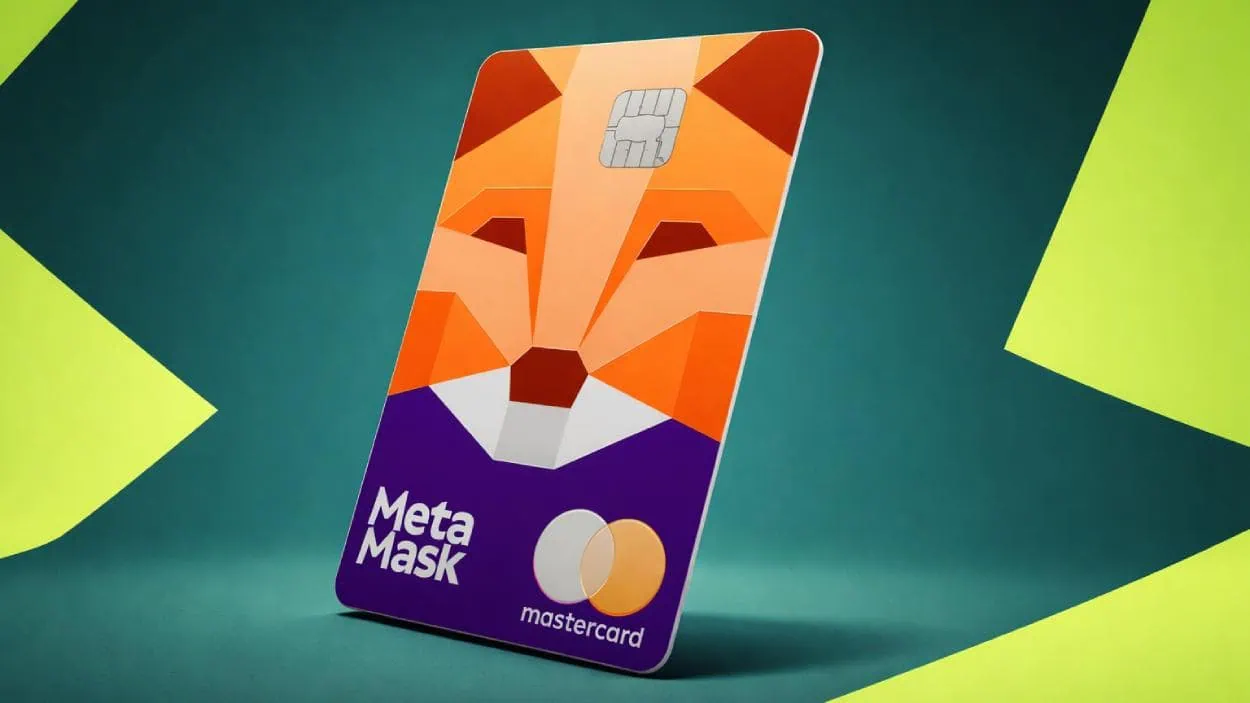







MetaMask has launched a new Mastercard powered payment card across the United States that lets users spend crypto directly from their own wallet, with onchain rewards and broad merchant acceptance.
Key Takeaways
- MetaMask Card is now available across 49 US states, including New York, with Vermont excluded at launch.
- The card is self custodial, meaning users keep control of funds in their MetaMask wallet until the moment of payment.
- Cashback rewards are paid in mUSD, a MetaMask stablecoin, with 1% for standard users and up to 3% for premium users on the first $10,000 spent each year.
- Partners include Mastercard, Cross River Bank as issuer, and Monavate as the program enabler.
What Happened?
Consensys owned wallet MetaMask has expanded its blockchain based debit card nationwide in the United States after earlier pilots in Europe, the UK, and a US test period that began in December 2024. The product is designed to make crypto spending feel like normal card payments while keeping users in control of their assets.
Your digital wallet just learned how to speak IRL. 🤝⁰The @MetaMask Card is the bridge between your crypto and your everyday life. pic.twitter.com/grw2qNw1fO
— Mastercard (@Mastercard) February 26, 2026
A Nationwide Push After Pilots Abroad
MetaMask first tested the card with a limited rollout to a few thousand users in the European Union and the UK in August 2024, according to reporting from CoinDesk. That pilot allowed purchases using USDC, USDT, and wETH held on Linea, an Ethereum based network developed by Consensys, MetaMask’s parent. The US pilot followed in December 2024, and MetaMask now says the card is broadly available across the country, including New York for the first time.
Vermont is excluded at launch due to regulatory constraints cited in coverage of the rollout, while the card is otherwise available in 49 states.
How the MetaMask Card Works?
The big difference from many exchange issued crypto cards is custody. MetaMask and Consensys have emphasized that the card is fully self custodial, so users do not need to move funds onto an exchange account before spending.
Consensys described it this way:
The card can be used wherever Mastercard is accepted, and it supports Apple Pay and Google Pay, making tap to pay use cases a core part of the pitch.

Who Powers the Card?
MetaMask’s card runs on Mastercard’s global payment network. Coverage and company statements say it is issued by Cross River Bank and enabled by fintech partner Monavate, which was previously known as Baanx.
Mastercard’s Global Head of Digital Commercialization Sherri Haymond said:
MetaMask announced the broader rollout through its official channels, which editors can link as the official announcement when publishing.
Rewards, mUSD, and Premium Plans
MetaMask is leaning hard into onchain rewards rather than traditional points. Users can earn cashback paid in mUSD, MetaMask’s stablecoin. Consensys said mUSD is issued by Bridge, a stablecoin issuance platform owned by Stripe, and minted via M0’s decentralized infrastructure. Consensys also said the stablecoin is backed 1:1 by “high quality, highly liquid dollar equivalent assets.”
Reward rates depend on the tier. Standard cardholders earn 1%, while premium users can earn up to 3% on the first $10,000 spent during a year.
Gal Eldar, a product lead at MetaMask, said in a press release shared with CoinDesk:
CoinLaw’s Takeaway
I like this move because it keeps the user in the driver’s seat. In my experience, most people do not want to think about moving funds to an exchange just to buy coffee. They want the convenience of a normal card, plus the control that crypto promised in the first place. If MetaMask can keep the experience smooth, keep fees predictable, and make rewards actually feel valuable, this is the kind of product that can quietly pull crypto into daily life without asking users to become power traders.