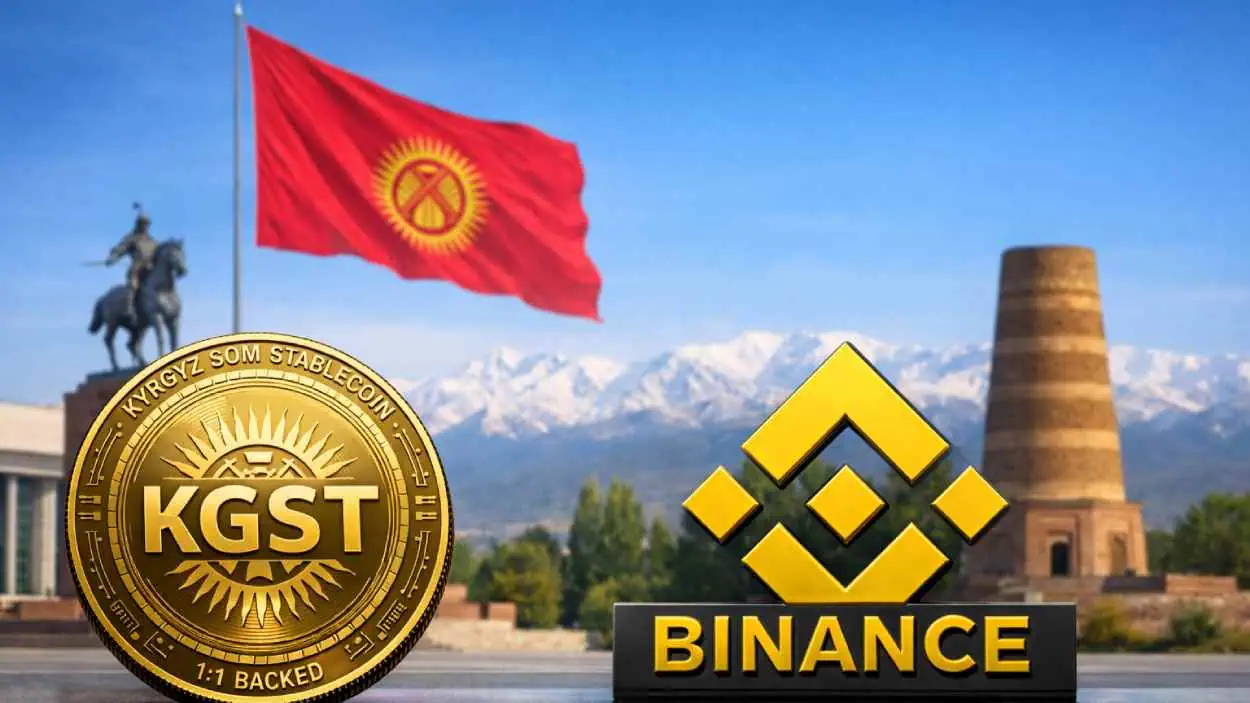







Kyrgyzstan has taken a historic step into the digital asset world by launching KGST, a stablecoin backed by its national currency, the som, and getting it listed on Binance.
Key Takeaways
- KGST is the first state-backed stablecoin from a CIS country to be listed on Binance.
- It is pegged 1:1 to the Kyrgyz som and operates on the BNB Chain.
- This marks a shift from private to sovereign-issued stablecoins in the crypto space.
- Binance founder CZ hinted more nation-backed tokens may follow.
What Happened?
President Sadyr Zhaparov announced the official launch of the KGST stablecoin, highlighting its listing on Binance as a landmark achievement. The token is backed 1:1 by the Kyrgyz som and was developed as part of Kyrgyzstan’s push into blockchain-based financial innovation. It runs on the BNB Chain, Binance’s own blockchain network.
Greetings everyone!
— Sadyr Zhaparov (@sadyrzhaparovkg) December 24, 2025
Today I received important and truly landmark news — the Kyrgyz stablecoin KGST has been listed on the global cryptocurrency exchange Binance @binance. KGST @KGSToken is backed 1:1 by the national currency of the Kyrgyz Republic, the som.
I congratulate the… pic.twitter.com/U8dNPsKA6y
A Bold Digital Leap by Kyrgyzstan
Kyrgyzstan has made a bold move by creating and listing a national currency-backed stablecoin directly on a major global exchange. KGST is not only pegged to the som but also entirely backed by it, providing sovereign credibility rather than relying on corporate reserves, as is common with stablecoins like USDT or USDC.
- KGST is issued as a state-backed stablecoin, breaking from the dominant trend of private issuance
- It is available to users worldwide through Binance, giving it immediate visibility and access to global liquidity
- The project was developed and deployed on BNB Chain, which supports scalable and cost-effective blockchain infrastructure
President Zhaparov congratulated the development team, praising the milestone as a key part of Kyrgyzstan’s digital finance roadmap. He emphasized the potential for KGST to enable digital payments, blockchain finance, and cross-border transactions, expanding the use of the som beyond traditional boundaries.
CZ’s Response and Industry Implications
Binance founder Changpeng Zhao (CZ) acknowledged the listing of KGST as a significant first. Posting on X, he called KGST the first nation-backed stablecoin to launch on BNB Chain and suggested that “many more” could be on the way.
KGST
— CZ 🔶 BNB (@cz_binance) December 24, 2025
First nation backed stablecoin
On @BNBCHAIN
Many more to come.
ps, that gold bar I had on stage with Peter, was real (to the best of my knowledge) from KG. Guess what’s coming next? 😂 https://t.co/9vqD7I1Djf
His comments not only reinforced the credibility of the KGST project but also hinted at a broader movement of governments exploring public blockchains for national currency implementations. In a light-hearted moment, CZ also referenced a gold bar he had used during a Bitcoin versus gold debate, noting that the bar came from Kyrgyzstan, adding another layer of symbolism to the announcement.

A Regional First with Global Vision
According to President Zhaparov, KGST is the first stablecoin from the Commonwealth of Independent States (CIS) region to secure a listing on a global exchange. This move places Kyrgyzstan as a pioneer among its neighbors and positions its national currency in a new digital frontier.
The listing also reflects growing momentum around regulated, sovereign-backed stablecoins, especially as countries evaluate alternatives to dominant USD-pegged assets. The move comes amid growing regulatory interest in state-managed digital currencies, including U.S. discussions around bank-issued stablecoins tied to acts like the GENIUS Act.
CoinLaw’s Takeaway
In my experience covering digital currencies, this is one of the most fascinating state-led experiments in the space. I found Kyrgyzstan’s decision to skip the pilot phase and go straight to a global exchange listing pretty bold. It gives KGST immediate reach and sets a precedent for other nations considering a similar route. What stands out most is the intentional shift toward sovereign credibility in a market long dominated by private players. If KGST gains adoption, this could nudge the entire stablecoin landscape toward more transparent, government-supported models.