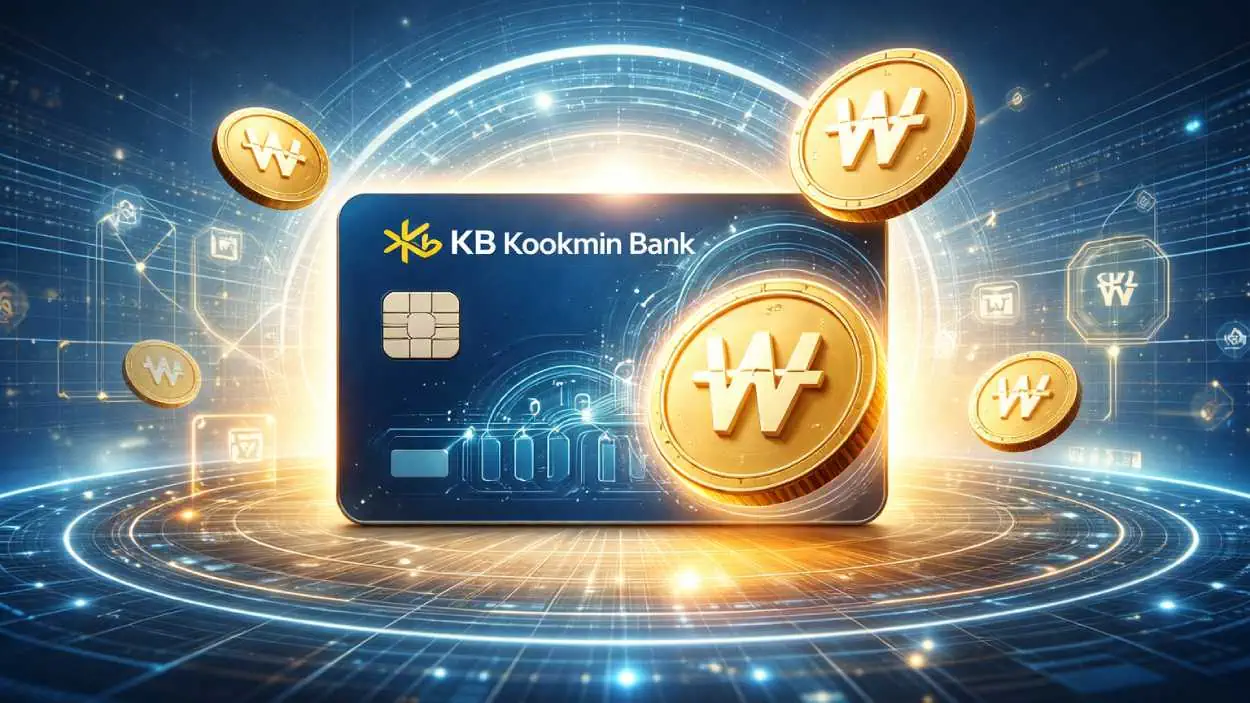







South Korea’s KB Kookmin Card is stepping into the crypto future with a newly filed patent for a hybrid payment system that lets users pay with stablecoins through their existing credit cards.
Key Takeaways
- KB Kookmin Card has filed a patent for a hybrid stablecoin-credit card system, aiming to simplify digital asset payments.
- The technology prioritizes stablecoin spending, falling back on the linked credit card only if the digital asset balance is insufficient.
- This move aligns with South Korea’s ongoing push for a local stablecoin market, supported by upcoming legislation like the Digital Asset Basic Act.
- The system requires no new card issuance, preserving the familiar experience of traditional credit cards while integrating blockchain wallets.
What Happened?
KB Kookmin Card, a subsidiary of South Korea’s largest financial group KB Financial, has filed a patent for a new payment system that could reshape how consumers use digital currencies. The proposed technology enables users to link a blockchain wallet to their existing credit card, spending stablecoins directly while enjoying all the usual benefits of card payments. If the stablecoin balance runs low, the remaining payment automatically gets charged to the user’s credit line.
🇰🇷South Korea’s KB Kookmin has filed a Patent for Stablecoin-first Credit Card System. 💳
— CoinLaw (@coinlaw_io) January 14, 2026
This system helps consumers use stablecoins held in Wallets through Credit Cards. @_KookminCard #CreditCards #Stablecoin #SouthKorea #Cryptocurrency #Wallet pic.twitter.com/xlMLpgjKOI
Stablecoins and Credit Cards Finally Meet
The patent reveals a first-of-its-kind hybrid payment architecture. Users would register a blockchain wallet address to their current credit card. When making purchases, the system would automatically prioritize payments from the stablecoin balance in the wallet. Only if there is a shortfall would the credit card be charged for the remaining amount.
By preserving traditional card infrastructure, the system aims to reduce the friction many users face when spending crypto. Merchants continue to use familiar payment terminals. Users still enjoy protections, rewards, and the user interface they are used to. This could help push stablecoins from niche usage into mainstream financial ecosystems.
A KB Card executive said the system “lays the technical foundation for customers to use digital assets more easily and securely” and that the company would consider regulatory and market conditions before deployment, ensuring consumer protection stays a top priority.
Timing Aligns with South Korea’s Crypto Legislation Push
The filing comes at a critical moment in South Korea’s digital asset landscape. The upcoming Digital Asset Basic Act, expected to be finalized in the first quarter of the year, is designed to regulate stablecoins and create a local won-pegged market.
Previously, KB Kookmin Bank had already filed applications for stablecoin-related trademarks, showing early interest in the sector. Current policy discussions suggest stablecoin issuance will be limited to licensed bank consortia, although some lawmakers have expressed concerns this might hinder innovation.
KB’s move signals readiness to act once the regulatory path is clear.

A Strategic Step Forward in Crypto Payments
What sets KB Kookmin’s system apart is how it integrates crypto into existing consumer finance habits. Unlike traditional crypto cards that often rely on third-party services to convert assets before purchase, this model handles everything internally.
Benefits include:
- No new cards required: Works with the customer’s current credit card.
- Seamless integration: Merchants use standard card terminals.
- Smart payment flow: Stablecoins are used first, with credit as backup.
- Enhanced security: Built on banking-grade systems.
- Potential lower costs: Blockchain settlements may reduce merchant fees.
According to Dr. Soo-Min Lee of Seoul National University:
Technical and Regulatory Hurdles Remain
Although promising, the system still faces technical and regulatory challenges. It must ensure real-time syncing between blockchain balances and card networks, without slowing down transactions. Fraud protection, asset validation, and error-proofing will be crucial.
On the regulatory side, the system will need to comply with AML (Anti-Money Laundering) and KYC (Know Your Customer) laws, both in traditional banking and the crypto space. Patent review and approval may take several years, showing this is a long-term strategic move rather than a product launch in the immediate future.
CoinLaw’s Takeaway
In my experience, most people want simplicity when it comes to using digital assets, and this patent hits the mark. The beauty of KB’s approach is that it respects what people already know, while gently introducing them to stablecoins. I found the timing smart too. Filing a patent right as the country prepares to regulate stablecoins shows strategic thinking. If this tech goes live, it could serve as a blueprint for banks around the world that want to embrace crypto without overwhelming users.