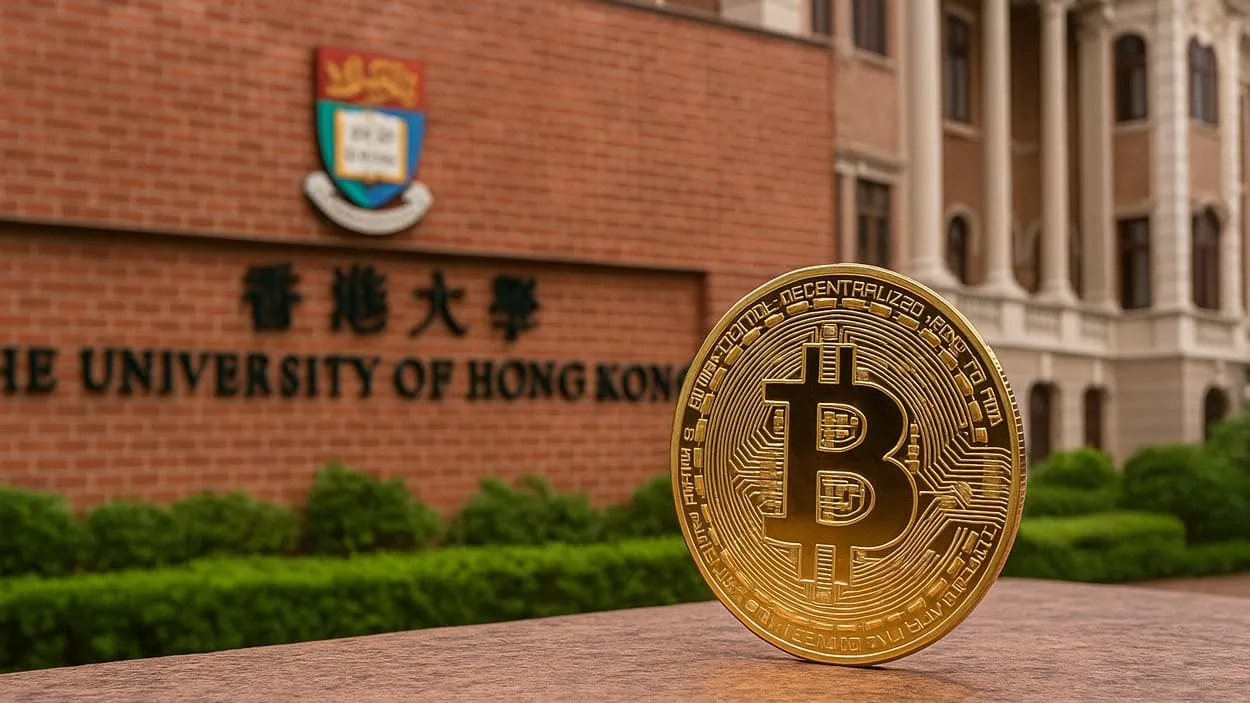







The University of Hong Kong’s Business School is preparing to accept Bitcoin and other digital currencies for tuition payments and donations, aligning with Hong Kong’s broader push to become a global crypto hub.
Key Takeaways
- HKU Business School plans to accept Bitcoin and digital assets for tuition and donations.
- All technical systems for crypto payments are already in place, pending secure rollout.
- The move coincides with Hong Kong’s new stablecoin licensing regime launched August 1.
- Lawmakers stress the need for strong KYC and AML controls as crypto adoption grows.
What Happened?
The University of Hong Kong (HKU) Business School has announced plans to integrate Bitcoin and other digital currencies into its payment system for tuition and donations. This comes as part of a broader initiative to embrace financial innovation and position Hong Kong as a global center for virtual assets. The dean of the school confirmed at the CryptoFi Forum that all technical requirements for crypto payment integration have been completed.
HKU Moves Toward Digital Finance in Education
HKU Business School, one of Asia’s top-ranked institutions, is exploring digital asset payments as part of a strategic vision to modernize its financial operations. Speaking at the CryptoFi Forum, Dean Professor Hongbin Cai stated, “All the technical details have been sorted out. We will take Bitcoin and digital currencies for tuition fees and donations in the future.”
⚡️NEW: PAY BITCOIN FOR EDUCATION?
— Coin Bureau (@coinbureau) August 30, 2025
🇭🇰Hong Kong University Business School will now accept BTC for tuition & donations.
Global #Bitcoin adoption isn’t slowing down—it’s going mainstream. pic.twitter.com/0u9hoh5YQR
A university spokesperson later confirmed that the initiative is more than speculative. The school is actively developing a secure, compliant payment framework that ensures all digital currency transactions align with Hong Kong’s regulatory standards.
The decision is backed by Hong Kong’s new Stablecoins Ordinance, which took effect on August 1. The law requires all stablecoin issuers to obtain licenses from the Securities and Futures Commission (SFC), with the first licenses expected by early 2026.
Regulatory Guardrails and Public Support
Professor Cai acknowledged the risks involved, particularly price volatility. “If we lose money, we will be losing the money of the faculty… It’s ok, we can take care of it,” he said. Despite this, the initiative aims to prepare students for real-world applications of digital finance.
Lawmaker Johnny Ng Kit-chong supported the idea but warned that proper know-your-customer (KYC) and anti-money laundering (AML) procedures must be in place. He emphasized the need for smart management strategies like locking Bitcoin value at the point of payment or converting immediately to fiat currency to mitigate risk.
Ng also pointed out that Hong Kong still lags behind in everyday crypto adoption due to limited public awareness, even though digital payments are widely accepted in other countries.

Building the Infrastructure for Blockchain Payments
The business school is now working closely with partners to develop a transparent and safe system for handling cryptocurrency payments. These efforts focus on:
- Meeting compliance requirements under Hong Kong’s new crypto laws.
- Ensuring AML and KYC checks are embedded in the transaction process.
- Offering a smooth user experience for students and donors.
The adoption of Bitcoin could expand access for international students and streamline donation channels. Cryptocurrencies backed by fiat currencies, such as stablecoins, could provide a reliable method to avoid market fluctuations while making cross-border payments easier.
Crypto Adoption Gains Ground in Education
HKU’s plans reflect a wider trend in global education. Earlier this year, Brown University in the United States received its first investment from BlackRock in Bitcoin via a regulated ETF. Similarly, more institutions are experimenting with crypto as a financial tool for both operations and instruction.
At the CryptoFi Forum, Binance founder Zhao Changpeng highlighted Hong Kong’s potential to rival crypto hubs like the United States and the United Arab Emirates, but only if the government moves swiftly to support innovation with strong regulatory clarity.
If implemented successfully, HKU could become the first major Asian university to formally accept crypto payments, potentially leading the way for similar initiatives across the region.
CoinLaw’s Takeaway
I find this move by HKU incredibly forward-thinking. In my experience, universities that embrace innovation tend to shape the future, not just teach about it. Allowing tuition to be paid in Bitcoin not only makes higher education more accessible for global students, but it also sets a powerful precedent for digital finance in academia. It’s refreshing to see an institution tackle the real challenges of crypto, like volatility and compliance, while still pushing for progress. If more universities follow suit, we could see blockchain become a standard part of educational infrastructure in the next decade.