







Goldman Sachs remains one of the most influential investment banks in the world, shaping capital markets, advising major mergers, and managing trillions in client assets. Its performance impacts everything from institutional investing strategies to corporate financing decisions across the US and globally.
For example, hedge funds rely on their trading infrastructure, while Fortune 500 companies depend on their advisory services for deal-making and capital raising. This article breaks down the latest Goldman Sachs statistics to help you understand its financial strength, growth trends, and market position.
Editor’s Choice
- Goldman Sachs reported $58.28 billion in net revenue in 2025, up 9% year over year.
- Return on equity stood at 15.0% in 2025, while Q4 2025 annualized ROE was 16.0%.
- Total assets climbed to $1.810 trillion at December 31, 2025, versus $1.676 trillion a year earlier.
- Fourth-quarter 2025 net revenue was $13.45 billion, down 3% year over year.
- Goldman Sachs employed 47,400 people globally at the end of 2025, up 2% from 46,500 a year earlier.
- Book value per common share rose to $357.60 in 2025, increasing 6.2% during the year.
- Goldman Sachs returned $16.78 billion of capital to common shareholders in 2025, including $12.36 billion in share repurchases.
Recent Developments
- Goldman Sachs invested $42.5 million in GeoWealth in 2026 to expand its RIA platform reach.
- The GeoWealth platform grew assets from $32 billion to $49 billion in 2025, indicating rapid ecosystem expansion.
- Goldman Sachs’ global revenue increased 9% in 2025, driven by trading and deal activity.
- The bank’s London revenue climbed to $11.8 billion in 2025, up 16% year over year.
- Goldman Sachs reported a record Q3 2025 performance with revenue of about $15 billion.
- Dealmaking fees increased 26% in Q2 2025, showing strong advisory demand.
- New US capital rules in 2026 could reduce required capital by ~4.8%, freeing billions for lending and buybacks.
- Goldman Sachs continued restructuring by focusing on core banking and asset management segments post-2024 strategy shift.
Goldman Sachs Forecast on China’s Current Account Surplus
- China’s current account surplus is expected to reach nearly 1% of global GDP by 2029, according to Goldman Sachs research.
- The surplus previously peaked at around 9.8% of China’s GDP in 2007, marking its historical high.
- It declined significantly to roughly 4% by 2010, reflecting global economic adjustments.
- Between 2014 and 2019, the surplus stabilized within the 2%–4% range of GDP.
- China recorded a sharp dip to लगभग 0% in 2018, indicating a temporary contraction.
- A recovery phase began post-2020, with the surplus rising to about 4.3% in 2022.
- By 2023, the surplus moderated to approximately 2.5% of GDP.
- Goldman Sachs forecasts a rebound, with the surplus climbing to around 4.8% by 2027.
- The surplus is expected to stabilize at about 4.7%–4.8% through 2029–2030.
- As a share of global GDP, China’s surplus is projected to grow sharply from below 0.6% historically to nearly 1% by 2029–2030.

Goldman Sachs Net Income and Earnings Statistics
- Goldman Sachs reported $17.18 billion in net earnings for 2025, announced in January 2026.
- Fourth-quarter 2025 net earnings were $4.62 billion.
- Diluted EPS reached $51.32 for the full-year 2025.
- Q4 2025 diluted EPS was $14.01.
- Return on average common shareholders’ equity was 15.0% for 2025.
- Annualized ROE for Q4 2025 came in at 16.0%.
- Goldman Sachs said revenues have grown 60% since its first Investor Day.
- The firm said returns improved by 500 basis points since that Investor Day.
- Goldman Sachs said total shareholder returns exceeded 340% over that period.

Total Assets Statistics
- Goldman Sachs held $1.810 trillion in total assets at year-end 2025, disclosed in January 2026.
- Book value per common share rose to $357.60 in 2025 after 6.2% annual growth.
- Common equity tier 1 capital totaled $104.3 billion in 2025 under standardized capital rules.
- Advanced-rule risk-weighted assets stood at $694 billion in 2025.
- Global core liquid assets averaged $466 billion in 2025, up from $429 billion in 2024.
Investment Banking Market Growth Forecast
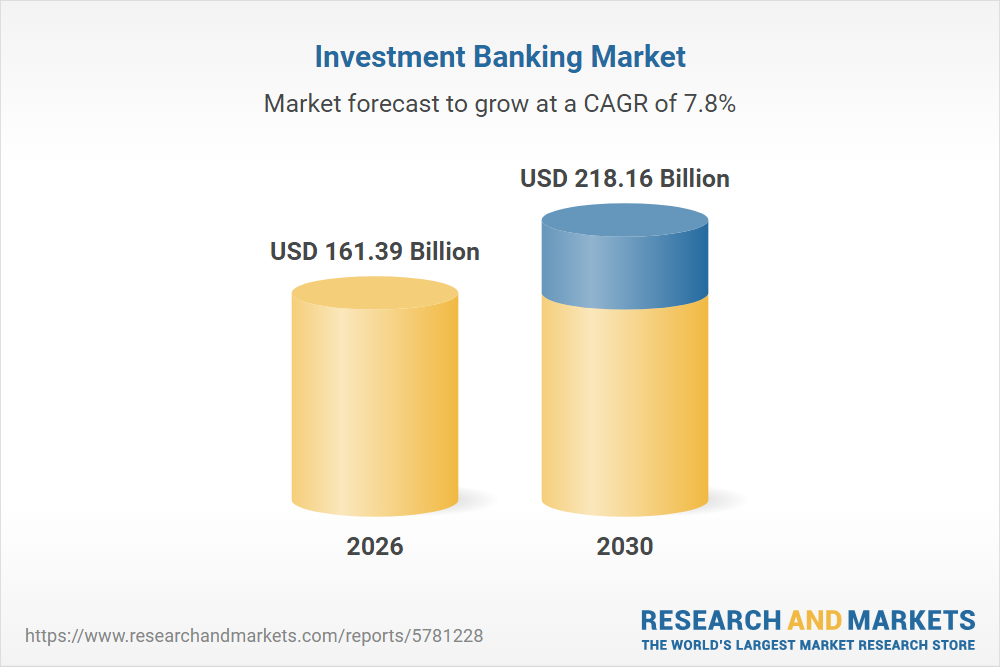
- The global investment banking market is projected to grow at a 7.8% CAGR.
- Market size is estimated at $161.39 billion in 2026.
- Market value is expected to reach $218.16 billion by 2030.
- The market shows a strong upward trajectory with an increase of $56.77 billion between 2026 and 2030.
- Growth reflects expanding demand for advisory, capital markets, and financial services globally.
Assets Under Supervision
- Goldman Sachs reported $3.606 trillion in total assets under supervision at December 31, 2025, up from $3.137 trillion a year earlier.
- Long-term assets under supervision totaled $2.705 trillion, representing about 75% of total AUS of $3.606 trillion at year-end 2025.
- Alternative investments represented $420 billion of AUS at December 31, 2025.
- Goldman Sachs recorded $224 billion in total AUS net inflows in 2025, including $168 billion in long-term AUS net inflows.
- Institutional clients contributed over 60% of AUS, reinforcing Goldman Sachs’ institutional focus.
- Retail and wealth clients made up about 40% of supervised assets, showing growth in private wealth channels.
- AUS growth has averaged 5–7% annually since 2021, indicating consistent expansion.
- Liquidity products accounted for approximately $600 billion of AUS, supporting cash management strategies.
Asset and Wealth Management
- Goldman Sachs’ Asset & Wealth Management division generated $16.68 billion in net revenues in 2025, up 2% year over year.
- Management and other fees contributed $11.54 billion of Asset & Wealth Management net revenues in 2025.
- Incentive fees reached $489 million in 2025.
- Private banking and lending generated $3.35 billion in net revenues in 2025.
- Assets under management (AUM) within this division stood at $2.6 trillion, forming the bulk of firm-wide AUM.
- The division’s pre-tax margin reached approximately 23% in 2025, signaling improved efficiency.
- Alternative investments grew by 12% year over year, outperforming traditional strategies.
- Wealth management client assets surpassed $1 trillion, highlighting growth in private client services.
- Digital wealth platforms contributed to double-digit client growth in 2025, especially in US markets.
Revenue by Segment
- Global Banking & Markets generated $41.45 billion in net revenues in 2025, making it Goldman Sachs’ largest segment.
- Platform Solutions delivered $6.9 billion in revenue, driven by consumer and transaction banking.
- Investment banking fees totaled $7.2 billion in 2025, up 15% year over year.
- Equities trading revenue reached $13.1 billion, reflecting strong market activity.
- Fixed income, currency, and commodities (FICC) generated $11.8 billion, showing steady trading performance.
- Advisory revenue increased by 20% in 2025, driven by M&A activity.
- Consumer banking revenue declined slightly by 3% year over year, reflecting strategic pullbacks.
- Platform Solutions segment margins improved to 12% in 2025, up from 8% in 2024.

Revenue by Region
- The Americas contributed approximately 60% of Goldman Sachs’ total revenue in 2025, maintaining dominance.
- EMEA (Europe, the Middle East, and Africa) accounted for about 25% of total revenue.
- Asia-Pacific generated roughly 15% of revenue, showing growth potential.
- US revenue alone exceeded $30 billion in 2025, driven by strong capital markets.
- European revenue grew by 8% year over year, supported by dealmaking activity.
- Asia-Pacific revenue increased by 10% in 2025, led by Japan and India markets.
- Emerging markets contributed around $5 billion in revenue, reflecting expansion efforts.
- Cross-border transactions accounted for over 35% of total deal volume, highlighting global integration.
- Currency trading revenues grew by 9% in EMEA, reflecting volatility-driven gains.
Capital and Liquidity
- Goldman Sachs reported a Common Equity Tier 1 (CET1) ratio of 14.8% in 2025, exceeding regulatory requirements.
- The firm maintained a liquidity coverage ratio (LCR) of 128%, ensuring strong short-term resilience.
- Global core liquid assets averaged $450 billion in 2025, supporting liquidity needs.
- Total capital returned to shareholders reached $13.2 billion in 2025, including dividends and buybacks.
- Risk-weighted assets stood at approximately $820 billion, reflecting disciplined risk management.
- The supplementary leverage ratio (SLR) remained around 5.7% in 2025, above minimum thresholds.
- Goldman Sachs held $182 billion in cash and equivalents, ensuring operational flexibility.
- The firm issued over $40 billion in long-term debt in 2025, supporting the funding strategy.
- Regulatory capital buffers exceeded requirements by 2–3 percentage points, providing additional safety margins.
Dividend Statistics
- The reported dividend yield was about 1.65% based on market data.
- The reported payout ratio was about 26.41% of earnings.

- Goldman Sachs increased its quarterly dividend to $4.50 per share for Q1 2026, equal to an annualized rate of $18.00.
- The firm paid $4.42 billion in common stock dividends during 2025.
- Goldman Sachs returned $16.78 billion of capital to common shareholders in 2025.
- Common share repurchases totaled $12.36 billion in 2025.
- Goldman Sachs repurchased 18.9 million shares in 2025 at an average cost of $654.45.
- In Q4 2025, Goldman Sachs paid $1.24 billion in common stock dividends.
- In Q4 2025, share repurchases totaled $3.00 billion.
- Goldman Sachs paid a quarterly dividend of $3.00 per share before raising it to $4.50 in 2026.
Compensation and Operating Expense
- Goldman Sachs reported $34.7 billion in total operating expenses in 2025.
- Compensation and benefits accounted for $17.9 billion, or roughly 52% of total expenses.
- The firm’s compensation ratio stood at approximately 31% of net revenue in 2025.
- Average compensation per employee reached about $382,000 globally in 2025.
- Technology and infrastructure costs exceeded $4.5 billion, reflecting digital investment priorities.
- Non-compensation expenses grew by 6% year over year, driven by regulatory and operational costs.
- The efficiency ratio improved to 60% in 2025, indicating better cost management.
- Legal and compliance expenses accounted for roughly $1.2 billion, reflecting regulatory oversight.
- Office and occupancy costs remained stable at around $1 billion annually.
Employee Statistics
- Goldman Sachs employed approximately 47,400 people globally in 2025.
- Around 35% of employees are based in the Americas, with the rest spread across EMEA and Asia-Pacific.
- Women represent approximately 44% of the global workforce, showing progress in diversity.
- Senior leadership roles held by women reached 29% in 2025, improving year over year.
- Goldman Sachs hired over 8,000 new employees in 2025, including analysts and associates.
- Voluntary attrition rate remained below 10%, indicating relatively strong retention.
- The firm operates in over 30 countries, supporting global talent distribution.
- Employee training investments exceeded $500 million annually, focusing on leadership and technical skills.
Deal and Market Ranking
- Goldman Sachs ranked #1 globally in M&A advisory by deal value in 2025, maintaining leadership.
- The firm advised on deals totaling over $1.2 trillion in 2025, reflecting strong advisory activity.
- Goldman Sachs held a 7.5% global M&A market share, leading competitors.
- It ranked top 3 in global equity underwriting, with proceeds exceeding $150 billion.
- Debt underwriting volumes surpassed $500 billion in 2025, highlighting the capital markets’ strength.
- Goldman Sachs maintained a top 5 position in global IPO underwriting, participating in major listings.
- The firm ranked #1 in the US in announced M&A deals, reinforcing domestic leadership.
- Cross-border M&A advisory accounted for over 40% of total deals, reflecting global reach.
- Goldman Sachs consistently ranks among the top global investment banks by revenue, competing with JPMorgan and Morgan Stanley.
Frequently Asked Questions (FAQs)
The firm earned approximately $17.18 billion in net income in 2025, up about 20% year over year.
Goldman Sachs recorded an EPS of $51.32 in 2025, reflecting strong profitability.
The company achieved a 15.0% ROE in 2025, indicating efficient capital usage.
Conclusion
Goldman Sachs continues to demonstrate strong financial performance, supported by diversified revenue streams, disciplined capital management, and a leading position in global dealmaking. Its growing assets under supervision and consistent shareholder returns highlight long-term stability, while strategic shifts toward core banking and asset management strengthen its competitive edge. As markets evolve, Goldman Sachs remains a key player influencing capital flows, investment strategies, and corporate finance worldwide.