






A consortium of 12 major European Union banks is preparing to launch a euro pegged stablecoin in the second half of the year as it advances talks with crypto exchanges and liquidity providers.
Key Takeaways
- Qivalis, a group of 12 leading EU banks, plans to launch a MiCA compliant euro stablecoin in the second half of the year.
- The consortium is in advanced talks with crypto exchanges, market makers, and liquidity providers to ensure trading access and liquidity from day one.
- The stablecoin will be backed 1:1, with at least 40 percent held in bank deposits and the rest in short term euro area sovereign bonds.
- The initiative aims to provide a regulated European alternative to US dollar stablecoins and strengthen EU payment autonomy.
What Happened?
Qivalis, a consortium of major European banks, is moving closer to launching a regulated euro pegged stablecoin. According to reporting from Cinco Días, the group is in advanced discussions with crypto exchanges and liquidity providers as it prepares for a launch in the second half of the year.
The consortium is also seeking authorization from the Dutch central bank under the European Union’s Markets in Crypto Assets framework, positioning the token as fully compliant with EU rules.
Qivalis, a group of major EU banks developing a euro-pegged stablecoin, is in advanced talks with crypto exchanges, to ensure their token is listed on regulated platforms. pic.twitter.com/QdKXySRDjp
— CoinDesk (@CoinDesk) March 2, 2026
A Consortium of Europe’s Leading Banks
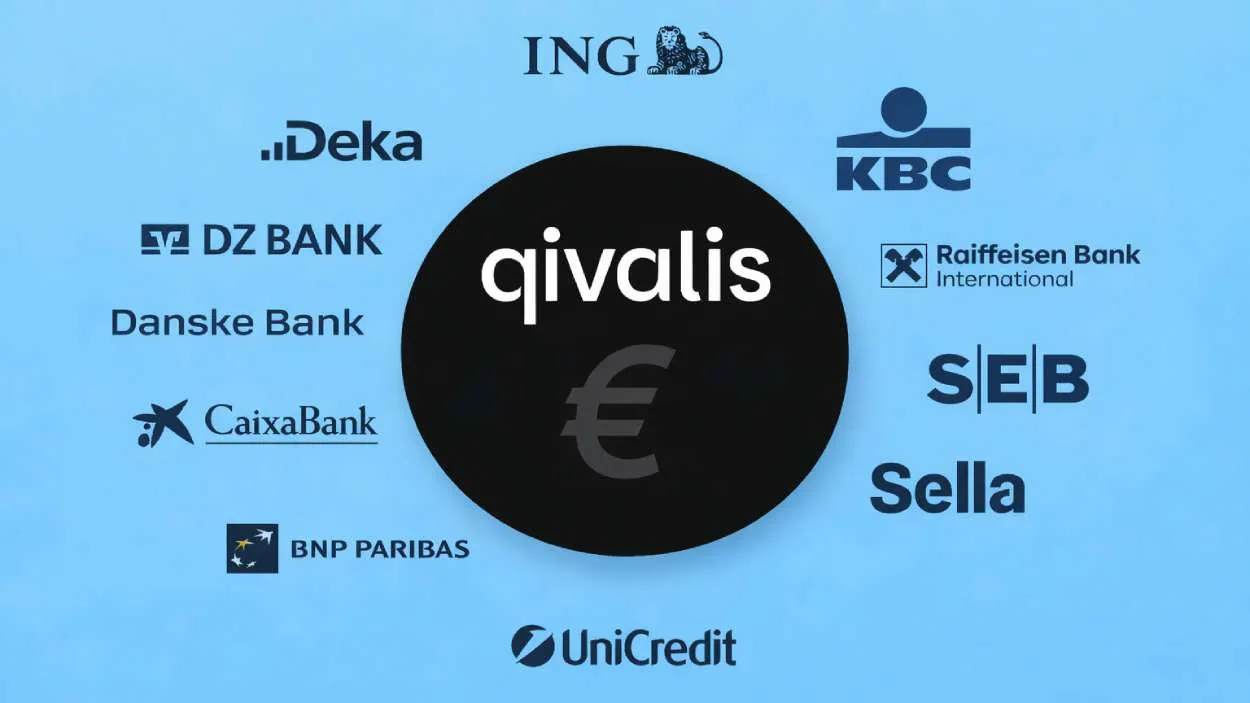
Qivalis brings together 12 prominent European financial institutions. Members include ING, UniCredit, BNP Paribas, CaixaBank, and BBVA, along with several others that joined when the consortium was first announced in September 2025.
Additional early members included Danske Bank, Raiffeisen Bank International, KBC, SEB, DekaBank, and Banca Sella. The initiative was initially launched with nine banks before expanding to its current structure.
The group is headquartered in the Netherlands and is seeking regulatory approval under the EU’s Markets in Crypto Assets Regulation, commonly known as MiCA.
Securing Liquidity Before Launch
Ensuring liquidity from day one appears to be a top priority. Qivalis is holding advanced talks with regulated trading platforms, market makers, and liquidity providers across Europe and internationally.
Spanish crypto exchange Bit2Me confirmed it has held discussions with one of the consortium’s banks. However, most platforms declined to comment publicly.
Jan Sell, Qivalis CEO and former head of Coinbase in Germany, said the consortium is considering partnerships with both European and international platforms. He noted that offering a regulated, domestic alternative to US dollar denominated stablecoins is central to the project’s mission.
He said:
Importantly, shareholder banks within the consortium will also be able to distribute the stablecoin directly.

Reserve Structure and Compliance
During a recent presentation, Qivalis chief financial officer Floris Lugt shared details about the reserve structure backing the stablecoin.
The token will be backed 1:1. At least 40 percent of reserves will be held in bank deposits. The remaining portion will be invested in short term, high quality euro area sovereign bonds diversified across EU countries to reduce concentration risk.
Reserves will be held with multiple highly rated credit institutions. The design also includes 24 hour redemption availability, allowing token holders to redeem their holdings at any time.
The consortium is currently seeking authorization from the Dutch central bank under MiCA, which sets strict requirements for stablecoin issuers within the European Union.
A Strategic Push for European Autonomy
The broader objective is clear. The stablecoin market today is largely dominated by US dollar backed tokens. European banks see an opportunity to build a euro based alternative that supports businesses and consumers within the bloc.
A euro pegged token could enable blockchain based payments and settlements in euros without relying on traditional banking rails or foreign third party providers. It may also strengthen the European Union’s strategic autonomy in digital payments.
CoinLaw’s Takeaway
In my experience, this is one of the most serious attempts by traditional European banks to compete directly in the stablecoin market. I believe the regulatory clarity under MiCA gives Qivalis a real advantage compared to earlier crypto projects.
What stands out to me is the strong reserve structure and the focus on liquidity from the start. If they execute properly, this could become a credible European alternative to US dollar stablecoins. I found the emphasis on cross-border business payments especially important, since that is where stablecoins can deliver real value beyond speculation.