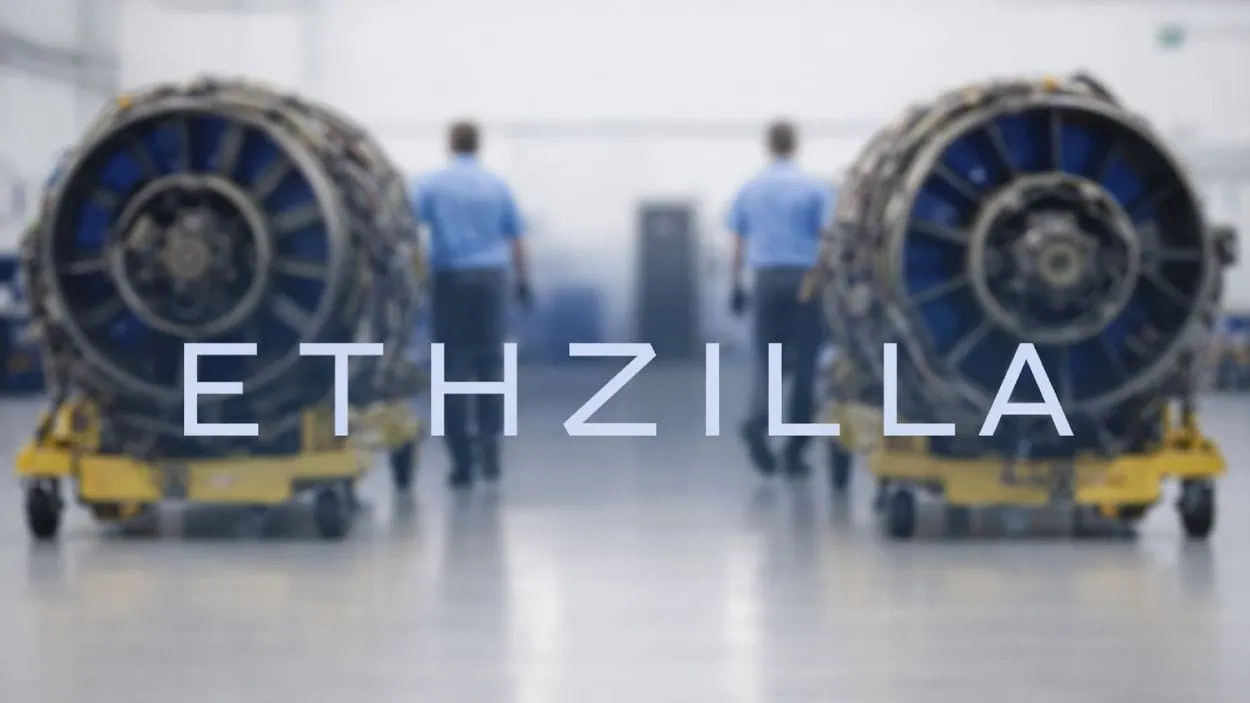







Ethereum treasury firm ETHZilla has taken a bold step into the aerospace sector with a $12.2 million investment in commercial jet engines, reinforcing its pivot toward real-world asset tokenization.
Key Takeaways
- ETHZilla purchased two aircraft engines for $12.2 million through its new subsidiary ETHZilla Aerospace LLC.
- The engines are already leased to a major airline, creating an immediate yield opportunity.
- This move supports ETHZilla’s broader strategy to tokenize real-world assets (RWAs).
- The company has sold over $114 million in ETH to fund new ventures amid crypto market pressures.
What Happened?
ETHZilla confirmed in an SEC filing that it bought two CFM56-7B24 aircraft engines, complete with lease agreements and servicing contracts. The engines were acquired from Avean, an affiliate of Aero Engine Solutions, and are currently under lease to a large airline. ETHZilla also signed a servicing agreement allowing Aero Engine Solutions to manage the engines.
🔥ETHZILLA BUYS JET ENGINES AFTER SELLING ETH
— Coin Bureau (@coinbureau) January 25, 2026
ETHZilla has bought two jet engines for $12.2M via a new subsidiary after selling $114M in $ETH holdings.
SEC filings show the engines will be leased to airlines to generate predictable cash flow.
The move comes as DATs face… pic.twitter.com/7aOuBw0Wlb
ETHZilla Enters the Aerospace Market
ETHZilla, once focused solely on accumulating Ether, has been shifting gears since late 2025. Its CEO, McAndrew Rudisill, announced plans to build a new business model focused on bringing real-world assets on-chain. Aircraft engines are the first such assets in ETHZilla’s tokenization pipeline.
- The engines were purchased through a new subsidiary, ETHZilla Aerospace LLC.
- They are subject to existing Aircraft Engine Lease Agreements with a major airline.
- ETHZilla will pay Aero Engine Solutions a monthly fee to manage the leases.
- A reciprocal buy-sell option allows either party to buy or sell the engines at $3 million each when the lease ends or is terminated early.
This strategic acquisition enables ETHZilla to tap into the specialized engine leasing sector, which helps airlines avoid operational downtime when primary engines fail or need maintenance. It’s a well-established business model used by major players like AerCap, SMBC Aero Engine Lease, and Willis Lease Finance Corporation.
Real-World Asset Tokenization Push
The engine purchase is part of ETHZilla’s broader initiative to tokenize real-world assets and bring them on-chain. Rudisill emphasized in a shareholder letter that ETHZilla’s team is leveraging deep aerospace industry ties to source tokenizable assets without relying on outside partnerships.
The company plans to tokenize these assets in collaboration with Liquidity.io, a regulated broker-dealer and SEC-registered ATS. ETHZilla aims to launch its first tokenized asset offerings in the first quarter of the year.
ETHZilla has also invested in other sectors to fuel its RWA plans:
- Acquired a 15% stake in Zippy, a lender in the manufactured home loan space, with the aim of tokenizing mortgage loans.
- Took a stake in Karus, an auto finance platform, intending to tokenize vehicle-related loans.

Crypto Liquidation Fuels Expansion
To finance these ventures, ETHZilla sold a significant chunk of its crypto holdings:
- Sold $40 million in ETH in October to fund a stock buyback.
- Liquidated an additional $74.5 million in ETH in December to redeem outstanding debt.
Despite holding $198.5 million in ETH, ETHZilla’s pivot comes amid a sharp drop in its share price. The company’s stock peaked at over $100 in August 2025 during a crypto rally but has since plummeted 95 percent to close at $5.24.
CoinLaw’s Takeaway
In my experience watching crypto firms pivot under market pressure, this move by ETHZilla stands out. Instead of clinging to its ETH stash or launching another speculative token, it’s making a smart leap into a real-world industry with stable yields. The aerospace engine leasing market has real demand, real cash flow, and now, potential for blockchain innovation. I find this tokenization strategy to be more than just hype. If executed well, it could actually create the kind of utility crypto needs to prove its long-term worth.