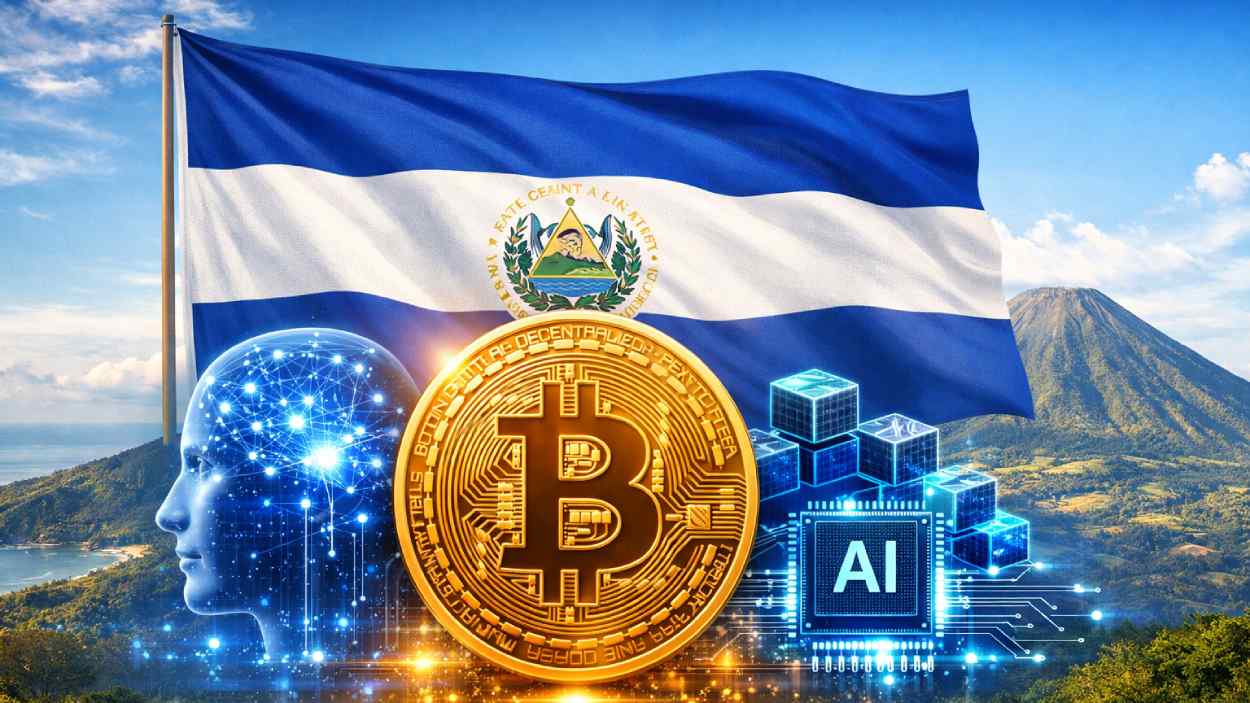







El Salvador is intensifying its commitment to Bitcoin and artificial intelligence in 2026 with the goal of redefining its economy and challenging traditional global economic models. The Central American nation is doubling down on technology and innovation as strategic pillars that it believes will deliver long term growth, financial inclusion, and competitive advantage over more established economies.
Key Takeaways
- El Salvador is backing Bitcoin and AI as central elements of its economic strategy for 2026 and beyond.
- The country continues to accumulate Bitcoin daily while embedding AI and blockchain technologies across key sectors.
- New laws and strategic partnerships aim to enhance financial inclusion, attract investment, and foster technological growth.
What Happened
El Salvador’s National Bitcoin Office announced that the country is going “all in” on Bitcoin and AI as core drivers of its economic future. The strategy reflects a broader pivot away from scarcity based economic thinking toward models focused on innovation driven abundance and excellence. This move builds on the nation’s earlier decision to adopt Bitcoin as legal tender in 2021 and follows years of consistent policy execution.
🇸🇻 2026: El Salvador Takes the Lead 🚀
— The Bitcoin Office (@bitcoinofficesv) January 1, 2026
Boomer economies cannot compete. We are abandoning the scarcity mindset to go all-in on abundance, excellence, and the strategic dominance of Bitcoin and AI. https://t.co/9aH4OFdcba pic.twitter.com/LX2YG75Iox
Long Term Vision for Bitcoin
El Salvador’s vision for Bitcoin extends well beyond speculation and short term price movements. The government has continued its commitment to accumulate Bitcoin regardless of volatility. Public data indicates the country now holds around 7,500 to 7,517 Bitcoin valued at over $660 million. Daily purchases of one BTC continue even through turbulent market conditions.
Officials describe these holdings as long term national assets that support monetary sovereignty and reflect confidence in Bitcoin’s role as a strategic reserve infrastructure. During market dips, such as the sharp sell off in November 2025, El Salvador increased its buying pace, signaling that accumulation is a tactical component of national strategy rather than passive buying alone.
This approach has raised broader discussions about how sovereign accumulation could influence Bitcoin’s circulating supply over longer timeframes. Analysts suggest that consistent demand from nation states like El Salvador could strengthen Bitcoin’s narrative as a fixed supply asset with strategic economic importance.
AI Integration Across Public Sectors
Bitcoin is not the only pillar of El Salvador’s 2026 agenda. The country is integrating artificial intelligence into public services and education as part of a larger economic transformation. In December 2025, El Salvador partnered with xAI, the artificial intelligence company associated with Elon Musk, to deploy its AI platform Grok in 5,000 public schools nationwide.
The AI initiative aims to support well over a million students and thousands of teachers with adaptive digital tutoring based on national curricula and localized learning needs. Officials emphasize responsible AI use and the development of domestic data sets that reflect the country’s unique educational priorities.
By embedding AI tools into the educational system, El Salvador seeks to advance technological literacy, improve educational outcomes, and foster a workforce aligned with future economic demands. This initiative also complements efforts to embed blockchain and AI technologies in both financial systems and public sector operations.

Growth, Inclusion, and Legal Innovation
El Salvador’s bold strategy is reinforcing broader economic goals that include financial inclusion, investment attraction, reduced remittance costs, and enhanced technological growth. Remittances from abroad remain a key part of the economy and Bitcoin based solutions are seen as a means to lower costs for families relying on these transfers.
In 2025, the Legislative Assembly approved the Investment Banking Law known as the Bitcoin Bank Law. This legislation created a new class of financial institution tailored for high net worth and institutional clients. The law is designed to expand the nation’s financial infrastructure and support the flow of capital through regulated frameworks that leverage digital assets and blockchain technology.
El Salvador’s economic confidence is reflected in projections of sustained growth near four percent into 2026. The International Monetary Fund has acknowledged stronger than expected economic performance and continues dialogue with the nation on fiscal transparency and risk management issues. Notably, IMF statements have stopped explicitly advising against Bitcoin accumulation.
Challenging Traditional Economic Models
El Salvador’s leadership frames the 2026 strategy as a break from what it terms “boomer economies” or traditional models rooted in scarcity based thinking. The goal is to embrace abundance and technological excellence as hallmarks of future success.
Officials argue that coupling a fixed supply monetary asset like Bitcoin with advanced AI systems positions the country uniquely on the global stage. If other nation states adopt similar frameworks, the argument goes, Bitcoin’s long term strategic relevance could strengthen gradually as part of sovereign policy rather than through speculative market events.
CoinLaw’s Takeaway
In my view El Salvador’s bold embrace of both Bitcoin and artificial intelligence marks one of the most experimental and forward looking economic shifts in recent years. This strategy signals deep faith in technology as a foundation for national growth and resilience. From consistent Bitcoin accumulation to large scale AI education partnerships, the government is not merely talking about innovation but executing on it. While risks remain this approach may help reshape how small economies compete globally and inspire wider discussion about the role of digital assets and AI in sovereign economic planning.