






One of the biggest crypto hacks this year has led to an arrest in India, after a former Coinbase support agent allegedly aided hackers in a massive $400 million data breach.
Key Takeaways
- Indian police arrested a former Coinbase customer service agent linked to a major data breach involving insider bribery.
- Hackers demanded a $20 million ransom after accessing sensitive customer data, though Coinbase refused to pay.
- The breach affected about 1 percent of Coinbase’s customer base, highlighting the threat of insider attacks.
- Coinbase praised global law enforcement, especially the Hyderabad Police, for aiding in the arrest and ongoing investigation.
What Happened?
A major data breach at Coinbase earlier this year exposed serious gaps in cryptocurrency platform security. Hackers reportedly bribed an overseas customer support agent in India, leading to unauthorized access to sensitive customer information. The breach resulted in a $20 million ransom demand and is expected to cost Coinbase up to $400 million in remediation.
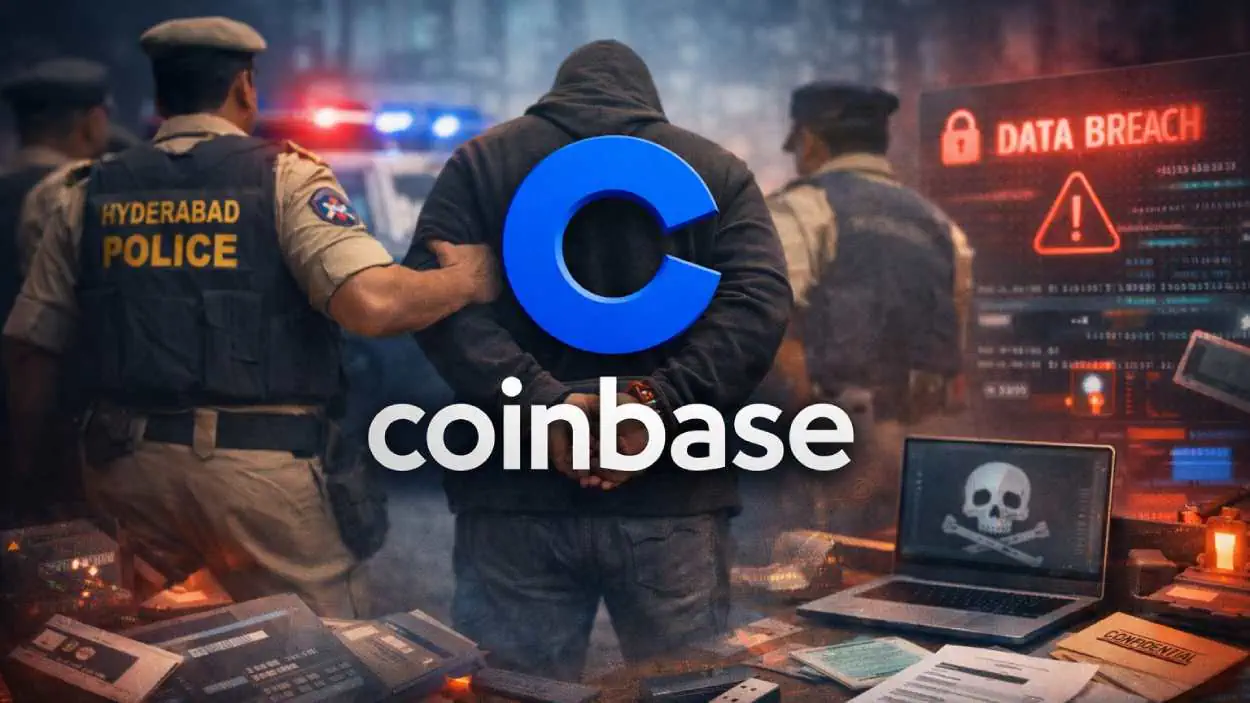
The former agent has now been arrested by Hyderabad Police in coordination with Coinbase and international law enforcement agencies, marking a key step forward in the investigation.
We have zero tolerance for bad behavior and will continue to work with law enforcement to bring bad actors to justice.
— Brian Armstrong (@brian_armstrong) December 26, 2025
Thanks to the Hyderabad Police in India, an ex-Coinbase customer service agent was just arrested. Another one down and more still to come.
Arrest Marks a Breakthrough in Global Crypto Crime Investigation
Coinbase CEO Brian Armstrong confirmed the arrest on X, formerly known as Twitter, thanking Indian authorities and reinforcing the company’s “zero tolerance for bad behavior.” He added, “Another one down and more still to come,” hinting at further arrests related to the breach.
The detained agent was reportedly part of a support team outside the United States. This insider access was exploited by hackers in May 2025 to steal data, including names, addresses, and email information of customers. While no passwords or crypto assets were directly taken, the stolen data was used for phishing attacks and social engineering schemes.
This is part of a broader investigation that has also implicated Ronald Spektor, a Brooklyn resident accused of orchestrating phishing attacks that tricked Coinbase users into handing over access to their funds. Nearly $16 million was stolen from about 100 victims through Spektor’s fake support messages and fraudulent links.
Insider Threats and the Risk of Global Outsourcing
The breach has raised alarms about the risks posed by outsourced support teams in the crypto industry. With Coinbase operating globally, the use of third-party contractors has created potential vulnerabilities in its internal systems. This incident has triggered a comprehensive review of how support teams are vetted, monitored, and managed.
Coinbase said it has already tightened internal controls, ramped up monitoring of employee access, and strengthened partnerships with law enforcement across borders. The company is also working closely with the U.S. Department of Justice and other agencies to pursue additional suspects.

Refusal to Pay Ransom and New Security Measures
After hackers contacted Coinbase demanding a ransom in May, the company chose not to pay. Instead, it launched a full investigation and offered a substantial reward for tips that could lead to the perpetrators.
Despite not losing any cryptocurrency in the breach, Coinbase estimated potential costs between $180 million and $400 million, factoring in customer support, investigation efforts, and trust repair.
As part of its long-term response, Coinbase has also resumed its operations in India after resolving past regulatory hurdles, even as it continues to fight jurisdictional disputes with U.S. regulators.
CoinLaw’s Takeaway
I’ve seen many cases of crypto fraud over the years, but what stands out here is how a single compromised insider can trigger a chain reaction with global consequences. This breach wasn’t just about technology being hacked; it was about trust being broken from the inside.
In my experience, crypto platforms too often focus on external threats while underestimating insider risk. Coinbase’s aggressive response and transparency are commendable, but the industry as a whole needs to invest more in people, training, and oversight. It’s time we stop thinking of security as just firewalls and start recognizing the human factor.