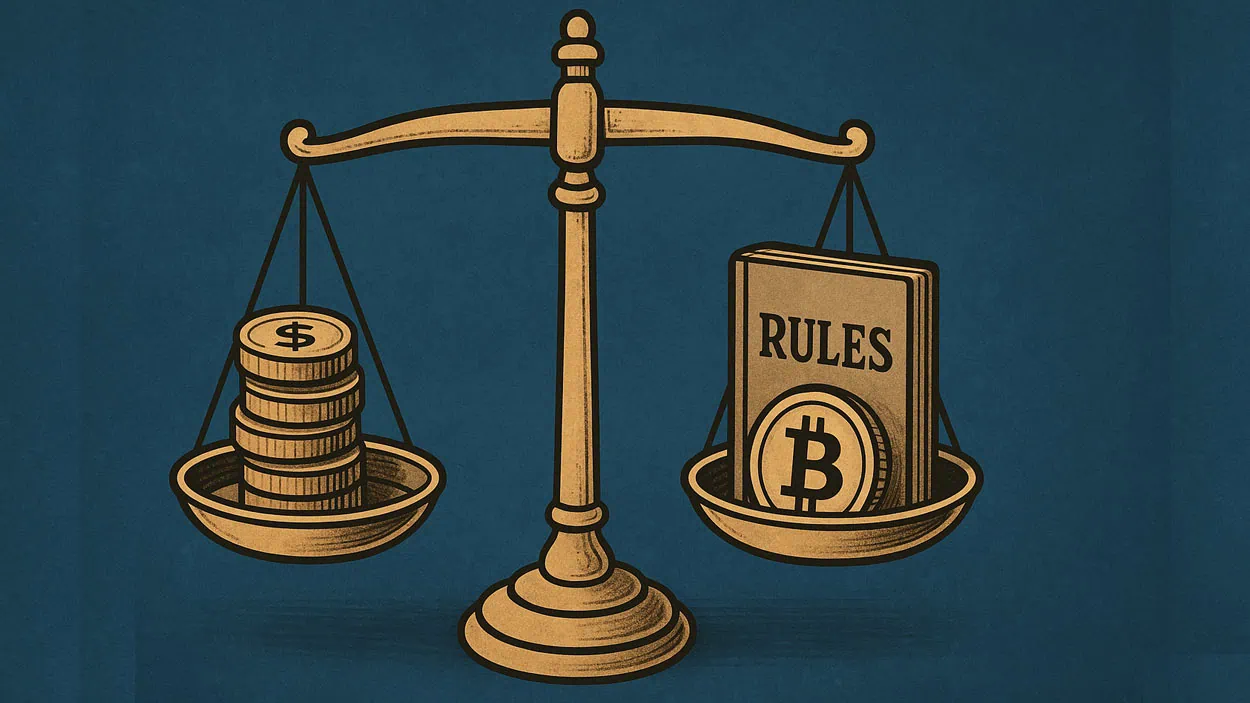







Crypto in 2025 will still be changing faster than anyone can predict. And the regulators will be playing catch-up just like the rest of us. Among the most interesting tendencies is the emergence of so-called ancillary assets. Ancillary assets are crypto assets discussed in the draft Responsible Financial Innovation Act (RFIA) of 2023, and which are not securities (but are practically useful within blockchain contexts).
On the one hand, in contrast to traditional securities, which have the primary goal of serving as an instrument of investment, ancillary assets are skewed towards utility functions. They can be deployed as a mechanism to give access to governance, a service, or reward interaction with a decentralized application (dApp). In differentiating these tokens with securities, the regulators will first encourage practical blockchain applications, and at the same time cushion market participants.
Global Regulatory Landscape
In Europe, a single regime on the topic is the Markets in Crypto-Assets (MiCA) Regulation, which spans the EU member states and has been fully in effect since December 2024.
The prevailing trend of making crypto regulations more straightforward can be viewed in the introduction of ancillary assets. In the event of adoption, RFIA would help define tokens that are not securities and provide more legal certainty to the projects that focus on utility-oriented paradigms of tokenization rather than the vehicles of speculative investments.
There are also emerging markets that are looking at models giving a difference between security and non-security tokens, at least in Southeast Asia and Latin America, to support innovation, as well as legal clarity in their domestic blockchain marketplaces. Other countries, such as Canada and Australia, are looking at hybrid systems that allow greater flexibility by combining conventional securities regulation with utility-related rules.
Implications for Investors and Developers
The fact that ancillary assets are transparent means a lot:
- Regulatory certainty: Caps any compliance weight and legal ambiguity because, with some tokens, developers and investors understand which ones are less of a main monetary concern.
- Innovation opportunities: Projects are going to have the freedom to build whatever they feel like building that is actually applicable (protocols, NFTs, etc), and will not risk being called a security.
- Institutional participation: Broader regulatory clarity may mean that institutional investors consider tokens aimed at utility as an investment vehicle that has had ambiguity in the past.
- Consumer protection: Ancillary asset definition also includes protection for users, enabling innovation of tokens to be designed.
Examples of the most popular ancillary assets include governance tokens in DAOs, platform utility tokens, and NFT-based gaming tokens. Such tokens have functional utility and contravene rights coupled with a lack of treatment as securities, thus making it a promising segment in the emerging crypto market.
Real-World Applications
Tokens with ancillary-asset characteristics are already impacting different sectors:
- Decentralized finance: DeFi has managed to do this by creating a platform on which users can receive rewards for providing liquidity, staking, and contributing to governance without falling into the securities laws by utilizing ancillary tokens.
- NFT gaming: Tokens can be exchanged to access in-game benefits, exclusive content, or allow them to vote within the community, and this has a greater focus on use rather than speculation.
- Enterprise solutions: The tokens are currently provided by companies as an alternative to employee entry, online identification, and supply chain authentication using blockchains to realise practical operational gains.
- Global reach: Projects in emerging markets can now launch tokens while following U.S. and EU rules, thanks to new regulatory frameworks.
Keeping Up with Crypto Regulations
Be ready for crypto regulations; they can change fast. Online resources such as CryptoManiaks allow developers and traders to keep up with regulations in identifying new prospects in this expanding space. They offer all kinds of guides about crypto.

The important thing is strategic planning. Developers should focus on building tokens that convey not only utility but also access and governance as well to ensure that these pass RFIA. Investors are able to diversify their efforts and portfolios between ancillary assets combinations and other crypto assets in a balance between innovation exposure and risk management.

Looking Forward
What analysts predict is that tokens of ancillary-type properties might become important in 2025 or beyond:
- Digital identity: Soon, crypto tokens may be your ticket to a blockchain identity, to prove who you are.
Dynamic or flexible regulations: Regulators may allow some asset classes to move into the “securities” space as needed, helping to clear things up on crypto compliance. - Institutional adoption: There is an opportunity that is open to banks and large-scale investors to adopt these tokens and include them in the set of clients they receive, which raises the liquidity and adoption within the market.
This is of immense value in knowing what to expect in case one of the projects or investors wants to thrive in such rapidly developing crypto environments.