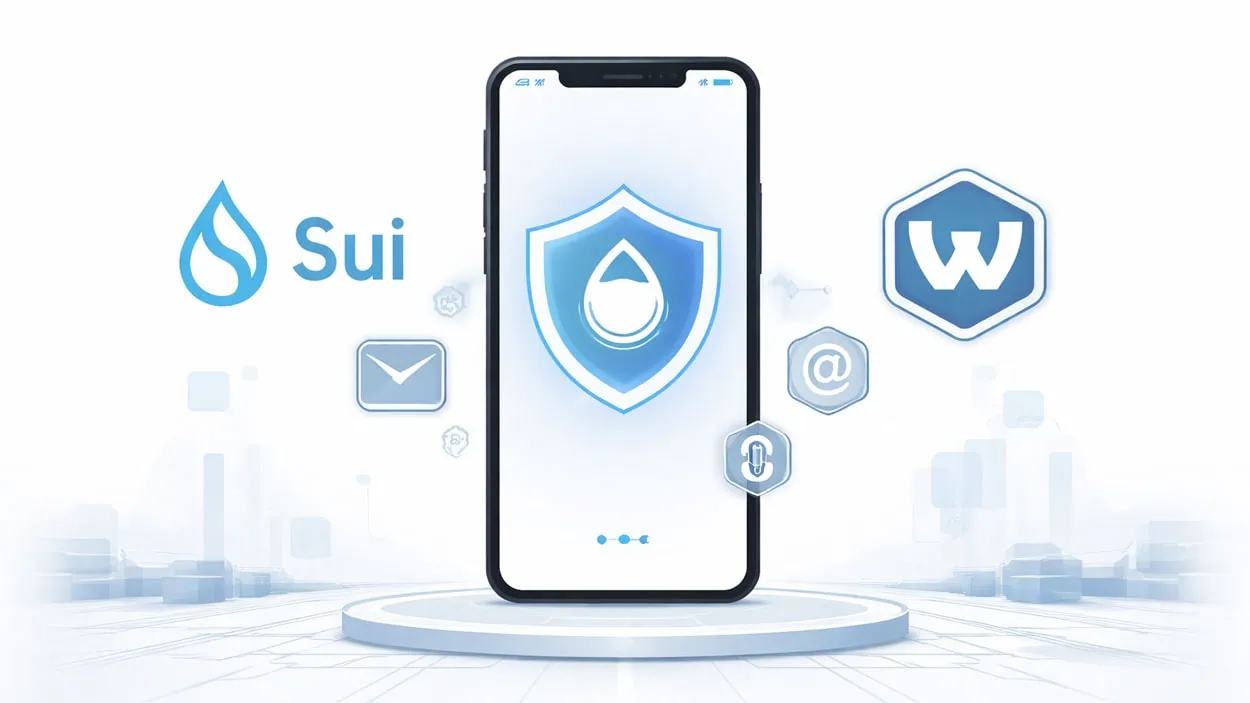







WaaP, the next evolution of Wallet-as-a-Service, is now live on Sui, bringing developers a secure, seedless embedded wallet protocol with true decentralization.
Key Takeaways
- WaaP has launched on the Sui blockchain, offering a self-custody embedded wallet protocol without the need for seed phrases or backend servers.
- Built on Ika, a decentralized coordination layer, WaaP ensures cryptographic user control and removes third-party custody risks.
- Developers can integrate wallets with social logins like email, phone, or Face ID, while maintaining true on-chain ownership.
- The protocol is free and open, with no vendor lock-in, making onboarding easier and more secure for developers and users.
What Happened?
human.tech, the team behind privacy-centric digital identity solutions, announced the launch of Wallet-as-a-Protocol (WaaP) on Sui, a high-speed Layer 1 blockchain. WaaP lets developers integrate self-custodial wallets into apps using familiar login methods, but without the traditional tradeoffs in security or control. It’s powered by Ika, a decentralized security layer built natively into the Sui network.
WaaP Introduces True Embedded Wallet Infrastructure
WaaP is a major step forward in solving the longstanding problems of embedded crypto wallets. While traditional Wallet-as-a-Service providers offer convenience, they often compromise on decentralization and user ownership. WaaP addresses these issues with a protocol-level infrastructure, built on Sui’s smart contracts rather than centralized servers.
Key innovations of WaaP include:
- Seedless login options: Users can log in with email, phone, Google, or Face ID without ever managing a seed phrase.
- No backend lock-in: Developers use WaaP freely, without being tied to any vendor infrastructure.
- Security via 2PC-MPC: Signing authority is split between the user’s device and the decentralized Ika network. Neither side can access funds alone.
- Smart contract policy enforcement: Features like spend limits or approval thresholds are embedded directly on-chain.
This design provides the user experience of managed wallets while offering the security benefits of hardware wallets, all without compromising on control or decentralization.

Proven Infrastructure Now on Sui
The move brings human.tech’s infrastructure, which already supports 3 million verified users, into the Sui ecosystem. With over 43 million credentials issued and more than 500 million dollars in protected value, the platform has a strong track record.
Sui itself continues to grow, ranking in the top 15 blockchains by total value locked (TVL) and in the top 8 by decentralized exchange (DEX) volume. WaaP is expected to drive further adoption by simplifying user onboarding and increasing demand for Sui blockspace.
According to Shady El Damaty, CEO of the Holonym Foundation, “Sui developers can now offer seamless, seedless self-custody without taking on the risks of traditional wallet services.” He emphasized that WaaP’s integration means no tradeoff between user experience and true ownership.
Foundation for the Future of On-Chain Agents
Looking ahead, WaaP aims to support programmable accounts and delegated execution, enabling smart agents that can operate securely on behalf of users. This has significant implications for how AI agents interact on-chain, as they will be able to act within cryptographically defined boundaries while maintaining human oversight.
CoinLaw’s Takeaway
In my experience, truly decentralized wallet infrastructure is the missing link in mainstream crypto adoption. WaaP hits the sweet spot: it’s secure, easy to use, and doesn’t tie developers down to any provider. The fact that users can log in with everyday credentials but still retain full custody is huge. I found the use of Ika’s decentralized layer especially promising. If you’re building on Sui or looking for wallet tech that respects user sovereignty, this protocol is a no-brainer. It actually lives up to the self-custody promise that so many wallets fall short on.