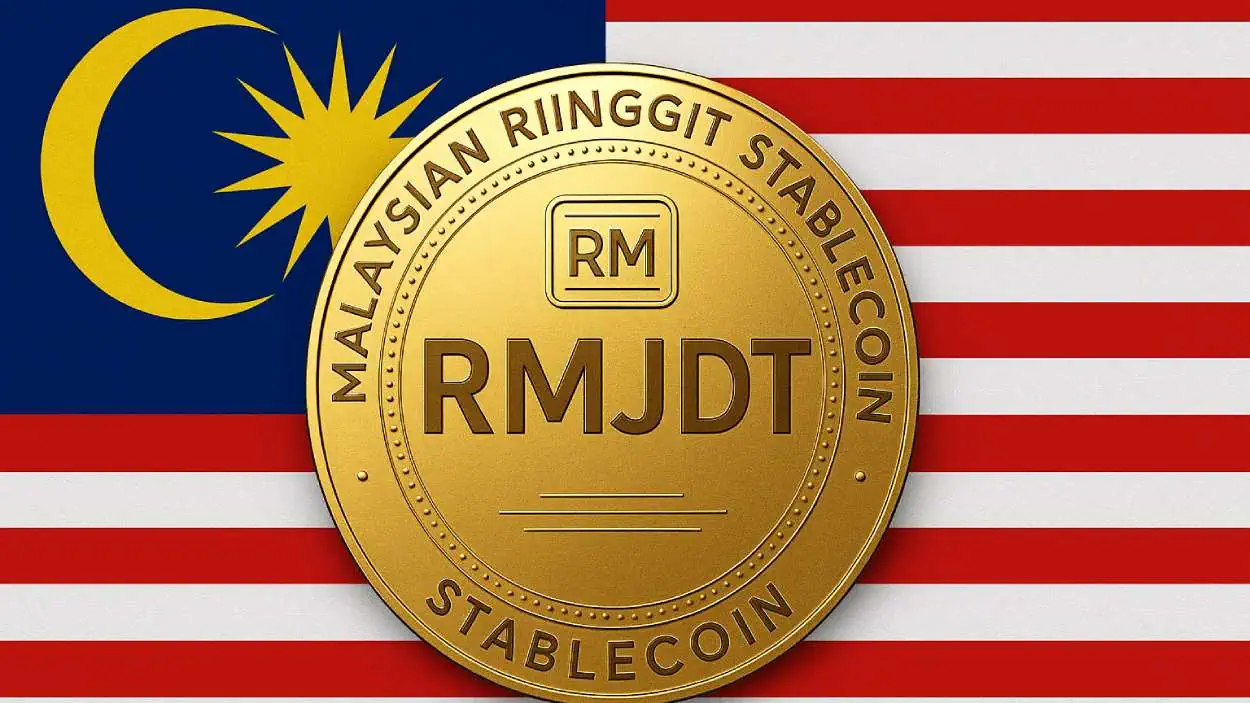







Malaysia has officially launched a new stablecoin called RMJDT, backed by the national currency and aimed at driving cross-border payments and foreign investment across the Asia-Pacific region.
Key Takeaways
- RMJDT is a stablecoin pegged to the Malaysian ringgit, launched by the Crown Prince of Johor under a regulated sandbox.
- The token will run on Zetrix, Malaysia’s national Layer-1 blockchain supporting Web3 and cross-border trade infrastructure.
- A Digital Asset Treasury Company (DATCO) is also being created with an initial RM500 million ($121.5 million) allocation in Zetrix tokens.
- RMJDT aims to promote international use of the ringgit and attract foreign direct investment to Malaysia.
What Happened?
Malaysia has stepped into the digital currency space with RMJDT, a ringgit-backed stablecoin launched by Tunku Ismail Ibrahim, the Crown Prince of Johor. The initiative is supported by Bullish Aim Sdn. Bhd., a telecom company owned by the prince. It will operate under Malaysia’s regulated sandbox for digital assets, overseen by the Securities Commission and Bank Negara Malaysia.
The eldest son of Malaysia’s billionaire king is launching a ringgit-backed stablecoin https://t.co/yXhb91lhlg
— Bloomberg (@business) December 9, 2025
A Royal-Led Push into Stablecoins and Web3
The launch of RMJDT reflects a broader push by Malaysia to modernize its financial infrastructure using blockchain technology. Issued on Zetrix, a national Layer-1 blockchain developed by Zetrix AI Berhad (formerly MY E.G. Services Bhd), the stablecoin is designed to support cross-border trade, especially with partners in the Asia-Pacific region, including China.
Zetrix allows for smart contracts, privacy, and scalability, and plays a foundational role in the Malaysia Blockchain Infrastructure (MBI). The platform already supports tools like Blockchain-based Identifiers and Verifiable Credentials that could help transform trade processes.
The initial supply of RMJDT is 500 million tokens, backed by ringgit cash deposits and short-term Malaysian government bonds, according to official statements. The coin’s purpose is not just transactional efficiency but to help the ringgit gain broader international relevance in trade settlements.
Establishing a Digital Asset Treasury
Bullish Aim also announced the formation of a Digital Asset Treasury Company (DATCO), which will manage a treasury of RM500 million in Zetrix tokens. This is expected to increase to RM1 billion over time. The treasury will:
- Stabilize network gas fees for RMJDT transactions.
- Stake Zetrix tokens to support up to 10 percent of validator nodes on the blockchain.
- Provide long-term security and resilience for the Malaysian Web3 ecosystem.
The structure of this treasury draws inspiration from international crypto strategies such as those employed by MicroStrategy and Bitmine Immersion.

Riding the Wave of APAC Stablecoin Adoption
This launch comes at a time when Asia is leading global adoption of stablecoins. According to Circle, the APAC region recorded $2.4 trillion in on-chain stablecoin activity between June 2024 and June 2025. Over 56 percent of institutions in Asia already use stablecoins for treasury, payments, and settlements.
Malaysia’s move follows similar stablecoin developments in Hong Kong, which released regulations earlier this year. RMJDT positions Malaysia competitively within the region’s growing digital asset economy.
CoinLaw’s Takeaway
In my experience, seeing a royal-led initiative take charge of a stablecoin project signals just how serious Malaysia is about integrating blockchain into its economic strategy. RMJDT is not just another token. It is a policy-backed, infrastructure-supported financial instrument aimed at transforming how Malaysia does business globally. I found the blend of national policy alignment, private sector initiative, and royal leadership to be a strong signal of long-term commitment. This is not a trial balloon. It is a strategic move that puts Malaysia on the digital currency map in Asia.