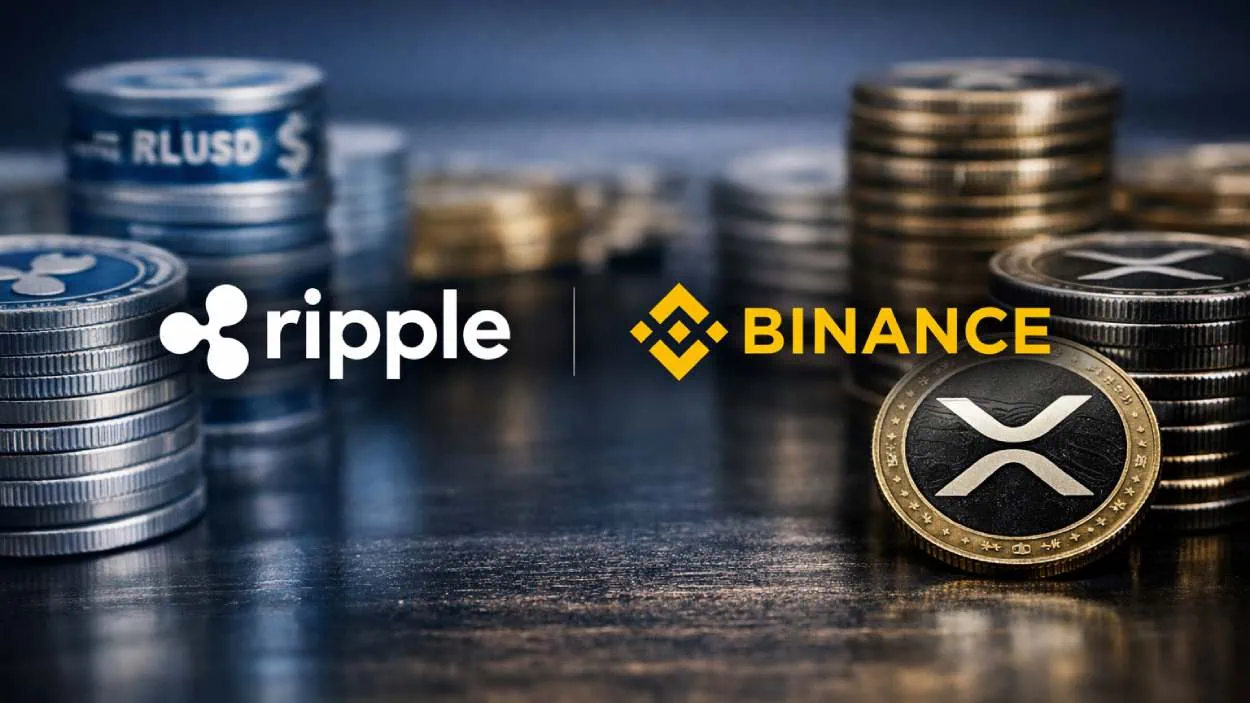







Ripple’s dollar-backed stablecoin RLUSD has officially launched on Binance, unlocking new trading channels and deepening XRP Ledger integration.
Key Takeaways
- Binance listed RLUSD with multiple spot pairs including XRP/RLUSD and introduced zero-fee trading on select pairs.
- RLUSD is backed by more than 103% reserves in cash and U.S. Treasuries, overseen by New York regulators.
- The stablecoin operates on Ethereum and XRP Ledger, with plans to expand to major Layer 2s like Optimism and Base in 2026.
- Institutions and NGOs such as BlackRock and World Central Kitchen are integrating RLUSD for payments and settlements.
What Happened?
On January 21, Binance, the world’s largest crypto exchange by trading volume, announced support for Ripple’s regulated stablecoin RLUSD. The listing came with spot pairs such as RLUSD/USDT, RLUSD/U, and XRP/RLUSD. To mark the debut, Binance introduced zero trading fees on RLUSD/USDT and RLUSD/U pairs for a limited time.
Deposits are already open, and withdrawals began on January 23. RLUSD becomes instantly accessible to Binance’s global user base and liquidity pools, significantly expanding its reach.
Ripple USD 🤝 Binance$RLUSD is officially listed on @binance 🚀supported on Ethereum, with XRPL coming soonhttps://t.co/z8bGUGZpZZ
— Ripple (@Ripple) January 21, 2026
RLUSD’s Growing Adoption and Technical Strength
Launched in December 2024, RLUSD quickly reached a market cap exceeding $1.4 billion. The stablecoin is pegged 1:1 to the U.S. dollar and backed by a reserve buffer exceeding 103%, held in FDIC-insured bank deposits and U.S. Treasury bills. These assets are safeguarded under the New York Department of Financial Services (NYDFS) trust charter.
Ripple selected Bank of New York Mellon as RLUSD’s primary custodian through its subsidiary, Standard Custody & Trust Company. RLUSD is designed to comply with regulations like MiCA in Europe and NYDFS oversight in the U.S.
The stablecoin is live on Ethereum and the XRP Ledger (XRPL). Ethereum support gives RLUSD access to the deepest DeFi liquidity, while XRPL integration allows for faster, cheaper settlements. Ripple plans to extend RLUSD to Ethereum Layer 2s in 2026, using Wormhole and Native Token Transfer (NTT) protocols to support chains like Optimism, Base, Ink Chain, and Unichain.
Real-World Use Cases and Institutional Demand
Ripple is positioning RLUSD as a compliant and enterprise-grade stablecoin, gaining traction with institutions and nonprofits alike:
- BlackRock has added RLUSD as collateral in its tokenized treasury fund BUIDL, showcasing its institutional potential.
- The Dubai Financial Services Authority approved RLUSD for use under its updated crypto framework, putting it on par with USDC and EURC.
- Nonprofits like World Central Kitchen, Water.org, Mercy Corps, and GiveDirectly are testing RLUSD for humanitarian aid, leveraging Ripple’s blockchain to enable fast and transparent cross-border payments.

How This Impacts XRP and Ripple’s Ecosystem?
The Binance listing gives RLUSD exposure to one of the most active crypto trading environments. While RLUSD itself is a stablecoin, its usage on XRPL could increase network activity and fee burns, indirectly supporting XRP.
Ripple CEO Brad Garlinghouse praised the listing as “eXtRemely Positive,” and community members highlighted the impact on DeFi opportunities and liquidity provisioning.
With over 60 global licenses, Ripple received a U.S. banking charter from the Office of the Comptroller of the Currency. It gives RLUSD a dual-layer regulatory structure that no other stablecoin currently offers.
The broader strategy appears to be a “stablecoin-first architecture,” where RLUSD represents fiat value on-chain, and XRP remains the fast, cost-efficient bridge for currency movement.
CoinLaw’s Takeaway
I think this move by Binance is a massive credibility boost for RLUSD and a strategic win for Ripple. In my experience watching stablecoin launches, getting listed on Binance with zero fees is a strong market signal. It shows RLUSD is not just another token but a serious player in regulated digital finance.
Also, the fact that NGOs and even BlackRock are using RLUSD tells me that Ripple is building something more future-proof than competitors like PYUSD. I found the Ethereum Layer 2 expansion plans particularly smart. Ripple is clearly thinking long-term about liquidity and scaling.