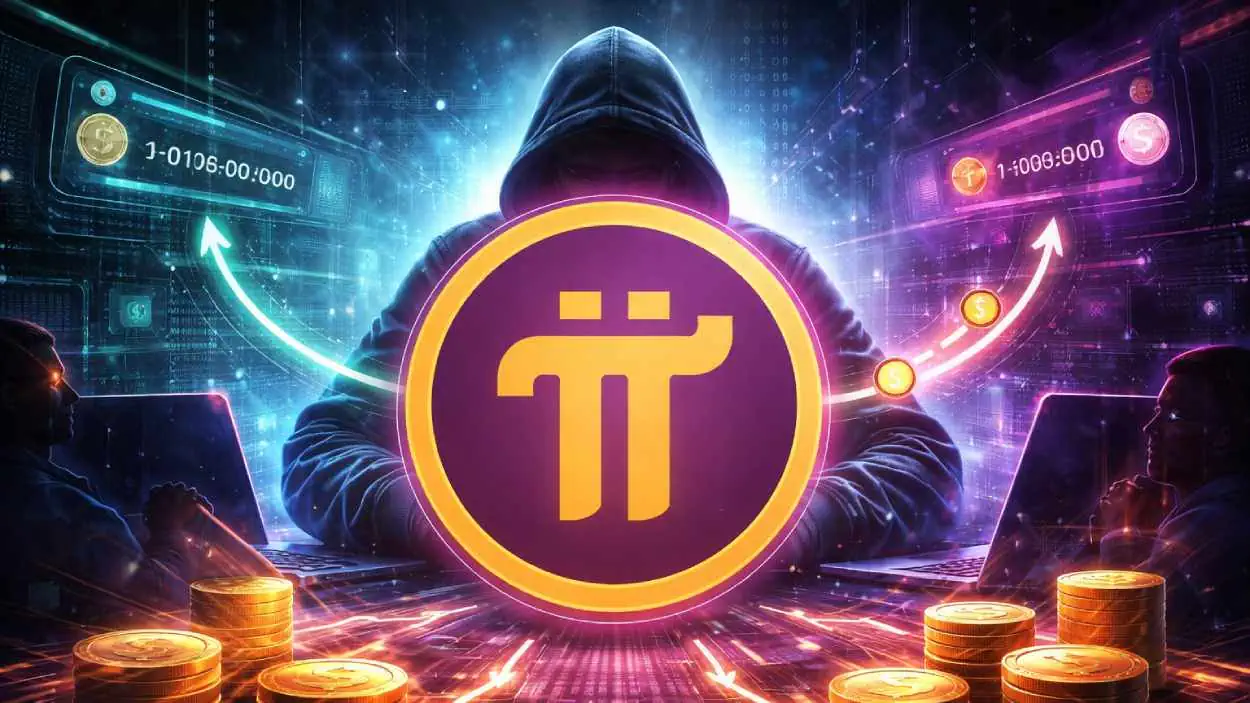







Pi Network has temporarily disabled its wallet payment request feature following a wave of sophisticated scams that drained more than 4.4 million Pi tokens from user accounts.
Key Takeaways
- Over 4.4 million Pi tokens have been lost through social engineering scams that exploit the network’s payment request feature.
- A single scam wallet has been linked to monthly inflows of up to 877,900 Pi since July 2025.
- The Pi Core Team has suspended the payment request function to prevent further abuse while evaluating additional security measures.
- Community leaders are urging users to reject all unsolicited payment requests, even those appearing to come from known or trusted sources.
What Happened?
The Pi Network wallet’s payment request feature has been exploited in a widespread scam campaign, leading to significant losses for users. Scammers use the transparency of the Pi blockchain to identify wallets with large balances and then send fraudulent requests. Once a user approves such a request, the tokens are transferred instantly and irreversibly to the scammer’s wallet.
Special announcement to all #Pioneers.
— Pi OpenMainnet 2025 (@Pi_OM_2025) December 30, 2025
Stay alert.
Hello #Pioneers, Scammers can find your wallet address on the blockchain and clearly see how many Pi coins you have in your wallet. Once they know your Pi coin balance, they will send you a payment request. As soon as you click… pic.twitter.com/Yqnmjt5cXC
Scams Trigger Feature Suspension
Pi Network’s Core Team made the decision to suspend the payment request feature after a sustained and coordinated scam operation came to light. One wallet, identified by community trackers, has received hundreds of thousands of Pi each month, with losses totaling over 4.4 million tokens across 2025.
Here’s how much the top Pi scammer is stealing per month
— r/PiNetwork (@PiNetworkUpdate) December 30, 2025
Payments to GCD3SZ3TFJAESWFZFROZZHNRM5KWFO25TVNR6EMLWNYL47V5A72HBWXP
2025-07: 877902.56
2025-08: 743046.69
2025-09: 757277.21
2025-10: 563096.74
2025-11: 622767.88
2025-12: 838110.68
Total: 4402201.77
Data shared publicly shows:
- 877,900 Pi in July 2025
- 743,000 Pi in August
- 757,000 Pi in September
- 563,000 Pi in October
- 622,700 Pi in November
- Over 838,000 Pi in December
This trend suggests an organized campaign rather than isolated incidents, with activity accelerating toward the end of the year.
How the Scam Works?
The method does not rely on a software vulnerability. Instead, it leverages the standard functionality of Pi wallets and the openness of blockchain data. Scammers locate high-value wallets and send them a payment request. If the user unknowingly approves the request, the tokens are gone for good.
A community post from Pi OpenMainnet 2025 clarified:
This highlights the fact that the scam exploits human error, not a flaw in the Pi Network’s design.

Social Engineering at the Core
Pi’s transparent blockchain and public wallet addresses make it easy for bad actors to identify targets. Once a potential victim is found, scammers may pose as friends, moderators, or even official Pi representatives to trick them into approving malicious transfers.
Users have also been targeted through phishing portals, fake airdrops, and misleading promotions. Some scams closely mimic legitimate interfaces, making it difficult for inexperienced users to spot the difference.
Pi Team Responds with Temporary Suspension
In response to the mounting threat, the Pi Core Team suspended the wallet’s payment request feature. Pi Network Alerts confirmed the move on X, suggesting it was due to the scams “getting out of control.“
The team is now evaluating improved review flows, clearer warnings, and additional protections to prevent further incidents. No timeline has been given for re-enabling the feature.
Community Steps Up
Moderators and security advocates across the Pi ecosystem are calling on users to:
- Reject all unsolicited payment requests.
- Verify any wallet activity before approval.
- Avoid interacting with unverified links or domains.
- Stay alert for impersonators mimicking official channels.
With many Pioneers still new to on-chain transactions, education and awareness remain the strongest defenses.
CoinLaw’s Takeaway
In my experience, the biggest risks in crypto often don’t come from bugs in the code, but from tricks played on the mind. This Pi Network incident is a classic case of social engineering, where scammers use trust, not tech, to steal your tokens. I found the community’s fast response impressive, but this should be a wake-up call. Transparency is a double-edged sword. It empowers users, but also empowers scammers. The Pi Core Team’s temporary suspension was the right move, but stronger, permanent guardrails must follow. And most importantly, users must learn to double-check before they click.