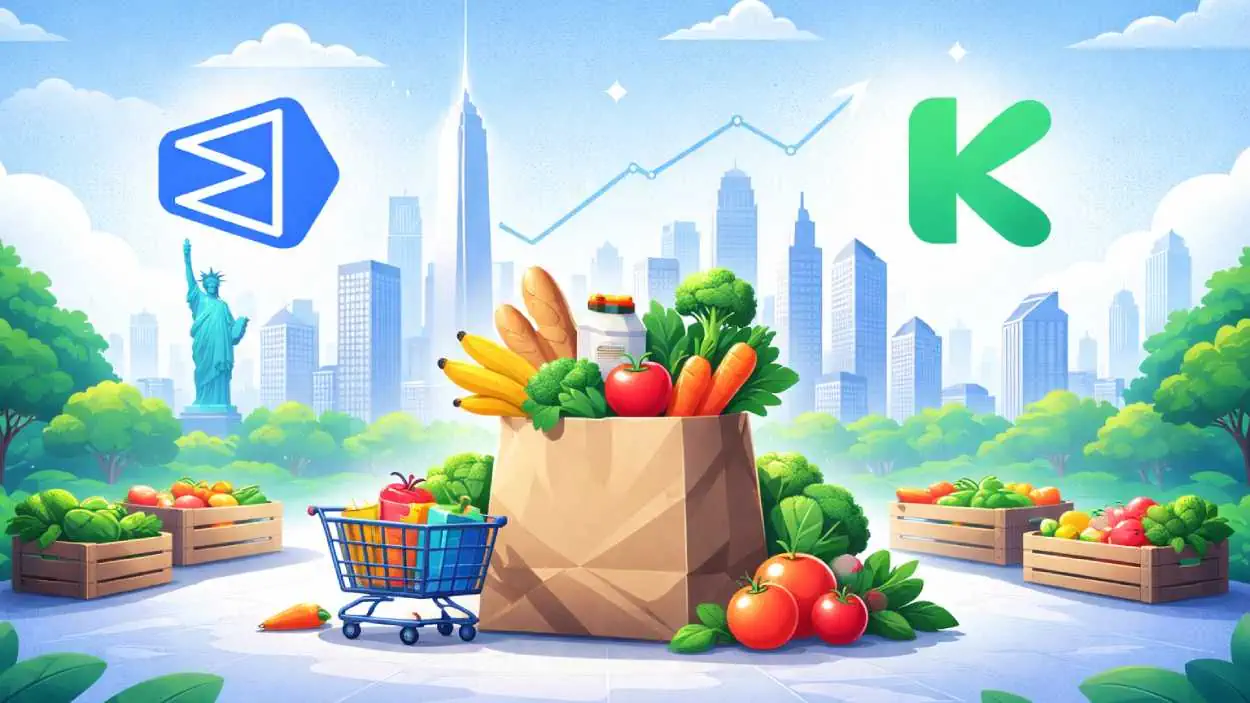







Two prediction market giants are turning heads in New York City with competing free grocery giveaways, aiming to boost brand visibility and stir conversation around the future of forecasting platforms.
Key Takeaways
- Kalshi gave away $50 worth of groceries to nearly 1,800 people at a Manhattan grocery store on February 2.
- Polymarket is opening a fully stocked free grocery store for five days starting February 12.
- Both platforms say the stunts are in response to NYC Mayor Zohran Mamdani’s pledge for city-run grocery stores.
- The grocery giveaways reflect intensifying competition as prediction markets grow more mainstream and media-facing.
What Happened?
Two of the most prominent prediction markets, Kalshi and Polymarket, are clashing publicly in New York with dueling “free grocery” campaigns. The high-visibility stunts are part branding exercise, part social message, and come at a time when both platforms are experiencing record usage and heightened regulatory scrutiny.
Thousands have already picked up their free Kalshi groceries!
— Kalshi (@Kalshi) February 3, 2026
We are being told we’ve already inspired other companies to keep up the initiative!
2 more hours to get yours
Westside Market | 84 3rd Ave. NYC pic.twitter.com/8R11OGODLu
NYC Grocery Giveaway Becomes a PR Battleground
Kalshi struck first, announcing a one-day event where it would cover up to $50 in groceries per shopper at Westside Market in the East Village. The event, held on Tuesday, February 2, saw long lines stretching across several blocks, with over 1,795 people signing up, according to Kalshi’s guest list.
Running from 12 p.m. to 3 p.m., the promotion reportedly drew thousands and was covered by mainstream outlets. Kalshi promoted the event through social media and emphasized its commitment to accessible food as a civic gesture.
Not to be outdone, Polymarket unveiled a more ambitious plan, announcing what it calls “New York’s first free grocery store”, set to open from February 12 through February 15. The company has leased a retail space for the temporary activation, although the exact address has not been disclosed publicly.
In a bold statement, Polymarket said:
“Free groceries. Free markets. Built for the people who power New York.”
After months of planning, we’re excited to announce ‘The Polymarket’ is coming to New York City.
— Polymarket (@Polymarket) February 3, 2026
New York’s first free grocery store.
We signed the lease. And we donated $1 million to Food Bank For NYC — an organization that changes how our city responds to hunger. 🧵 pic.twitter.com/BGMCWUMz8n
The company added that the pop-up is the result of months of planning, involving retail build-outs, permits, logistics, and partnerships with nonprofits. Most notably, Polymarket donated $1 million to Food Bank for New York City, a contribution that was confirmed by the nonprofit’s spokesperson.
A Nod to Political Promises and Public Sentiment
Both companies appear to be reacting to Mayor Zohran Mamdani’s controversial campaign pledge to launch city-run grocery stores, a proposal that has sparked debate across political and business communities.
While the mayor’s idea has been met with mixed reactions, including from current grocery store owners, New York already operates city-supported grocery initiatives via its Economic Development Corporation. Kalshi and Polymarket’s events capitalize on the buzz around this topic, bringing it into the public eye in flashy, consumer-facing ways.

Prediction Markets on the Rise
The grocery stunts reflect a larger battle for mindshare in the booming prediction markets sector. According to recent figures:
- Daily prediction market volume now tops $400 million, a fourfold increase from the previous year.
- Kalshi earned $263.5 million in fees in 2025 alone, according to internal figures.
- Both platforms now carry multi-billion dollar valuations, driven by integrations with major financial and media partners.
Polymarket has recently partnered with Dow Jones and the Golden Globes, while Kalshi is working with CNN and CNBC. In a creative twist, Polymarket has also launched billboard campaigns designed to be vandalized, while Kalshi uses digital billboards to display real-time market odds.
Despite growing popularity, both platforms face rising scrutiny. The CFTC and state regulators have raised concerns about insider trading, particularly after a Polymarket trader allegedly profited significantly from a geopolitical event involving Venezuela.
Kalshi has publicly distanced itself from any questionable activity, emphasizing its strict policies against insider trading and its support for clear regulation in the space.
CoinLaw’s Takeaway
I love a good marketing stunt, but this one hits differently. In my experience covering crypto and finance, stunts like this are more than gimmicks. They’re clever pressure points, designed to highlight economic gaps while building trust in new platforms. The battle between Polymarket and Kalshi is not just about who gives away more food. It’s about who earns the public’s confidence first in a market that lives and dies by perception. I found Polymarket’s $1 million donation a bold and strategic move, while Kalshi’s crowd-powered giveaway showed off scale and real-time hype. Either way, this competition is serving up more than groceries. It’s reshaping how the public sees prediction platforms.