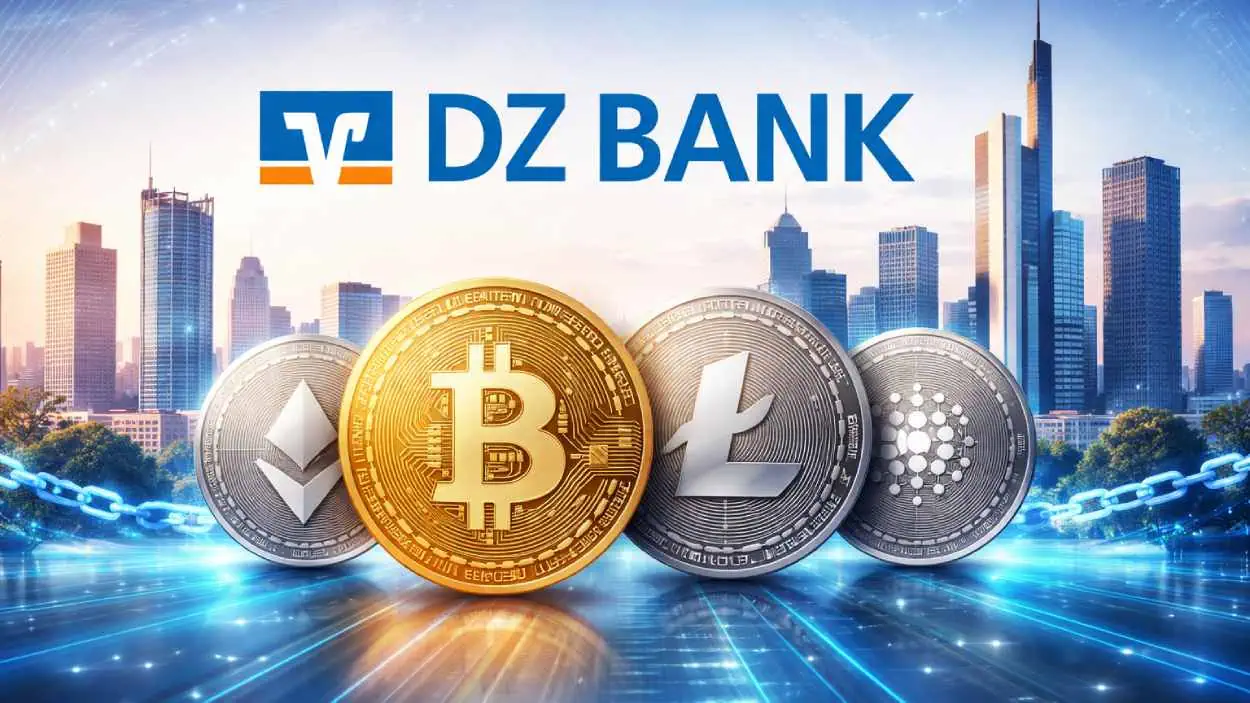







Germany’s second-largest bank has received the green light to bring cryptocurrency trading directly to retail customers through its nationwide cooperative banking network.
Key Takeaways
- DZ Bank secured MiCA regulatory approval from BaFin, allowing it to launch its retail crypto trading platform, meinKrypto.
- meinKrypto will be integrated into the VR Banking App, giving users access to trade Bitcoin, Ether, Litecoin and Cardano.
- Each cooperative bank must individually apply for MiCA notification to activate crypto services for their customers.
- The move reflects a broader shift in Germany, as traditional banks embrace crypto under new EU-wide regulations.
What Happened?
DZ Bank has received a MiCA license from BaFin, Germany’s financial regulator, to offer cryptocurrency services through its new digital asset platform called meinKrypto. Designed for retail customers, the service will operate within Germany’s cooperative banking network, which includes local institutions like Volksbanken and Raiffeisenbanken.
💥BREAKING: 🇩🇪 Germany’s second-largest bank DZ Bank gets approval for institutional Bitcoin and crypto trading.
— Crypto Rover (@cryptorover) January 14, 2026
Big for adoption. 🤝 pic.twitter.com/iSonypvIq7
DZ Bank Brings Crypto to the Masses
With the license secured in December 2025, DZ Bank is moving from institutional crypto services to offering fully regulated retail access. meinKrypto is a self-directed trading platform that supports Bitcoin (BTC), Ether (ETH), Litecoin (LTC), and Cardano (ADA), and will be embedded directly in the VR Banking App.
The bank confirmed that meinKrypto is not part of advisory services and is meant for retail investors who prefer managing their own portfolios. The platform was jointly developed with Atruvia, the IT provider for Germany’s cooperative banking system.
To offer these services, each participating cooperative bank must submit a MiCA notification to BaFin. Once approved and implemented, the crypto trading feature will be available to their retail clients through existing mobile banking apps.
According to a study conducted in September 2025 by Genoverband, over 71 percent of Germany’s cooperative banks expressed interest in offering crypto services to their customers, signaling strong momentum for adoption.
A Strategic Shift from Institutional to Retail Crypto
The MiCA license marks a major milestone in DZ Bank’s ongoing crypto strategy. In 2024, the Frankfurt-based bank partnered with Boerse Stuttgart Digital to deliver crypto trading and custody solutions to around 700 cooperative banks. At that time, the initiative was focused on institutional clients, with a phased rollout awaiting regulatory clearance.
That clearance has now arrived. The approval from BaFin offers a clear legal foundation under MiCA, the European Union’s comprehensive regulatory framework for digital assets. This removes previous regulatory uncertainties and positions DZ Bank as a frontrunner in implementing MiCA standards in practice.
However, the license does not automatically cover the entire cooperative network. Each bank within the network will independently determine whether to adopt the crypto offering for their customers.

A Broader Trend in German Banking
DZ Bank is not alone in this move. DekaBank, another major player in Germany’s cooperative financial system, launched institutional crypto trading and custodial services earlier in 2025. Together, these developments point to a wider transformation in Germany’s financial sector, where traditional institutions are embracing digital assets under clear regulatory guidance.
As MiCA standardizes crypto oversight across the European Union, more banks are expected to follow suit and integrate regulated crypto services into their existing financial infrastructure.
CoinLaw’s Takeaway
I’ve seen countless crypto rollouts that stall at the regulatory stage, but this one is different. DZ Bank’s MiCA approval is not just a license. It’s a signal. It shows that crypto is becoming a legitimate part of everyday banking in the EU, especially when a heavyweight like DZ Bank moves beyond institutional clients and brings digital assets to retail users.
In my experience, when a major bank integrates crypto into its existing app, it simplifies adoption and builds trust for hesitant customers. The fact that meinKrypto is not an isolated app but part of the VR Banking experience could be a game changer for mainstream acceptance in Germany.