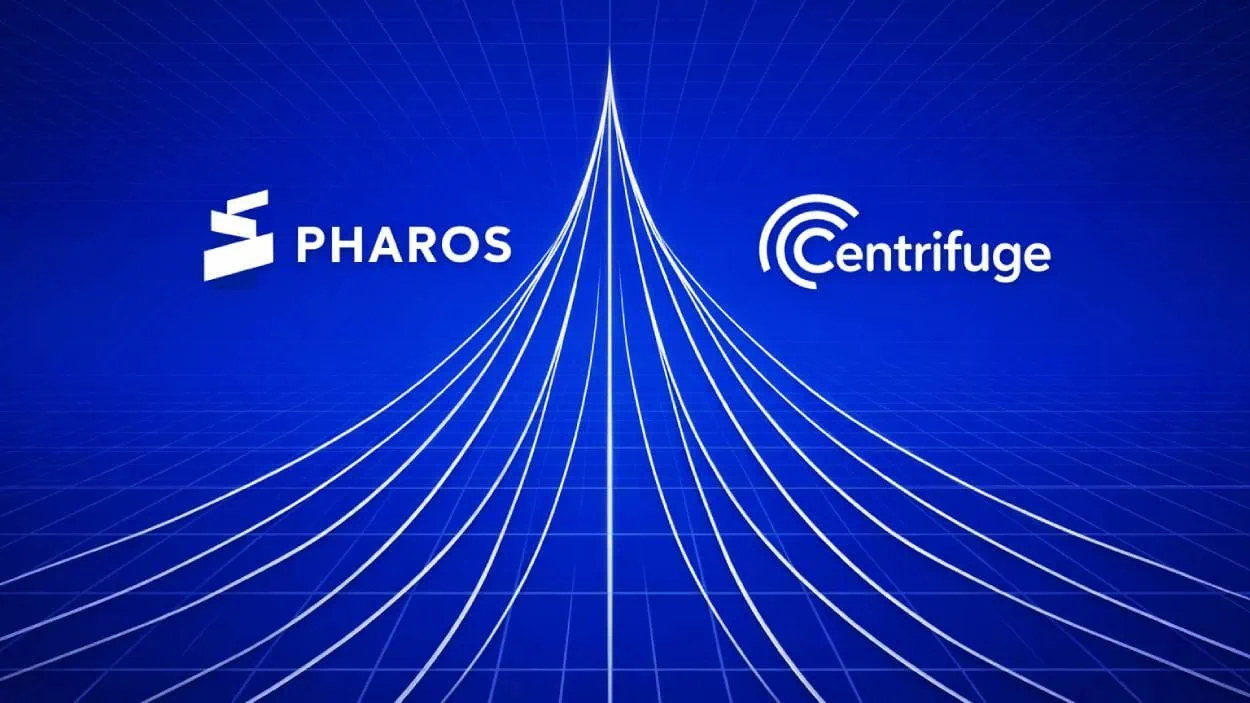







Centrifuge and Pharos have teamed up to make tokenized U.S. Treasuries easier to access, trade, and use across onchain financial systems.
Key Takeaways
- The partnership aims to improve distribution for institutional assets like tokenized U.S. Treasuries JTRSY and structured credit JAAA.
- Centrifuge brings tokenization infrastructure and asset standards, while Pharos offers a Layer 1 designed for high throughput financial workflows.
- The goal is to keep tokenized assets active and usable onchain, instead of turning into static holdings after issuance.
What Happened?
Centrifuge and Pharos announced a partnership focused on distributing and operating institutional grade assets onchain at scale. The companies say the core issue is not creating tokenized assets, but making them widely accessible and continuously usable in real onchain markets.
Pharos is partnering with @centrifuge to advance institutional-grade RWA distribution and execution onchain
— Pharos | Testnet Live (@pharos_network) February 17, 2026
Tokenization alone doesn’t solve access or usability. Many assets still end up fragmented or idle after issuance
By combining Centrifuge’s institutional asset standards… pic.twitter.com/5h7YKjpxF2
Why Distribution Is Still the Hard Part?
Tokenization has moved from theory to reality, but institutional adoption often stalls at the same bottleneck: distribution. Many tokenized products still end up fragmented across platforms, with limited pathways for new participants to discover, access, and deploy them. Even when issuance works smoothly, the assets can become passive after launch, with few tools to integrate them into active strategies.
Centrifuge and Pharos are positioning their partnership as an answer to that gap. Their shared approach is about building the rails that make institutional assets move through onchain finance more like they move through traditional markets, with better access, deeper liquidity, and more consistent utility.
What Centrifuge Brings to the Partnership
Centrifuge has been building infrastructure for institutional grade tokenization, with standards designed to support real world assets across onchain environments. In this partnership, Centrifuge is the issuance and asset framework layer for products like tokenized U.S. Treasuries JTRSY and structured credit JAAA.
Bhaji Illuminati, CEO of Centrifuge Labs, said:
That message is important because it shifts the conversation away from just putting assets onchain and toward keeping them operational once they arrive.

What Pharos Adds as a Liquidity and Execution Layer
Pharos is designed as a financial Layer 1 focused on RealFi, with an emphasis on throughput and practical financial workflows. The network highlights capabilities like deep parallel execution and a modular approach intended to support large scale institutional activity.
In the partnership, Pharos acts as a strategic distribution and liquidity layer for assets issued through Centrifuge. The companies describe an integrated environment that spans wallet access, platform and enterprise channels, and execution capacity, so assets can be accessed, pooled, allocated, and reused rather than remaining static after issuance.
Wish Wu, CEO of Pharos, said:
Pharos is backed by investors including Hack VC and Faction VC, along with other investors tied to traditional finance.
Why This Matters Outside the U.S. and Western Europe
One of the most practical angles in the announcement is the focus on access barriers in many markets outside the U.S. and Western Europe. The companies point to issues such as regulatory hurdles, onboarding friction, custody limitations, and operational constraints that can make it hard to reach U.S. dollar denominated treasury and credit products.
Even with tokenized versions available, distribution can remain indirect and fragmented. The partnership frames Pharos as a pathway to broader capital entry and deeper onchain liquidity, especially where users and institutions need simpler access points and better execution infrastructure.
CoinLaw’s Takeaway
I found this announcement refreshing because it talks about the unglamorous part of tokenization that actually decides whether it wins: distribution. In my experience, the market does not fail because people do not want safe yield products like treasuries. It fails when access is clunky, liquidity is thin, and assets just sit there doing nothing after launch. If Centrifuge and Pharos can genuinely make tokenized treasuries easier to reach and easier to use inside real onchain workflows, that is the kind of plumbing that can pull institutional finance closer to crypto rails in a meaningful way.