






Spain’s second-largest bank has joined a growing European banking initiative to launch a regulated euro-backed stablecoin, strengthening the bloc’s push for financial independence in the digital currency space.
Key Takeaways
- BBVA has joined Qivalis, a European consortium of 12 major banks developing a regulated euro-pegged stablecoin.
- The stablecoin aims to counter the dominance of dollar-backed tokens like USDT and USDC.
- Qivalis is pursuing MiCA-compliant approval from the Dutch central bank to operate as an electronic money institution.
- The token’s launch is expected in the second half of 2025, with plans to support faster blockchain-based payments across the EU.
What Happened?
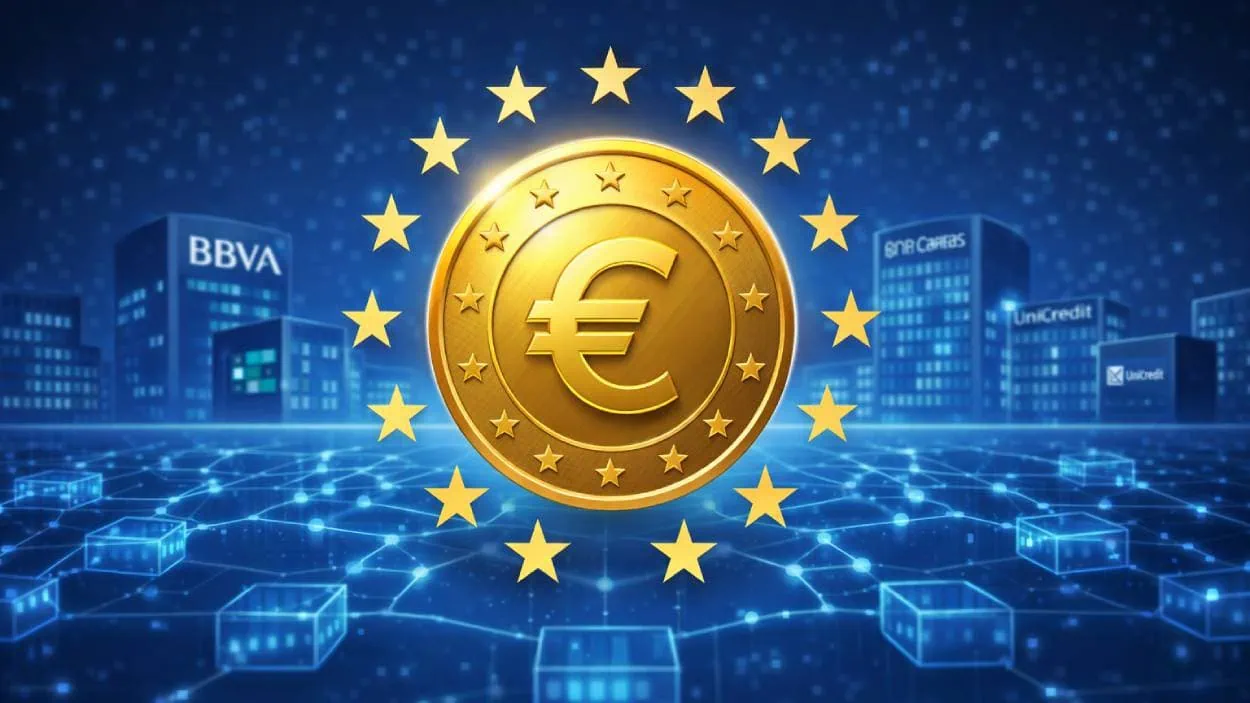
BBVA, the $800 billion-asset Spanish banking giant, has become the 12th financial institution to join Qivalis, an Amsterdam-based initiative working to launch a euro-pegged stablecoin. The group includes some of Europe’s most prominent banks such as BNP Paribas, ING, UniCredit, and CaixaBank. This growing alliance aims to offer an alternative to U.S.-based stablecoins and support the European Union’s broader goals of digital sovereignty and financial innovation.
🚨$800B BBVA BANK JOINS EU CONSORTIUM TO LAUNCH REGULATED EURO STABLECOIN
— Coin Bureau (@coinbureau) February 4, 2026
Spain’s second-largest bank BBVA has joined the Qivalis group alongside 11 major banks to launch a MiCA-regulated euro stablecoin in H2 2026, challenging the dollar dominance. pic.twitter.com/65um38eS9P
European Banks Push Back Against Digital Dollar Dominance
With a current global stablecoin market worth around $300 billion, the euro only accounts for a tiny fraction of about $860 million while Tether’s USDT and Circle’s USDC dominate with a combined market cap of over $250 billion. Qivalis plans to change that by creating a euro-backed token built on trust, regulated under the EU’s MiCA framework, and operated by long-standing European banks.
BBVA’s addition reinforces the credibility and strength of the initiative. The bank is not new to digital finance. Since 2021, it has offered Bitcoin and Ethereum trading services, reflecting its early commitment to blockchain-based financial solutions. Its participation further reflects a broader industry trend of traditional financial institutions embracing tokenization and decentralized technologies.
Alicia Pertusa, Head of Partnerships and Innovation at BBVA CIB, emphasized the collaborative nature of the effort. She said:
Qivalis Builds a Regulatory Foundation for Stability
Qivalis is currently seeking authorization from the Dutch central bank to operate as an electronic money institution, a requirement under the EU’s Markets in Crypto-Assets Regulation (MiCA). This step is crucial for the group to issue a stablecoin that complies with the new pan-European framework aimed at ensuring safety, transparency, and accountability in the digital asset space.
Once approved, the Qivalis stablecoin is expected to launch commercially in the second half of 2025. The project intends to enable faster, more efficient, and euro-denominated blockchain transactions for both consumers and businesses within the bloc. It could reduce the EU’s reliance on non-European stablecoin providers, thereby protecting monetary autonomy and streamlining cross-border payments.
The current consortium includes:
- BBVA
- CaixaBank
- BNP Paribas
- ING
- UniCredit
- KBC
- Raiffeisen Bank International
- DZ BANK
- DekaBank
- Danske Bank
- SEB
- Banca Sella
Qivalis CEO Jan-Oliver Sell, formerly with Coinbase Germany, remarked that BBVA’s entry “consolidates Qivalis’ standing as Europe’s foremost bank-supported stablecoin initiative.”

CoinLaw’s Takeaway
In my experience covering digital finance, this kind of cross-border collaboration between trusted banks is exactly what Europe needs to stay competitive in a tokenized economy. The dominance of U.S.-based stablecoins like USDT and USDC is no small hurdle, but Qivalis is clearly playing the long game by building a MiCA-compliant foundation with some of the most respected institutions in the EU. I found BBVA’s steady commitment to digital transformation impressive. This move is not just about a new stablecoin. It’s about asserting control over the next generation of money in Europe and giving businesses and consumers a homegrown, reliable alternative.