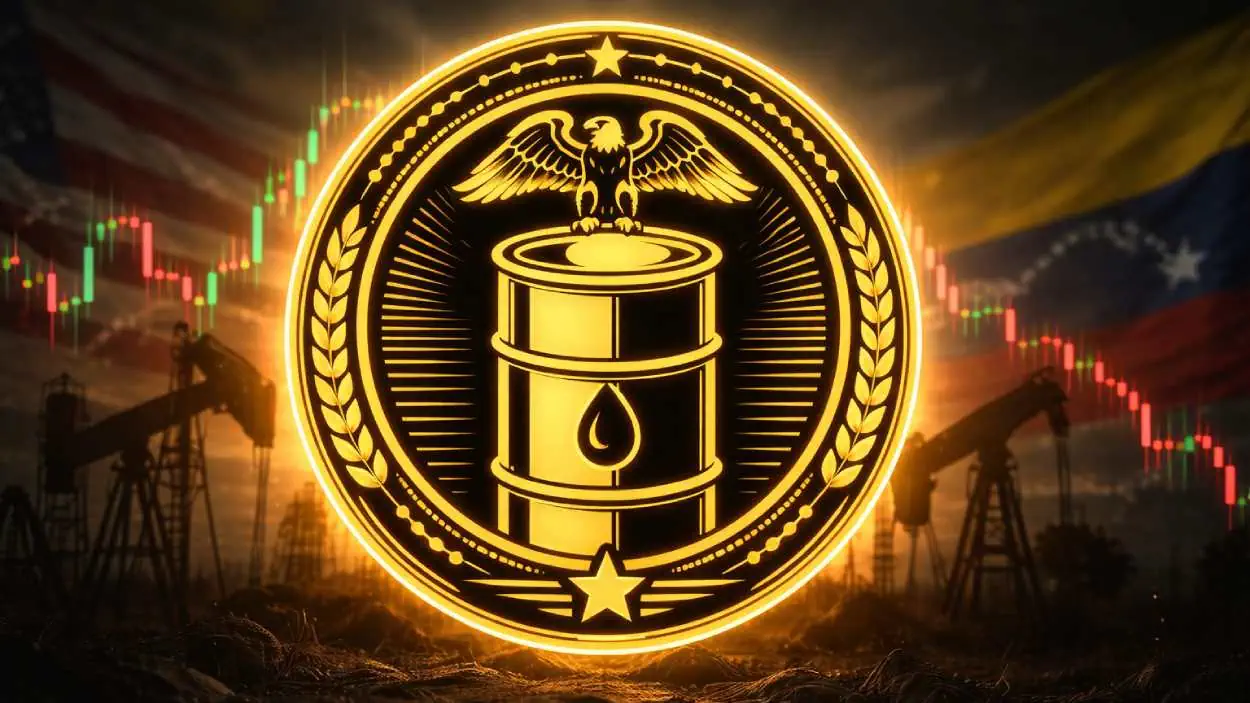







The Solana-based meme coin USOR rallied sharply on geopolitical oil news before collapsing nearly 98 percent amid warnings that the token’s narrative and structure lacked verified backing.
Key Takeaways
- USOR, a speculative meme coin claiming oil reserve links, jumped over 150 percent and briefly topped a $40 million market cap as traders reacted to U.S.–Venezuela oil developments.
- The token’s rally was driven by social media hype and narrative trading rather than verified fundamentals or asset backing.
- On-chain data revealed concentrated holdings among a small cluster of wallets, suggesting high insider control and elevated manipulation risk.
- After peaking, USOR’s price crashed from around $0.16 to roughly $0.00394 in hours, wiping out many retail positions.
What Happened?
In mid January 2026 USOR a new Solana-based token branded as U.S. Oil Reserve captured sudden attention after surging more than 150 percent in a single day of trading. The rally pushed its market capitalization above $40 million and made it one of the most active assets on crypto trackers. But the surge was short lived as the token’s price collapsed nearly 98 percent soon after its peak.
Crazy 24 hours for the $USOR meme coin. After the US officially started selling Venezuelan oil, a Solana token called U.S Oil promised tokenized shares of the American Oil Reserve using its $USOR token. It rallied 150% yesterday, only to crash straight down. pic.twitter.com/azduDZIUq3
— BeInCrypto (@beincrypto) January 21, 2026
Narrative Driven Rally on Geopolitical News
The rapid ascent in USOR’s price coincided with heightened geopolitical focus on oil markets especially linked to United States actions involving Venezuelan oil assets. Traders rapidly attached a political narrative to USOR projecting it as a play on U.S. oil interests despite no official connection to any government oil reserves or strategic petroleum holdings.
The token trended on platforms like CoinGecko as retail interest spiked. Daily trading volumes soared with traders describing the price structure as “vertical” and speculative. Yet analysts and on-chain trackers quickly warned that the price dynamics exhibited classic signs of a pump driven more by sentiment than fundamentals.
No Verified Oil Backing and Misleading Claims
The USOR project promoted itself through flashy messaging claiming to tokenize U.S. oil reserves or offer on-chain exposure to oil assets. Its official website described ideas like “gov-verified reserves” and suggested alignment with U.S. energy interests. However independent assessments and blockchain analysts determined there was no verifiable custody of oil or formal backing from any government or energy agency.
Critics noted that some promotional material even contained factual errors such as implying that oil is stored by institutions that have no such role. The crypto community also flagged assertions that referenced famous names or suggested endorsements without credible evidence.

On-Chain Data Raises Red Flags
While USOR enjoyed momentary popularity, scrutiny of its token distribution revealed concentrated holdings. The largest wallets held significant portions of the total fixed supply of one billion tokens. On-chain analytics platforms highlighted that a small cluster of wallets controlled more than a quarter of the supply which elevated concerns about potential insider coordination and manipulation.
Such concentration means that these wallets could exert outsized influence on price action and liquidity. For retail participants this raised alarms of exit liquidity risk where large holders dump tokens at peak prices leaving late buyers exposed to losses.
Sudden Crash Wipes Out Gains
After reaching its high, USOR’s price experienced a dramatic reversal dropping from around $0.16 to about $0.00394 within hours. This 98 percent decline erased gains for many retail traders who had jumped on the narrative-driven rally. Tracking platforms even issued warnings about unusual price action and heightened risk.

The collapse underscores the risks inherent in meme and narrative-based tokens where prices can swing wildly on sentiment rather than economic fundamentals. Crypto forums and social feeds were filled with mixed reactions as some criticized the hype while others lamented losses.
Broader Trends and Speculation
USOR’s rapid rise and fall comes amid a broader trend where macroeconomic and geopolitical news bleeds into crypto speculation. Traders and commentaries pointed out that tokens tied to high-profile storylines often exhibit extreme volatility and can behave like classic speculative pumps.
Unlike regulated products such as energy exchange traded funds that have transparent backing and oversight, tokens like USOR operate largely within decentralized exchanges without formal asset custody or investor protections.
CoinLaw’s Takeaway
In my view the USOR saga illustrates the danger of narrative over substance in crypto markets. While geopolitical headlines can spark interest and momentary price moves, meaningful backing and transparent mechanisms matter. In my experience retail traders often get drawn into hype cycles only to face losses when the narrative fades. High volatility and concentrated token holdings make projects like USOR precarious and unsuitable for anyone seeking stable exposure to real-world assets. Always research beyond the story and understand the fundamentals before risking capital.