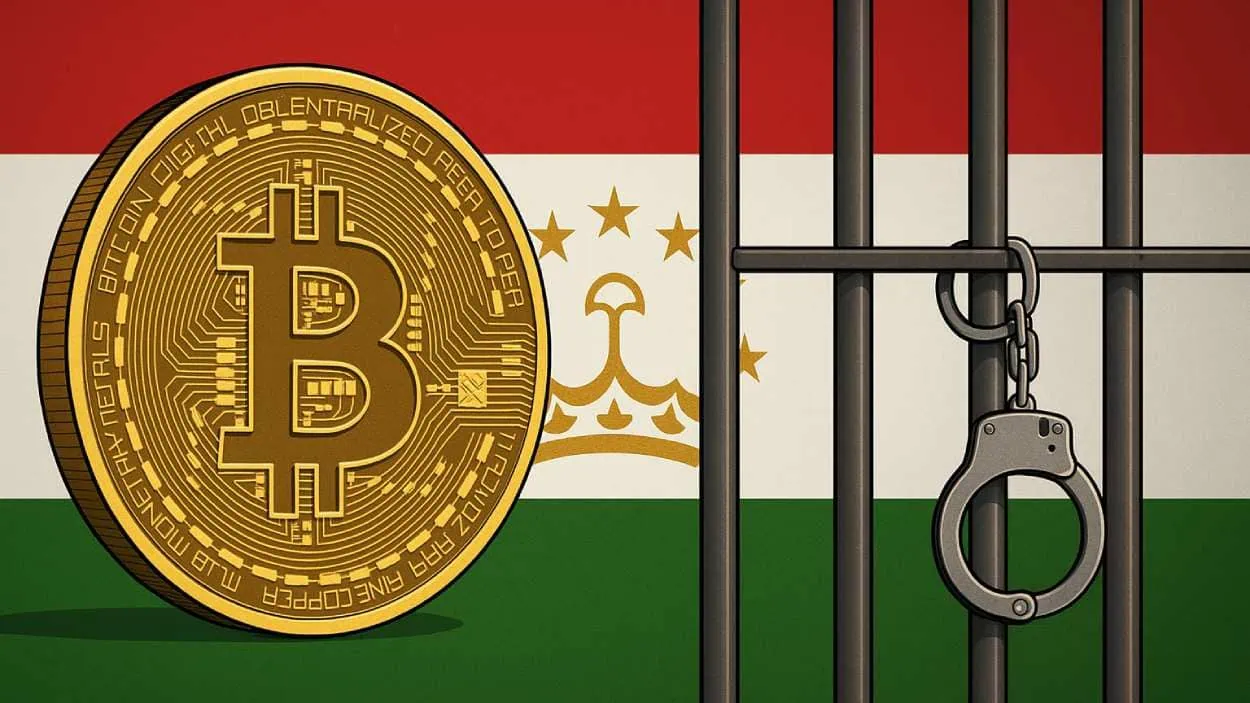







Tajikistan has officially passed a law that imposes prison sentences of up to eight years and heavy fines on individuals and groups engaged in illegal cryptocurrency mining using stolen electricity.
Key Takeaways
- New law introduces up to 8 years of prison for illegal crypto mining with stolen electricity.
- Fines range from 15,000 to 75,000 somoni, depending on the scale and organization of the mining.
- The crackdown comes amid worsening winter power shortages in Tajikistan.
- Authorities link illegal mining to over $3.5 million in financial losses and rising energy theft.
What Happened?
Tajikistan’s parliament has approved significant amendments to its Criminal Code that introduce strict penalties for unauthorized crypto mining operations. The law specifically targets miners who tap into the national power grid without authorization, a practice that has exacerbated the country’s energy crisis. The bill was presented by Prosecutor General Habibullo Vokhidzoda and was passed on December 3. It is now pending the president’s signature to come into full effect.
🚨 Tajikistan: up to eight years in prison for bitcoin mining using stolen electricity
— Atlas21 (@Atlas21_eng) December 10, 2025
Tajikistan has passed new laws to crack down on bitcoin mining powered by stolen electricity, introducing heavy fines and prison sentences of up to eight years. The measure comes as the… pic.twitter.com/VLjEev7QRA
Tajikistan’s New Law: Heavy Fines and Prison Time
The newly introduced Article 253(2) of Tajikistan’s Criminal Code establishes criminal liability for individuals involved in digital asset mining using illegally obtained electricity. Penalties vary based on the scale of the operation:
- Fines between 15,000 and 37,000 somoni (approximately $1,650 to $4,070) for individuals.
- Up to 75,000 somoni (around $8,250) for organized group operations.
- Imprisonment from 2 to 5 years for general offenders.
- Prison terms of 5 to 8 years for particularly large-scale electricity theft.
Lawmakers emphasized that illegal crypto miners often connect thousands of ASIC devices directly to the grid, bypassing metering systems and draining vast amounts of electricity.
Why the Crackdown Now?
Tajikistan faces severe winter energy shortages, largely due to low water levels affecting its hydropower plants, which provide 95 percent of the nation’s electricity. The country has seen a surge in illegal crypto mining operations, particularly after China’s 2021 mining ban, which drove many miners to Central Asia in search of cheap electricity and looser regulations.
Prosecutor General Vokhidzoda said unauthorized mining has forced authorities to restrict electricity supply in several regions. He warned that these activities have “created favorable conditions for the commission of various crimes,” including money laundering and financial fraud.

Financial Damage and Ongoing Investigations
Authorities have estimated the total losses from illegal crypto mining to exceed 32 million somoni (approximately $3.5 million). According to reports, 190 criminal cases involving nearly 4,000 people have been initiated, with damages now approaching $4.26 million.
Several mining farms have reportedly imported hardware illegally and connected directly to the power grid. These setups have been at the center of many investigations. Lawmakers stressed that the legislation is also designed to curb tax evasion, unregulated use of encryption technologies, and attempts to bypass commodity tracking systems.
CoinLaw’s Takeaway
I think Tajikistan’s move is a clear signal that crypto mining without regulation won’t be tolerated, especially when it harms public infrastructure. In my experience, crypto operations tend to migrate to places with weak oversight and cheap electricity, but that often leads to unsustainable exploitation of local resources. What stands out here is how far the government is going. Eight years in prison is no small threat, and it shows how serious the situation has become. The energy crisis was already bad, and illegal miners just made it worse. This kind of legal clarity is something many countries still lack when it comes to crypto enforcement.