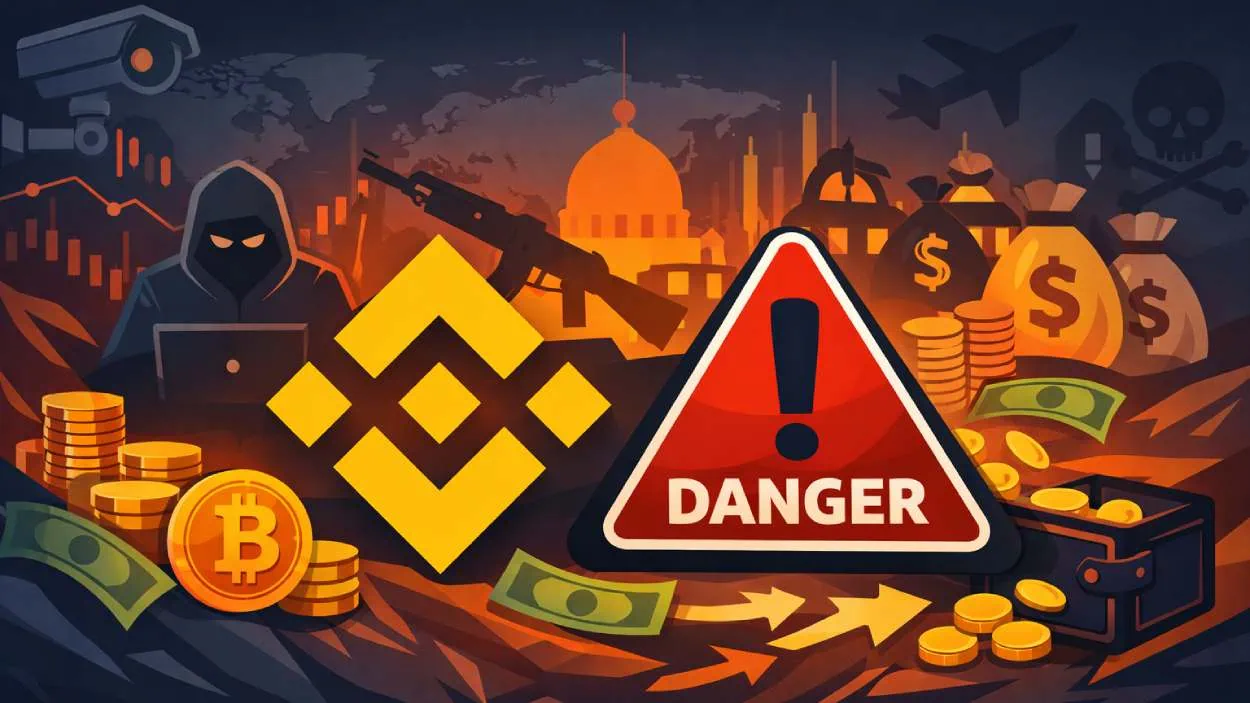







Even after agreeing to a record-breaking criminal settlement, Binance reportedly allowed high-risk accounts to move millions in cryptocurrency across its platform.
Key Takeaways
- Binance permitted $144 million in suspicious crypto activity even after its 2023 plea deal with US authorities.
- 13 flagged accounts handled over $1.7 billion, with some linked to Hezbollah, Iran, and other terror-financing networks.
- Red flags included impossible login patterns, failed identity checks, and connections to wallets frozen under anti-terror laws.
- Despite independent monitors and public promises, compliance issues persisted into 2025.
Update: We have contacted the Binance spokesperson and here is the statement we got from them.
What Happened?
According to an investigation by the Financial Times, Binance allowed multiple suspicious accounts to remain active after agreeing to a $4.3 billion settlement with the US Department of Justice in November 2023. The accounts were reportedly tied to money laundering, terrorist financing, and compliance red flags, raising serious questions about the exchange’s post-settlement enforcement.
Binance allowed suspicious accounts to operate even after 2023 US plea agreement https://t.co/5EEWGrwMCg
— Financial Times (@FT) December 22, 2025
Binance’s Compliance Pledge Falls Under Scrutiny
Binance, the world’s largest cryptocurrency exchange, faced intense regulatory pressure in 2023, culminating in a $4.3 billion criminal settlement for violations related to money laundering, sanctions evasion, and weak oversight. The company pledged to overhaul its compliance operations, including onboarding external monitors to ensure improved standards.
But new findings suggest that significant gaps remained. The Financial Times obtained internal Binance data spanning from 2021 through 2025 and reviewed 13 accounts that processed around $1.7 billion in transactions. Shockingly, $144 million of this activity occurred after Binance’s plea deal, contradicting public assurances of reform.
Key Cases from the FT Report:
- A Venezuelan man allegedly pushed $93 million through Binance. Some of the funds were traced back to Iran and Hezbollah-linked networks.
- A 25-year-old Venezuelan woman reportedly received $177 million in crypto, altering bank details 647 times over 14 months and cycling through 496 different accounts.
- Logins from some accounts showed physically impossible patterns, like accessing the account from Caracas and Osaka within hours.
- All 13 accounts received at least $29 million in Tether (USDT) from wallets later frozen by Israel due to links with terrorism. Most of these funds came from wallets tied to Tawfiq Al-Law, sanctioned by the US Treasury in March 2024.
Trump Pardon and New Binance Ties
Former Binance CEO Changpeng Zhao (CZ) was convicted of willfully violating anti-money laundering laws but received a presidential pardon from Donald Trump in October. Following the pardon, Trump family business interests announced an expansion of the USD1 stablecoin on Binance, sparking concerns over regulatory capture.
Critics argue that the pardon may have weakened compliance motivation within the company. Former Canadian intelligence official Jessica Davis said:
CZ remains banned from holding executive roles, but his longtime partner He Yi was recently named co-CEO, further complicating the company’s leadership optics.

Official Denials and Legal Pushback
Binance’s legal representatives from Carter-Ruck stated, “Any suggestion that our client has knowingly facilitated bad actors in criminal conduct is baseless.” They also claimed that the wallets in question were not flagged as terror-related at the time of transactions, and that no alerts were triggered by blockchain analytics tools.
Still, ongoing lawsuits continue to put pressure on Binance. In November, 306 families of October 7 Hamas attack victims filed suit accusing Binance of enabling millions in terror funding via its platform. Binance called those allegations “grotesquely sensationalist.”
CoinLaw’s Takeaway
Honestly, this isn’t just a regulatory hiccup. In my experience covering crypto law, when a firm agrees to a massive settlement and promises reform, the public expects action. Not just vague PR. Binance had the eyes of the world on it, yet still let flagged accounts keep flowing with millions. That’s not just oversight. That’s a failure to deliver on promises.
What really caught my eye was the physically impossible login activity. That alone should have triggered red flags, let alone the use of hundreds of bank accounts or ties to sanctioned terror networks. I get it, crypto moves fast, but compliance has to keep up.
This raises the question: if the world’s biggest exchange struggles with post-settlement compliance, what hope do smaller platforms have?