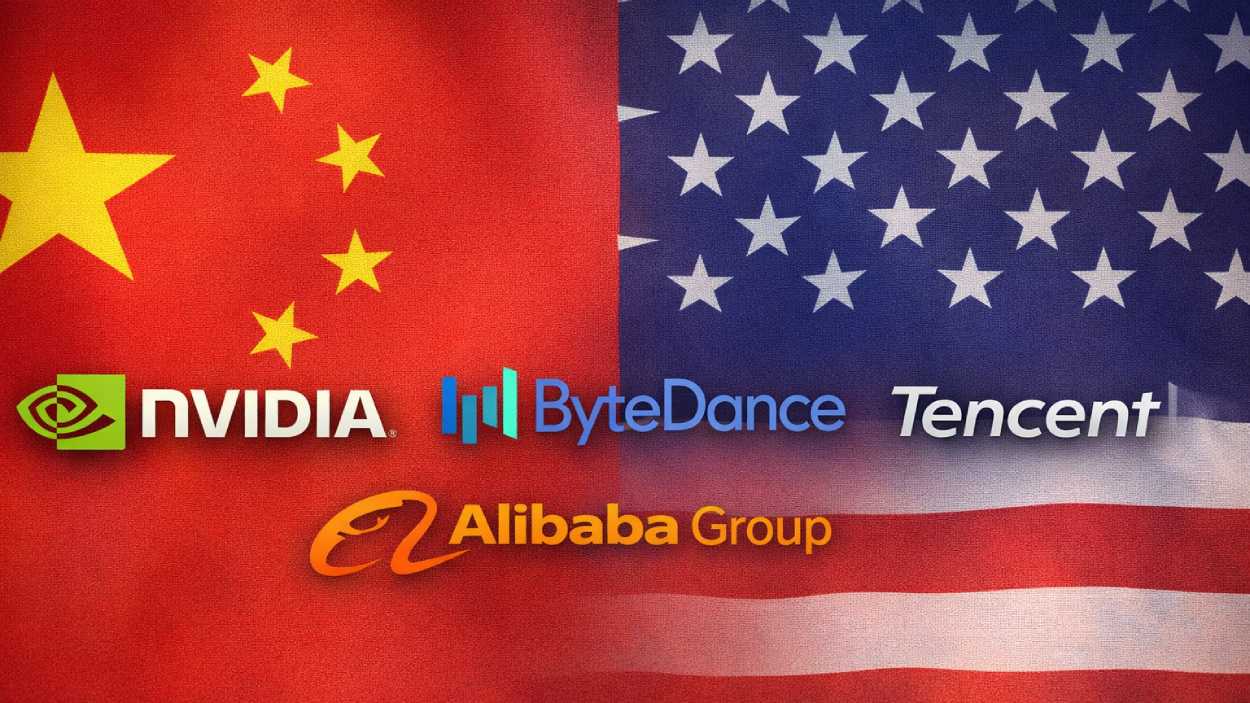







China has officially approved Nvidia’s sale of H200 artificial intelligence chips to major domestic tech firms, marking a significant pivot in its semiconductor policy amid growing AI infrastructure demands.
Key Takeaways
- ByteDance, Alibaba, and Tencent received approval to purchase over 400,000 Nvidia H200 AI chips.
- The move sparked a broad semiconductor market rally, with Nvidia stock rising 1.6% and European chipmakers surging.
- China is softening its stance on foreign chip imports, signaling a shift in its AI development strategy.
- The H200 chip offers six times the performance of Nvidia’s H20, underscoring China’s urgent need for advanced AI hardware.
What Happened?
China has granted Nvidia the green light to sell its H200 chips to ByteDance, Alibaba, and Tencent, three of the country’s most powerful tech giants. The approvals were confirmed during Nvidia CEO Jensen Huang’s visit to China this week, according to several Reuters sources. While the approvals are conditional, this marks the first significant clearance of Nvidia’s top-tier AI chips into the Chinese market.
JUST IN: 🇨🇳🇺🇸 China officially approves importing first batch of Nvidia’s H200 artificial intelligence chips. pic.twitter.com/jZ8CzkkKLi
— BRICS News (@BRICSinfo) January 28, 2026
Beijing Eases Controls Amid Growing AI Pressure
After months of pushing domestic alternatives, China’s regulators have relaxed import restrictions to allow select Nvidia chip shipments. This approval not only reflects a change in China’s AI strategy but also acknowledges the limitations of current homegrown chip technology. Although companies like Huawei have developed competitive offerings, they still lag behind Nvidia’s H200 in performance.
Beijing’s decision follows persistent lobbying and high demand from Chinese firms, which had reportedly placed orders for more than two million H200 chips. However, the Chinese government has only approved around 400,000 so far and is reportedly considering pairing each foreign chip purchase with domestic chips to promote local industry.
Sources also noted that these approvals came with unspecified conditions. A fifth source mentioned that the restrictions are still tight, which has slowed the transition from approval to actual purchase orders.

Markets React with Optimism
News of the regulatory breakthrough had an immediate impact on global markets. Nvidia’s stock climbed 1.77% in premarket trading, while the broader chip sector saw gains. The VanEck Semiconductor ETF rose more than 3%, and companies like ASML and Infineon posted substantial stock increases.

This comes at a time when the chip industry is showing strong fundamentals, driven by global AI infrastructure growth. ASML reported €13.2 billion in equipment bookings, well above expectations, while SK Hynix posted record profits due to memory chip shortages.
A Strategic Win for Nvidia
For Nvidia, this is a critical step in regaining access to one of its most lucrative markets. The company had warned investors in 2025 that U.S. export restrictions could result in $8 billion in lost sales from China. Although the U.S. authorized exports earlier this year, Beijing’s prior hesitancy had blocked shipments.
Now, with this approval, Nvidia’s high-bandwidth memory GPUs are back on the table for China’s biggest AI players. These chips are essential for training large language models and other advanced applications. The H200 offers a significant upgrade over the H20, which was previously the most advanced chip allowed for sale in China.
CoinLaw’s Takeaway
In my experience, when two global powers engage in a technology standoff, the market always finds a way forward. This green light from China tells me the country’s need for cutting-edge AI tech outweighs nationalist pride for now. Nvidia is the clear beneficiary, and honestly, this shows just how far ahead they are in the AI chip race. I found it especially interesting that despite China’s prior posturing, they’re ultimately making practical decisions to keep up in the AI arms race. If Nvidia can lock in more of these deals quickly, it could reshape their earnings outlook for the next few years.