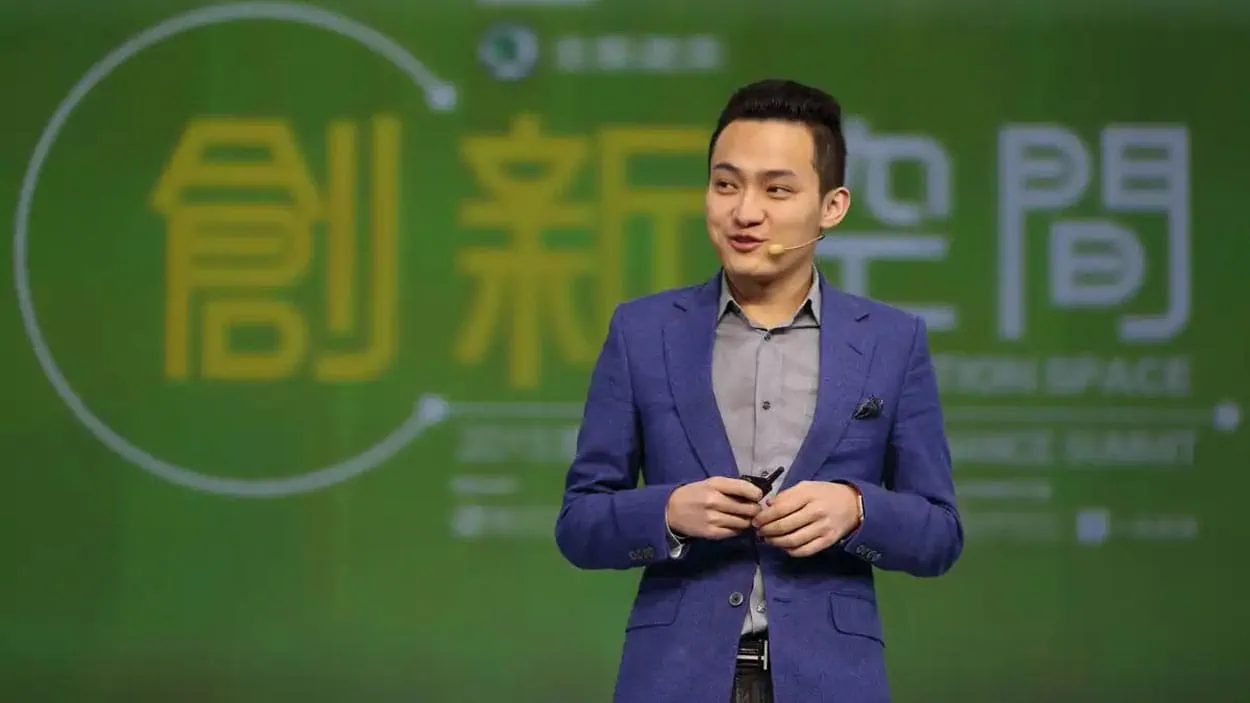







Tron founder Justin Sun has announced plans to increase the network’s Bitcoin holdings, echoing Binance’s recent billion-dollar reserve reallocation.
Key Takeaways
- Justin Sun confirmed that Tron will increase its Bitcoin reserves, following Binance’s move to convert its $1 billion SAFU fund from stablecoins into BTC.
- This strategic shift aligns with a broader trend among crypto entities adopting Bitcoin as a foundational reserve asset, moving away from stablecoin-heavy reserves.
- Tron’s financial strategy aims to strengthen its treasury and bolster support for its stablecoin ecosystem, including recent investments in Bitcoin-related infrastructure.
- The coordinated move between Tron and Binance highlights growing collaboration among major crypto players on long-term asset management strategies.
What Happened?
Justin Sun announced that Tron will follow Binance’s lead in increasing its Bitcoin holdings. This comes after Binance revealed plans to convert its $1 billion Secure Asset Fund for Users (SAFU) from stablecoins to Bitcoin. Sun stated on X that Tron would also raise its BTC exposure, signaling confidence in Bitcoin during a turbulent market.
In response to Binance’s call, Tron will also increase its BTC holdings in the future.
— H.E. Justin Sun 👨🚀 🌞 (@justinsuntron) January 30, 2026
Binance Sets the Stage with Bitcoin Reserve Move
Binance’s decision to reallocate its SAFU fund marks a major shift in how crypto institutions manage reserves. Established in 2018 as an insurance mechanism, the SAFU fund’s transition from stablecoins to Bitcoin reflects a growing belief in Bitcoin’s long-term value. Binance CEO Richard Teng emphasized that the move aligns the fund with the broader growth of the crypto industry.
Following this announcement, Sun revealed from Singapore on March 21 that Tron would “increase its Bitcoin holdings accordingly.” This response suggests pre-arranged coordination rather than mere imitation, indicating deeper strategic ties between Tron and Binance.
Tron’s Bitcoin Accumulation Strategy
Justin Sun framed the Bitcoin acquisition as part of Tron’s long-term treasury plan, not a short-term market play. He emphasized Bitcoin’s role as a primary reserve asset, echoing the strategy adopted by companies like MicroStrategy and Tesla.
Tron has also taken steps to integrate Bitcoin into its broader ecosystem. Sun recently invested $8 million in River, a Bitcoin-focused firm working to support Tron’s stablecoin infrastructure. This complements Tron’s dominance in the stablecoin market, with over $83 billion in USDT transactions and more than 361 million user accounts on the network.
In December 2025, Sun invested $18 million into Tron Inc. to expand the network’s treasury base. These moves are part of a broader diversification effort, adding Bitcoin alongside TRX and stablecoins to solidify Tron’s financial backbone.

Institutional Coordination Signals Market Maturity
This strategic alignment between Tron and Binance suggests a new era of institutional peer pressure in the crypto world. When a major exchange like Binance changes how it stores reserves, it creates a ripple effect. Tron’s quick alignment shows how influential such decisions can be in shaping industry norms.
Experts like Dr. Lena Schmidt from the Digital Asset Research Institute noted that this is “not just a trade; it’s a strategic reallocation of foundational capital.” It also reflects increasing regulatory clarity, with jurisdictions like the EU and UK offering frameworks for crypto asset holdings, giving projects like Tron more confidence to hold Bitcoin in large quantities.
Stablecoin Ecosystem and Bitcoin: A Functional Split
The shift could also change how stablecoins and Bitcoin function in the crypto economy. By using Bitcoin as a savings or reserve asset and stablecoins for transactions, projects like Tron are creating a functional separation in their treasury models.
While Binance’s SAFU conversion slightly reduces the demand for stablecoins in reserve roles, it enhances their utility for everyday use. Tron’s stablecoin-first architecture is particularly well-positioned to benefit from this separation, especially as it continues integrating Bitcoin-backed infrastructure.
CoinLaw’s Takeaway
In my experience, moves like this are more than just headline-grabbing announcements. What Justin Sun and Binance are doing reflects a major shift in how crypto institutions think about money. For years, stablecoins were king when it came to reserves. Now, Bitcoin is stepping in to play that central role. I found it especially telling that Sun didn’t just quietly buy Bitcoin. He made it public, tying Tron’s reputation to Bitcoin’s strength. That’s not just smart marketing, it’s a serious bet on crypto’s future. And with Tron already dominating in stablecoin volume, adding Bitcoin gives it a stronger backbone for whatever comes next.