






Russia is planning a permanent ban on Bitcoin mining in parts of Siberia to address growing energy shortages, signaling a major shift in crypto policy.
Key Takeaways
- Russia will impose a year-round Bitcoin mining ban in southern Buryatia and the entire Zabaykalsky Krai starting January 1, 2026.
- Officials blame massive 3,000 MW power shortages for the crackdown, with reports of residential blackouts.
- Miners warn the move makes them “vulnerable” and could damage Russia’s broader crypto ambitions.
- Despite the mining ban, crypto remains legal for investment, though Russia continues to block its use as a payment method.
What Happened?
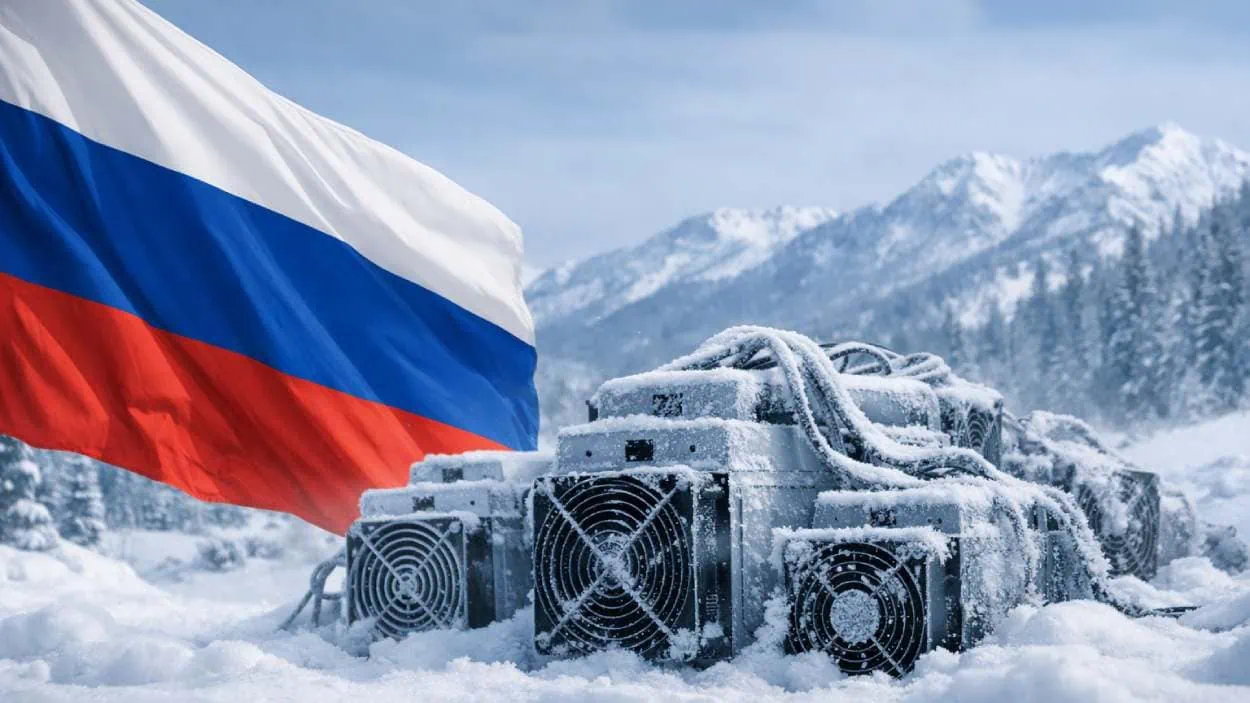
In a major policy move, the Russian government is preparing to enforce a permanent cryptocurrency mining ban in two key Siberian regions. The decision follows growing concerns over energy infrastructure stress, with local officials citing serious electricity shortages and grid instability caused by industrial-scale Bitcoin mining.
🇷🇺 BREAKING: Russia says Bitcoin & Crypto will NEVER be legal payment
— Crypto Patel (@CryptoPatel) December 17, 2025
Top Lawmaker Anatoly Aksakov just confirmed: “Cryptocurrencies will never become money in Russia”
✅ Crypto allowed as investment only
✅ All payments must be in rubles
✅ Cross-border trade exception exists pic.twitter.com/9wEVbkGdS9
Regional Power Struggles Trigger National Action
The upcoming ban, reported by Russian outlet Kommersant and confirmed by regional officials, targets the southern part of the Republic of Buryatia and all of Zabaykalsky Krai. These areas are known hotspots for crypto mining due to their cheap electricity and cold climate. Previously, a seasonal ban was enforced from November 15 to March 15 each year. But from January 1, 2026, the restrictions will become indefinite.
Officials in Buryatia support the move. A spokesperson from the Ministry for Transport, Energy, and Road Development said, “A complete ban on crypto mining is one of the measures that will help us stabilise the power supply.” The ministry also noted that power shortages across Irkutsk, Zabaykalsky Krai, and Buryatia have reached nearly 3,000 megawatts.
These shortages have led to frequent blackouts and rising tensions with local communities. Miners operating in the affected regions now face a bleak future, with few affordable or legally viable alternatives within Russia.
National Crypto Policy: Mixed Messages and Mounting Restrictions
Although crypto mining was legalized in Russia on November 1, 2024, the government’s stance has remained cautious. While regions with energy surpluses may continue mining activities, areas experiencing grid stress are actively seeking exemptions. According to Russian law, regions must apply to the central government for mining bans, and Moscow has the final say.
Adding to the confusion, Deputy Energy Minister Yevgeny Grabchak had assured the public as recently as October that no new mining bans were expected in 2025. Yet the incoming permanent ban directly contradicts that statement.
Meanwhile, crypto payments remain strictly banned in Russia. At a recent press conference, Anatoly Aksakov, Chairman of the State Duma Committee on Financial Markets, reiterated, “Cryptocurrencies will never become money within our country. They can only be used as an investment instrument.” His comments align with the Central Bank’s firm stance against the use of crypto as currency.

Economic and Industry Impact
The mining ban could reshape Russia’s crypto economy:
- Loss of tax revenue from electricity-heavy mining operations.
- Reduced foreign investment due to legal uncertainties.
- Growth of underground mining as companies evade restrictions.
- Setbacks for crypto hardware vendors and support services.
The affected Siberian regions previously attracted both domestic and international miners thanks to electricity costs as low as $0.01 per kWh. With that advantage now disappearing, the economic case for staying in Russia weakens.
Globally, Russia contributes about 4 to 5 percent of Bitcoin’s total hash rate. This ban could lower that figure and drive miners to look for alternative locations in Kazakhstan, Canada, or the United States, each with their own regulatory landscapes.
CoinLaw’s Takeaway
In my experience following crypto policy shifts, this is a big one. It shows how quickly government support can turn into restriction when infrastructure comes under pressure. I found it striking that while Russia acknowledges the economic promise of crypto, they are willing to sacrifice part of it for energy stability. This feels like a warning shot to miners globally: don’t get too comfortable in any one jurisdiction. Energy and policy risks are real and evolving.
This also reinforces the need for more energy-efficient blockchain models. Proof-of-work is powerful but power-hungry. If the industry doesn’t evolve faster, more countries might follow Russia’s lead.