






Chinese tech companies are scrambling to buy Nvidia’s powerful H200 AI chips, triggering supply challenges and geopolitical tension.
Key Takeaways
- Chinese demand for Nvidia’s H200 chips has far exceeded expectations, putting pressure on production capacity.
- The H200 is currently the most powerful AI chip legally accessible to China, following a recent US export approval with a 25 percent tariff.
- Major Chinese tech firms like Alibaba and ByteDance have placed large orders, prompting Nvidia to consider expanding production via TSMC.
- Chinese regulators are debating whether to allow H200 imports, fearing it could hinder local semiconductor growth.
What Happened?
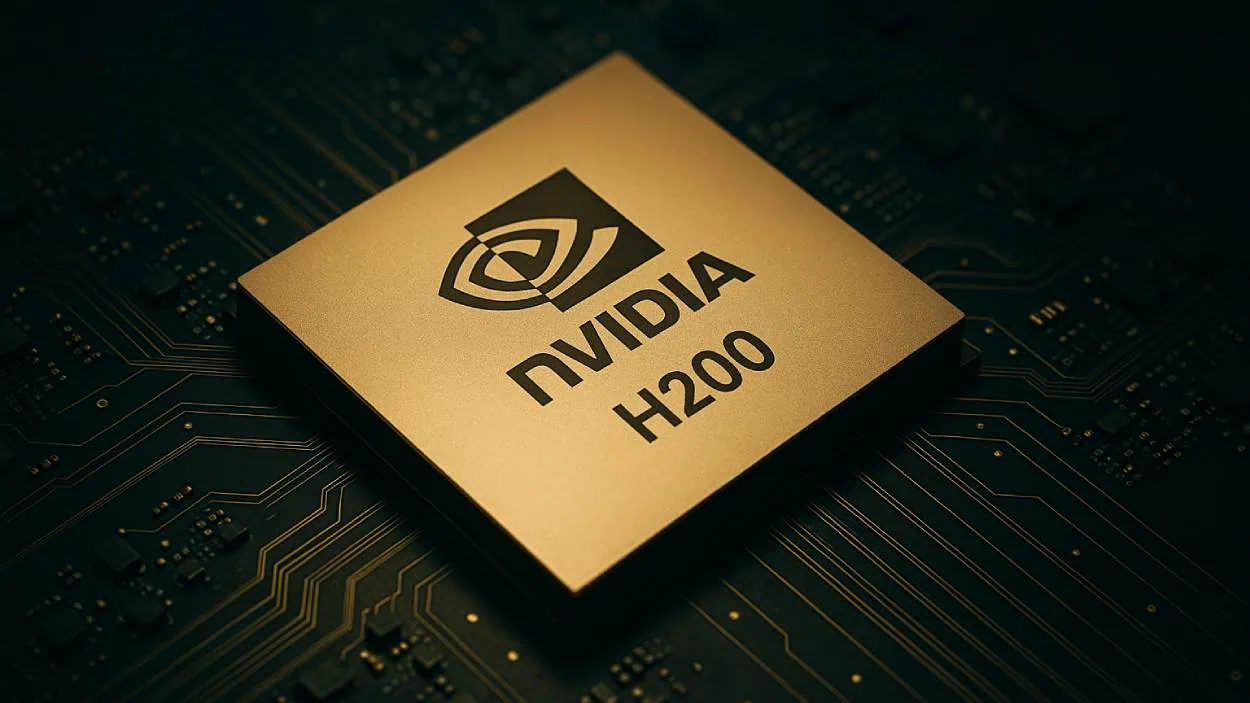
Nvidia is exploring ways to ramp up production of its H200 AI chips after Chinese demand surged far beyond initial projections. With the US recently allowing H200 exports to China under a 25 percent tariff, local tech giants like Alibaba and ByteDance are rushing to place orders. The H200 now represents the most capable AI hardware Chinese firms can legally acquire.
Meanwhile, China’s government is still weighing the implications of these imports, considering bundling H200 purchases with requirements to also buy domestic chips.
WATCH: Nvidia is considering adding new manufacturing lines for H200 AI chips following strong demand from Chinese clients and recent US export approval with a 25 percent fee https://t.co/6vqhFQdJ93 pic.twitter.com/y4P8X98XZr
— Reuters Business (@ReutersBiz) December 12, 2025
China’s Appetite for AI Power
The H200 chip, part of Nvidia’s Hopper architecture, has become a critical asset for AI development in China. Built using TSMC’s 4-nanometer process, the H200 is roughly six times more powerful than Nvidia’s previously approved H20 chip. That performance edge makes it ideal for training large language models and managing high-level inference tasks.
Following the US government’s decision, reportedly influenced by former President Donald Trump’s stance to tax but permit exports, demand in China skyrocketed. Nvidia insiders revealed that executives had to brief Chinese clients on supply limitations, acknowledging that production remains constrained due to competing priorities.
Production Challenges and TSMC Bottlenecks
Nvidia is facing production pressure across its chip lineup, with a strong focus on scaling its next-gen Blackwell and upcoming Rubin chips. Adding H200 production would mean negotiating more capacity at TSMC, where manufacturing slots are already highly sought after by tech giants like Google.
Despite the interest, output of the H200 remains limited, and Nvidia must balance global demand without undercutting its US and international customers. An Nvidia spokesperson emphasized that licensed sales to China are being managed carefully to avoid disrupting global supply.

Beijing’s Regulatory Dilemma
Although the US has cleared H200 exports, China’s government has yet to officially approve their import. Emergency meetings have been held with companies like Tencent, Alibaba, and ByteDance, and regulators are reportedly considering a proposal requiring companies to also purchase local chips when importing H200s.
This reflects Beijing’s broader concern: while Chinese AI chipmakers like Huawei and startups like DeepSeek are catching up, their offerings still lag behind Nvidia’s in raw performance. Nori Chiou of White Oak Capital Partners noted the H200 outperforms the most advanced local chips by two to three times.
Geopolitical Implications
This sudden shift in policy represents a major departure from decades of US tech restrictions. As former National Security Council official Rush Doshi pointed out, “Compute is our main advantage… giving this up increases the odds the world runs on Chinese AI.”
Tim Fist from the Institute for Progress added that this change enables Chinese companies to build an AI ecosystem powered by Nvidia chips, Chinese cloud providers, and locally developed AI models. The concern is that this hybrid stack could compete directly with US companies abroad, reshaping the global AI race.
CoinLaw’s Takeaway
Honestly, this story feels like a tech turning point. In my experience tracking AI developments, when a chip like the H200 becomes a bottleneck in both supply chains and international diplomacy, it signals how central compute power has become to global influence. Nvidia is stuck balancing profits, politics, and production. Meanwhile, China is playing the long game by trying to access the best tech while still pushing its domestic industry forward. I found it especially striking how quickly Chinese firms mobilized after the US export shift. This scramble tells us just how crucial high-performance chips are in the modern AI arms race.